
Welcome to How to Gardening
You’ve got a patch of earth—maybe it’s a windowsill, a backyard, or a stubborn concrete slab you’ve claimed as your own—and you want it to grow something. But the instructions you’ve found so far feel like they’re written for someone else: too vague, too technical, or just plain wrong.
Here, the advice is tested in real soil, not just theory. No fluff, no guesswork.
This is for the gardener who wants to know *why* tomatoes need pruning (it’s not just to make them look neat), how to tell if your seedlings are thirsty (it’s not always the soil), or whether that weird brown spot on your leaves is salvageable.
Whether you’re starting with a single seed or a whole plot, we’ll help you turn dirt into dinner, problems into solutions, and frustration into satisfaction.
Our story
There was a gap between the gardening books full of Latin names and the forum posts where people argued about whether compost tea was witchcraft.
One side assumed you already knew what a ‘hardening off’ period was; the other treated every question like it was the first time someone had ever tried to grow basil.
So we started with a single notebook, scribbling down the fixes that actually worked—like how to revive wilted herbs with a damp paper towel, or why your zucchini plant might be producing flowers but no fruit.
The first drafts were written in a sunroom in Portland at 3 a.m., after too much coffee and a failed attempt to grow microgreens under a single bulb. That’s when we realized the real problem wasn’t the lack of information; it was the lack of *honest* information.
No one was admitting that sometimes you just have to rip out the dead plants and start over. So we made a rule: if we couldn’t laugh about the mistake in the next sentence, we weren’t writing about it.
The turning point came on a rainy Tuesday in May, when a reader emailed to say they’d used our ‘emergency fix for blighted tomatoes’ and saved their entire harvest. That’s when we stopped treating this like a hobby and started treating it like something that could actually help.
The rest was just more dirt under the nails.
What we stand for
We believe gardening should be rewarding, not punishing. That means no vague advice like ‘give it more sun’ without telling you which kind of sun (morning? afternoon? the kind that comes through a neighbor’s tree?).
We also believe that every garden—big or small, urban or rural—deserves a fighting chance, even if the only tool you have is a butter knife.
What you will always get here
- Practical steps, not just theory—like how to tell if your soil is too dense, or why your peppers keep falling over (spoiler: it’s not always the wind).
- Real-world fixes for real-world problems, tested in gardens that aren’t just Pinterest-perfect.
- No jargon, no assumptions, and definitely no ‘you should’ve known that’ moments.
- A healthy dose of skepticism—because if something sounds too good to be true, it probably is (looking at you, ‘miracle-grow’ claims).
Meet the team
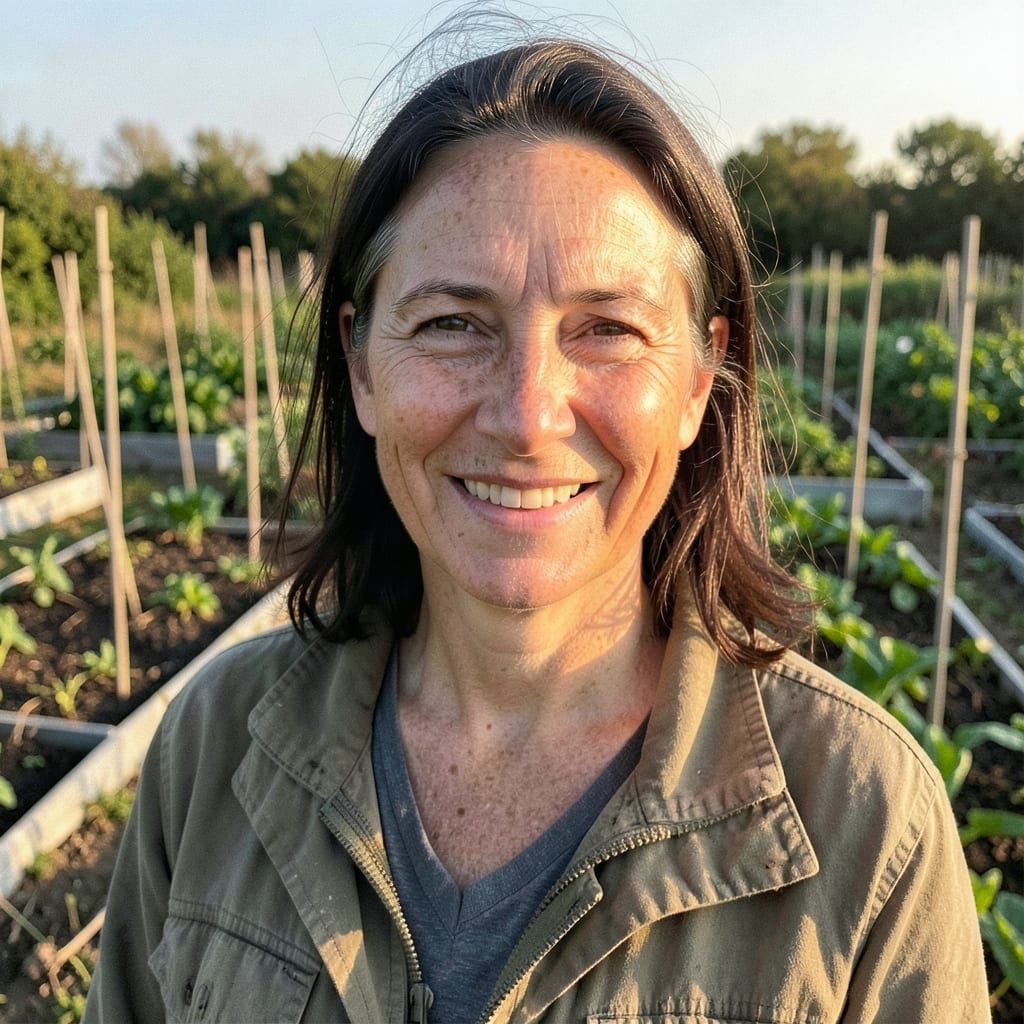
Behind every post is someone who’s either just pulled weeds in the rain or is currently Googling ‘why is my snake plant turning yellow’ at 2 a.m. We’re the people who show up with more questions than answers—and that’s exactly how we keep the advice useful.
No one here has a degree in horticulture (though we’ve all pretended to know what ‘xeriscaping’ means at a party).
Adriana Ibarra
Adriana Ibarra is the founder and editor of *How to Gardening*, and her green thumb has been in various stages of calloused since she was a kid sneaking sunflower seeds from her grandma’s garden.
She runs the site from a cluttered desk in Portland, where half the surface is taken up by seed packets, a half-empty mug of coffee, and at least three half-finished gardening projects.
Her specialty is translating gardening science into language that doesn’t sound like it was written by a botanist who’s never held a trowel.
Before this, she spent years writing about food and farming, which is how she learned that the best advice often comes from the person who’s just dug a hole with their hands.
She’s also the one who always forgets to water the new plants first—every time—and has to be reminded by the sad, drooping leaves. When she’s not editing posts, she’s probably outside, covered in dirt, muttering to herself about why the tomatoes still won’t ripen.
I still remember the first time I grew something from seed and it actually sprouted. It was a sunflower, and I think I screamed. Gardening isn’t just about the end result—it’s about the little victories along the way, like realizing you can fix a problem before it becomes a disaster. And if you’re not failing at least a little, you’re not trying hard enough.
Adriana Ibarra
How we create our content
Every piece starts with a question someone actually asked—or a problem someone actually had. It could be a comment on a forum, a message from a reader, or even something we’ve struggled with ourselves.
The goal isn’t to sound like an expert; it’s to sound like someone who’s been there, made the mistake, and figured out how to fix it (or at least how to laugh about it).
The first draft: raw and real
We write the first version in one sitting, no research, no second-guessing—just the way it would sound if we were explaining it to a friend over coffee.
If we’re writing about saving wilting herbs, we’ll describe the exact temperature of the water we used (lukewarm, not cold), how long we left them in the sink (20 minutes, not ‘a bit’), and what happened when we forgot to trim the stems (they didn’t revive).
No sugarcoating, no ‘ideal’ conditions—just what worked in our kitchen at 11 p.m. on a Tuesday.
This draft is usually messy: half questions, half answers, with at least one ‘I don’t know’ somewhere. But that’s the point. The goal isn’t perfection; it’s honesty. If we can’t admit we don’t know something, how can we help someone who’s stuck?
So we leave it out there—raw, unpolished—and then we get to work fixing it.
The second draft: tested and tightened
Next, we test every step ourselves—again. If we’re writing about composting, we’ll actually compost something (usually last week’s coffee grounds) and note where it went wrong. If we’re troubleshooting blight, we’ll spray a few leaves with the suggested mix and wait to see if they crisp up or collapse further.
No shortcuts. Then we cut out everything that doesn’t hold up: the ‘probably,’ the ‘might,’ and the ‘if you’re lucky’ phrases. What’s left is the bare minimum you need to know—and nothing more.
Finally, we ask someone who’s never gardened before to read it. If they don’t understand the first sentence, we rewrite it. If they skip a step, we add a reminder.
The goal is to make it so clear that even someone who’s never held a trowel could follow along—and if they still get it wrong, we own that.
Because gardening isn’t about being perfect; it’s about learning, and we’d rather admit our mistakes up front than let someone waste a season trying to figure them out.
Join our community
You’ll find answers to questions like ‘Why did my peppers stop producing?’ or ‘How do I keep squirrels out of my birdseed without poison?’—and if we don’t know, we’ll tell you that too.
Others share their own fixes, like turning a bathtub into a self-watering planter or reviving a dying fiddle-leaf fig with just a paper bag. Good suggestions get turned into posts, bad ones get laughed at (politely), and everything in between helps someone else avoid a mistake.
Let's connect
We love hearing about your wins (especially the ones that surprised you), your disasters (so we can warn others), and your weird gardening hacks (like using egg cartons as seed starters—it works!).
If you’ve got a question, a tip, or just want to tell us about the time your zucchini plant outproduced your entire neighborhood, we’re listening. Head to the contact page to share your story—we’ll meet you in the dirt.
The guides are grouped by category: Companion Plants, Flowers, How To, Lawn, Light Requirements and Orchid Care.