
Light Requirements
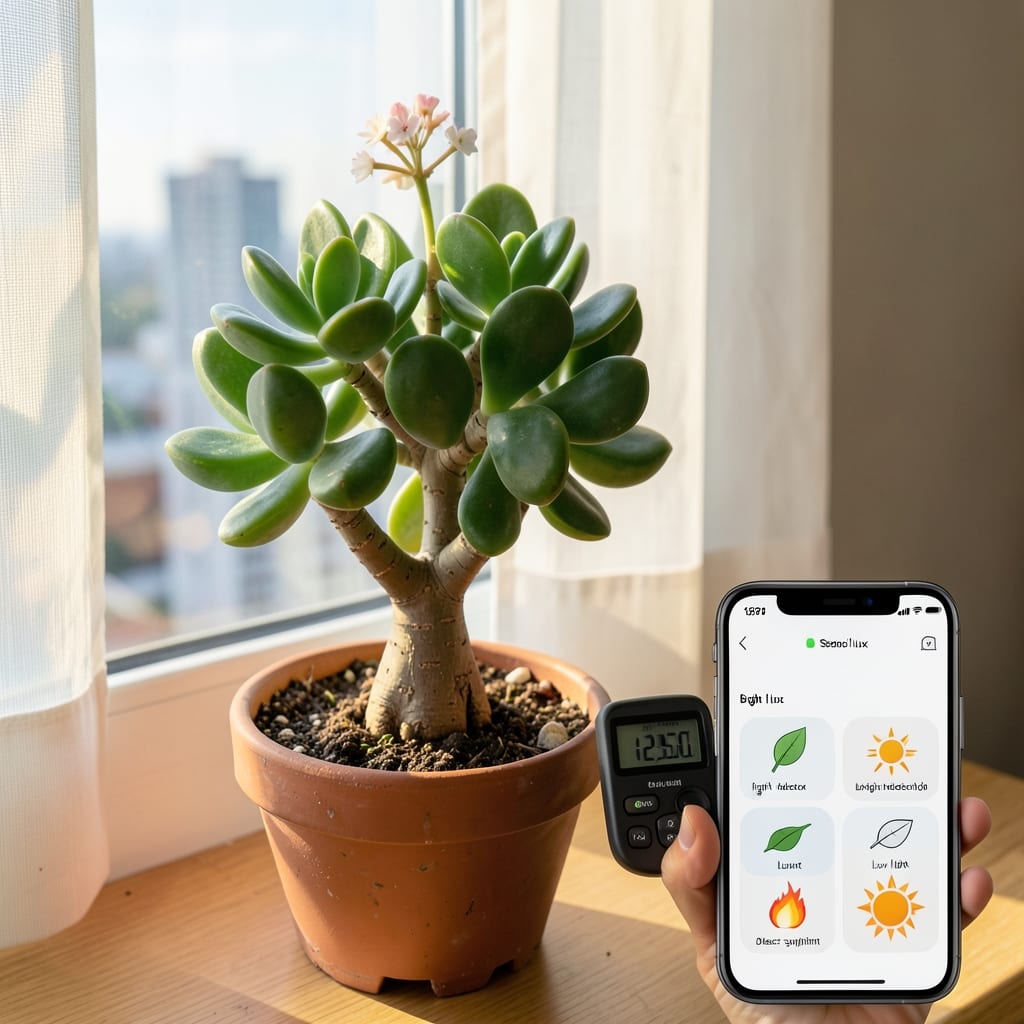
How much light does a jade plant require to stay happy and healthy? If you've ever watched your 🌿 jade plant stretch toward the window or develop brown spots, you're not alone—light is the most critical factor for keeping this succulent thriving.
The secret to perfect jade plant care lies in finding the right balance: too little light, and your plant becomes leggy and weak; too much, and those beautiful leaves can scorch. Most succulents like jade plants crave bright, indirect sunlight for 4-6 hours daily, but they can handle some direct morning sun without burning.
Whether you're placing your jade plant near a south-facing window or adjusting indoor lighting, I'll show you exactly how to create the ideal brightness zone. You'll learn how to spot signs of over- or under-exposure and make simple tweaks to keep your plant looking its best year-round.
Let's dive into the light requirements that will transform your jade plant from struggling to stunning—no guesswork required!

Jade plant light requirements: ideal brightness zones for healthy growth
Jade plants (Crassula ovata) thrive in bright indirect light, but their exact needs depend on your home’s natural light conditions. These succulents love sunlight but can scorch if exposed to harsh afternoon rays. The key is finding that sweet spot—enough light for vibrant growth without causing damage. Let’s break down the ideal light zones and how to spot when your plant is getting too much or too little.
For most homes, 4-6 hours of bright, filtered sunlight daily is perfect. This mimics their natural habitat in South Africa, where they grow under trees or on rocky cliffs with dappled shade. If your jade plant starts stretching toward the light or developing pale, leggy stems, it’s craving more brightness. Conversely, brown patches or crispy edges mean it’s getting too intense a light source.
Indoors, the best spots are east-facing windows or south-facing windows with sheer curtains. West-facing windows can work but may require afternoon shade, especially during summer months. Outdoors, place your jade plant in a partially shaded area where it gets morning sun and afternoon shade—this prevents leaf burn while keeping it happy.
| Light Zone | Daily Sunlight | Ideal Location | Signs of Good Light |
|---|---|---|---|
| Bright Indirect | 4-6 hours | East window, north window, or 3-6 feet from south window with sheer curtain | Thick, glossy leaves; compact growth |
| Low Light | <2 hours | North-facing window or room without direct sun | Leggy stems; pale, sparse leaves |
| Direct Sun | >6 hours (especially afternoon) | South or west window without shade; outdoor summer exposure | Brown, crispy leaf edges; sunburn spots |
Seasonal changes also affect your jade plant’s light needs. In spring and summer, when sunlight is intense, move your plant slightly farther from the window or use a light sheer curtain to diffuse harsh rays. During fall and winter, when natural light dims, supplement with a grow light for 6-8 hours daily if you notice leggy growth. LED grow lights with a cool white spectrum are ideal—they mimic sunlight without overheating your plant.
If you’re unsure whether your space meets the ideal light conditions, try the "shadow test": Place a piece of paper near your plant’s usual spot. If the shadow is sharp and dark, the light is too direct. If the shadow is faint or nonexistent, your plant needs more brightness. Adjust accordingly to keep those thick, vibrant leaves shining!
For outdoor growers, jade plants can handle morning sun but need afternoon shade, especially in hot climates. A 50% shade cloth works wonders during peak summer hours. If you’re growing in a container, rotate it weekly so all sides get even light exposure—this prevents lopsided growth and ensures your plant stays balanced and bushy.
Pro tip: Observe your jade plant’s leaves—they’re the best indicator of its light needs. Healthy leaves should be thick, glossy, and a deep green. If they start turning reddish or purple, it’s a sign of too much direct sun. If they stretch and become thin or pale, your plant needs more light. These visual cues will help you fine-tune the perfect brightness zone for your jade plant’s success.
Remember, jade plants are resilient, and small adjustments can make a big difference. Start with bright indirect light, monitor your plant’s response, and tweak as needed. With the right light, your jade plant will reward you with years of lush, healthy growth—and maybe even those prized pink or white flowers that bloom with proper care! 🌿
How to adjust light for jade plants in different environments
Not all homes offer the perfect bright indirect light for jade plants, but with a few clever adjustments, you can create ideal conditions. If your space lacks natural light—like a north-facing apartment or a dim basement—don’t worry. Jade plants are adaptable, and with the right tools, they’ll thrive even in tricky environments. The key is understanding how to supplement light and protect from harsh rays.
For low-light conditions, start by placing your jade plant as close as possible to the brightest window in your home. If that’s still not enough, consider a south-facing window with a sheer curtain to filter the light gently. If natural light is truly insufficient, a LED grow light placed 6-12 inches above the plant for 10-12 hours daily can work wonders. Look for lights with a full-spectrum bulb—these mimic sunlight and encourage healthy growth without overheating your plant.
Placing your jade plant in a south-facing window without shade can cause leaf scorch. The intense afternoon sun is especially damaging. Always use a light-colored curtain or move the plant back a few feet to diffuse the brightness.
Outdoor growers face different challenges, especially during summer months. While jade plants love morning sun, the afternoon heat can be too intense. If you’re growing outdoors, provide afternoon shade using a 50% shade cloth or place your plant under the dappled shade of a tree. For container growers, rotate your pot quarter-turns weekly to ensure even light exposure on all sides. This prevents lopsided growth and keeps your jade plant compact and symmetrical.
Greenhouses and sunrooms can also pose challenges. If your jade plant is exposed to direct midday sun, use reflective surfaces like white walls or mirrors to bounce light around without increasing heat. Avoid placing your plant near heat sources like vents or radiators, as jade plants prefer cool to moderate temperatures (ideally between 65-75°F). If your greenhouse gets too hot, a simple ventilation fan can help regulate the temperature and keep your plant comfortable.
Even with adjustments, some environments—like deeply shaded rooms or urban apartments with no windows—may still fall short. In these cases, a combination of grow lights and strategic placement is your best bet. Place your jade plant on a sunny windowsill during the day and supplement with a grow light at night if needed. Just remember: consistency is key. Jade plants prefer steady light exposure over erratic fluctuations, so aim for a predictable daily routine.
Pro tip: If you’re unsure whether your adjustments are working, watch for leaf color and growth patterns. Healthy jade plants develop thick, glossy leaves with a deep green hue. If you notice stretching or pale leaves, it’s time to increase light. If leaves turn reddish or crispy, reduce exposure to direct sun. With patience and these simple tweaks, your jade plant will flourish in nearly any environment—even the trickiest ones! 🌱