
Light Requirements
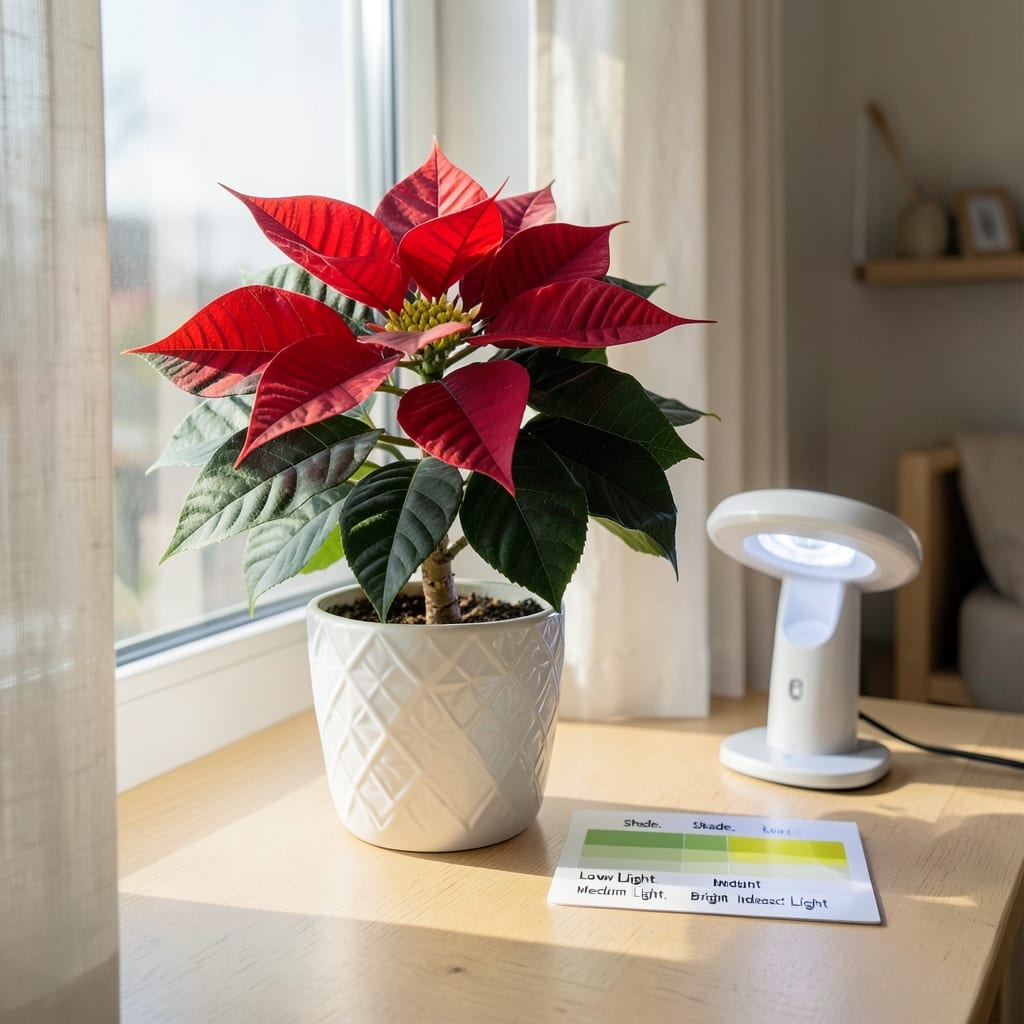
Ideal light requirements for poinsettias: bright indirect sunlight explained
Poinsettias thrive in bright indirect sunlight, making them perfect for indoor spaces during the holidays. Unlike sun-loving plants, they hate direct sun—it burns their delicate bracts (the colorful leaves) and causes leaf scorch. Think of them as shade-loving divas that still need plenty of light to maintain their vibrant colors.
For optimal growth, aim for 6 to 10 hours of bright, filtered light daily. This means placing your poinsettia near a north-facing window or east/west-facing windows where sunlight is gentle. South-facing windows can work, but you’ll need to filter the light with sheer curtains to prevent damage.
The key is mimicking their natural tropical habitat. In the wild, poinsettias grow under dappled sunlight in the Mexican forests. Recreate this by positioning your plant 3 to 6 feet away from windows or using a sheer curtain to diffuse harsh rays.
During winter months, natural light is weaker, so you may need to supplement with grow lights to maintain vibrancy. Short days and low light cause pale or yellowing bracts, which is why many poinsettias lose their holiday cheer by February.
Seasonal adjustments are crucial. In summer, when sunlight is intense, move your poinsettia to a shadier spot or increase the distance from the window. In fall and winter, when days shorten, ensure it gets maximum indirect light to encourage bract development for next year’s blooms.
Here’s the golden rule: If your poinsettia’s leaves look bleached or crispy, it’s getting too much direct sun. If the stems stretch and become leggy, it’s not getting enough light. Balance is everything!
| Light Requirement | Specification | Best Placement |
|---|---|---|
| Daily Light Hours | 6 to 10 hours | East or West window |
| Light Type | Bright indirect sunlight | 3-6 ft from window |
| Avoid | Direct sunlight | South-facing windows |
| Winter Supplement | Grow lights (12-14 hrs/day) | 6-12 inches above plant |
| Summer Adjustment | Reduce light exposure | Move to shaded area |
If you’re unsure about your home’s lighting, rotate your poinsettia every few days to ensure even growth. This prevents lopsided development and keeps the plant looking full and lush. A slow turn (like a quarter turn weekly) works wonders for maintaining symmetry.
For year-round care, consider placing your poinsettia near a skylight or glass door, where it can still receive bright, indirect light without the risk of scorching. Just avoid drafts—poinsettias hate cold windows and may drop leaves if exposed to chilly air.
Remember, the goal is to keep those bracts vibrant and the plant healthy. With the right light balance, your poinsettia will stay bold, bright, and beautiful long after the holidays end.
Ideal light requirements for poinsettias: bright indirect sunlight explained
Poinsettias thrive on bright indirect sunlight, mimicking their natural understory habitat. Think of it as a gentle morning sun with afternoon shade—just like their tropical origins. Without this balance, your plant may struggle to maintain those show-stopping red bracts or develop weak, leggy stems.
For optimal growth, position your poinsettia near an east or west-facing window, where sunlight is softer. South-facing windows can deliver too much direct sun, causing leaf scorch, while north-facing windows may provide insufficient light, leading to pale, stretched growth. Rotate your plant quarter-turn weekly to ensure even light exposure and prevent lopsided growth.
| Light Requirement | Specification | Seasonal Adjustment |
|---|---|---|
| Daily Light Hours | 6+ hours (bright indirect) | Winter: Supplement with grow lights if natural light drops below 4 hours |
| Window Placement | East/west-facing, 3-6 ft away | Summer: Move 1-2 ft back from window to avoid heat stress |
| Direct Sun Tolerance | None (max 1-2 hours morning sun) | Fall: Gradually increase light exposure to encourage bract formation |
| Artificial Light Option | LED grow lights (6000K-6500K) | Year-round: Use 12-14 hours/day if indoors year-round |
During summer months, poinsettias may need extra care to avoid heat stress. If your home gets hotter than 75°F, consider moving the plant to a cooler spot with filtered light, like behind a sheer curtain. In winter, when natural light decreases, supplement with a grow light placed 6-12 inches above the plant for 12-14 hours daily to maintain vibrancy.
Watch for color changes in the bracts—pale or yellowing indicates insufficient light, while crispy edges signal too much direct sun. Adjust placement gradually to avoid shocking the plant. For example, if your poinsettia starts looking leggy or sparse, it’s craving more light, but avoid sudden moves that can cause stress.
Pro tip: Use a light meter (or your phone’s light sensor app) to measure light levels. Aim for 1,000-2,000 foot-candles of bright indirect light. If you notice leaves leaning toward the light source, rotate the plant to encourage balanced growth and prevent weak stems.
Remember, poinsettias are short-day plants, meaning they need 12+ hours of darkness daily starting in late summer to trigger bract color formation. Keep them in a dark closet or covered area from 5 PM to 8 AM to encourage vibrant holiday colors—just don’t skip the light during the day!