
Light Requirements
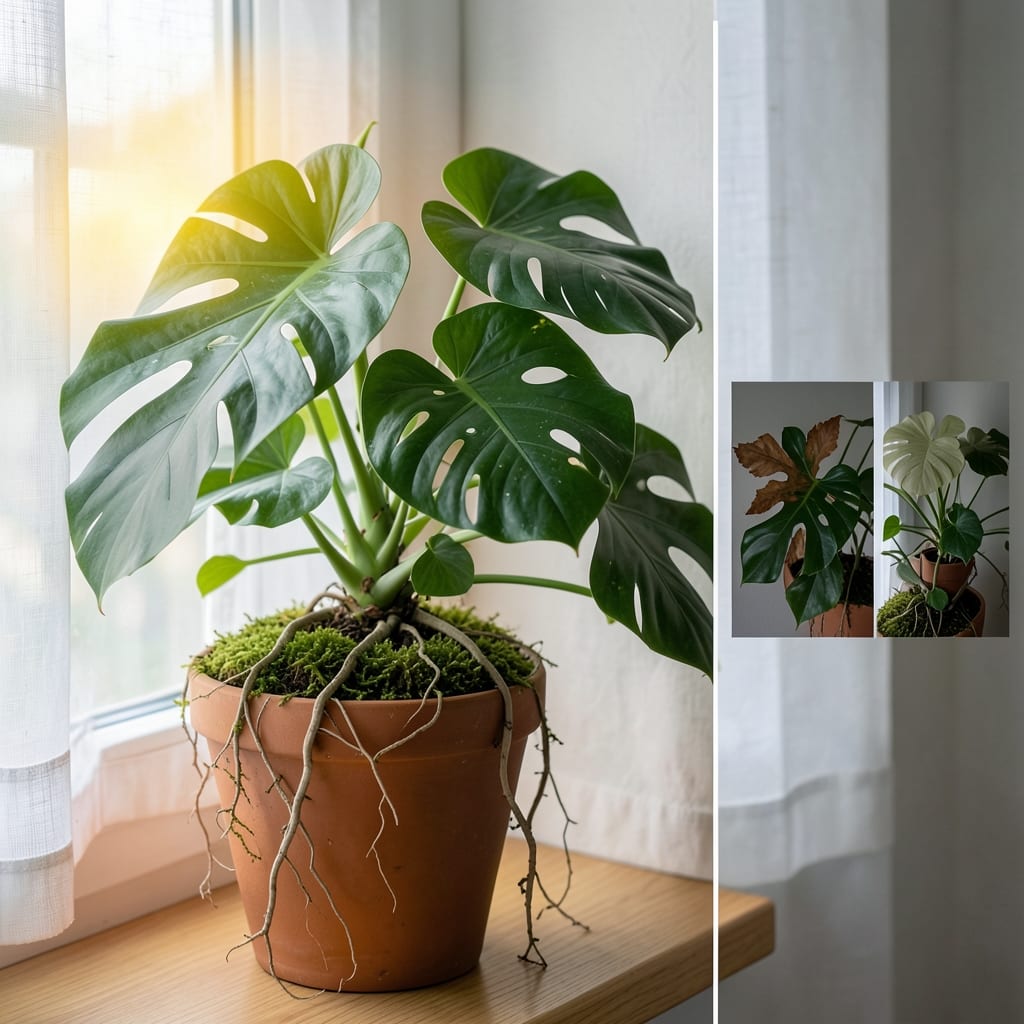
If your Swiss Cheese Plant 🌿 is struggling to grow, the answer might be simpler than you think—light exposure is the game-changer for those stunning variegated leaves. Too little, and your plant stretches awkwardly; too much, and those beautiful splits turn crispy. Finding the perfect balance isn’t just about keeping it alive—it’s about unlocking its full potential.
You don’t need a green thumb or a sunroom to get this right. Whether you’re working with a bright living room or a dim corner, I’ll show you exactly how to read your plant’s signals—like yellowing leaves or slow growth—and adjust the light like a pro. No guesswork, just results.
Ready to transform your Swiss Cheese Plant from a sad, leggy shadow into a thriving, show-stopping statement piece? Let’s dive into the ideal light conditions, from window placement to artificial light hacks, so you can give your plant the perfect glow.
By the end, you’ll know not just how much light your Swiss Cheese Plant needs, but where to place it and how to troubleshoot common light-related disasters. Your plant’s future starts here—let’s make it shine.
 Best Window Placement
Optimal light requirements for Swiss Cheese plant growth and variegation
The Swiss Cheese Plant (Monstera deliciosa) thrives in bright indirect sunlight, making it perfect for homes with well-lit spaces. This tropical beauty mimics its natural understory habitat, where dappled sunlight filters through the canopy. Without the right light, its iconic fenestrated leaves (those with holes!) won’t develop properly, and growth slows dramatically.
Direct sunlight, especially afternoon rays, can scorch delicate leaves, while low light causes leggy stems and pale foliage. The goal is to replicate 50-70% shade—think of it as a gentle morning glow that lingers until early afternoon. This balance isn’t just about aesthetics; it directly impacts your plant’s ability to produce chlorophyll and maintain its signature variegation.
🌿 Pro Tip: Rotate your plant quarter-turns every 2 weeks to ensure even growth and prevent lopsided exposure. This mimics nature’s way of distributing light uniformly across the plant.
| Light Condition | Ideal Hours/Day | Leaf Impact | Care Adjustment |
|---|---|---|---|
| Bright Indirect Light | 4-6 hours | Vibrant variegation, large fenestrated leaves | Rotate plant monthly; fertilize lightly |
| Low Light | <2 hours | Pale leaves, slow growth, no fenestrations | Move closer to window; supplement with grow lights |
| Direct Sunlight (Afternoon) | >3 hours | Brown crispy edges, bleached spots | Filter light with sheer curtain; avoid west/south windows |
| East-Facing Window | 6-8 hours (gentle morning sun) | Healthy growth, balanced variegation | Place 2-3 feet from window; ideal year-round |
Notice how bright indirect light directly correlates with the plant’s ability to produce its signature fenestrated leaves? This isn’t just about survival—it’s about unlocking the plant’s full genetic potential. In low light, your Swiss Cheese Plant might produce small, solid green leaves instead of the dramatic variegated patterns you love.
If you’re dealing with artificial lighting, aim for 12-14 hours of LED grow lights daily, positioned 6-12 inches above the plant. Fluorescent lights work too but require closer placement (3-6 inches) for effectiveness. The key is consistency—your plant won’t tolerate sudden light changes, so introduce new light sources gradually over 1-2 weeks.
💡 Light Meter Hack: Use your smartphone’s light meter app (like Light Meter Plus) to measure 1,000-2,000 lux—the sweet spot for Swiss Cheese Plants. This takes the guesswork out of placement and helps you fine-tune artificial setups.
Seasonal adjustments are crucial too. During winter months, when natural light dims, supplement with grow lights for 4-6 extra hours to maintain energy production. Conversely, in summer, watch for signs of heat stress like wilting or leaf drop—move your plant away from hot windows or use a light-colored curtain to diffuse intensity.
One common mistake is assuming all bright light is good light. A south-facing window in peak summer can deliver too much direct UV exposure, leading to leaf burn. Instead, opt for east or north-facing windows where sunlight is gentler, or place your plant 3-5 feet back from a west-facing window to filter harsh afternoon rays.
Finally, pay attention to your plant’s growth rate. Healthy Swiss Cheese Plants grow 1-2 feet per year under ideal light. If growth stalls or leaves stay small, it’s a clear signal to increase light exposure. Combine this with proper watering (deep soaks every 7-10 days) and humidity (aim for 40-60%) to create the perfect growing environment.
Optimal light requirements for Swiss Cheese plant growth and variegation
Your Swiss Cheese Plant thrives on bright indirect sunlight, which is the sweet spot between harsh direct rays and dim corners. Think of it like a morning coffee—just enough warmth to wake up its growth without burning it. The ideal light intensity mimics dappled forest light, where sunlight filters through leaves. This balance isn’t just about survival; it’s what makes those iconic variegated leaves develop their signature splits and patterns.
Direct sunlight, especially afternoon rays, can scorch leaves, leaving brown crispy edges that ruin the plant’s lush appearance. On the flip side, too little light causes leggy growth as the plant stretches toward any available source, weakening its structure. The goal? Keep your plant in a spot where it gets 4-6 hours of bright indirect light daily. This could be a few feet from an east-facing window or under a sheer curtain on a south-facing one.
🌱 Swiss Cheese Plant Light Requirements Summary
| Condition | Specification | Effect on Plant |
|---|---|---|
| Bright Indirect Light | 4-6 hours daily | Healthy variegation, strong growth |
| Direct Morning Sun | 1-2 hours max | Tolerated; too much causes burn |
| Low Light | <2 hours indirect | Leggy growth, pale leaves |
| Direct Afternoon Sun | Avoid entirely | Leaf scorch, crispy edges |
Watch for visual cues that reveal whether your plant is getting the right amount of light. If you notice new leaves emerging smaller than the mature ones, it’s a clear sign of insufficient light. Conversely, yellowing or brown patches on leaves exposed to direct sun mean it’s getting too intense. The key is to observe these changes and adjust placement accordingly—rotate your plant every few weeks so all sides get even exposure.
For variegated varieties, like the popular Albo or Thai Constellation, light plays an even bigger role. These plants need slightly more light to maintain their white or yellow patterns, as chlorophyll production requires extra energy. Without enough light, the variegation fades, and leaves may revert to solid green. If you’re growing one of these, aim for the upper range of bright indirect light—closer to 6 hours—to keep those stunning patterns vibrant.
In winter months, when natural light dims, you might need to supplement with grow lights. A simple LED bulb placed 12-18 inches above the plant for 12-14 hours a day can mimic the missing sunlight. This is especially helpful if your plant starts developing long, sparse stems or dropping leaves—a classic sign of light deprivation during shorter days. Even a few hours of extra light can make a world of difference in keeping your Swiss Cheese Plant happy and healthy.
Remember, the goal isn’t just to keep your plant alive—it’s to help it thrive and develop those breathtaking features that make it a showstopper. With the right light, your Swiss Cheese Plant will reward you with bold variegation, lush foliage, and a growth rate that’ll have you reaching for your shelves in no time. 🌿