
Orchid Care
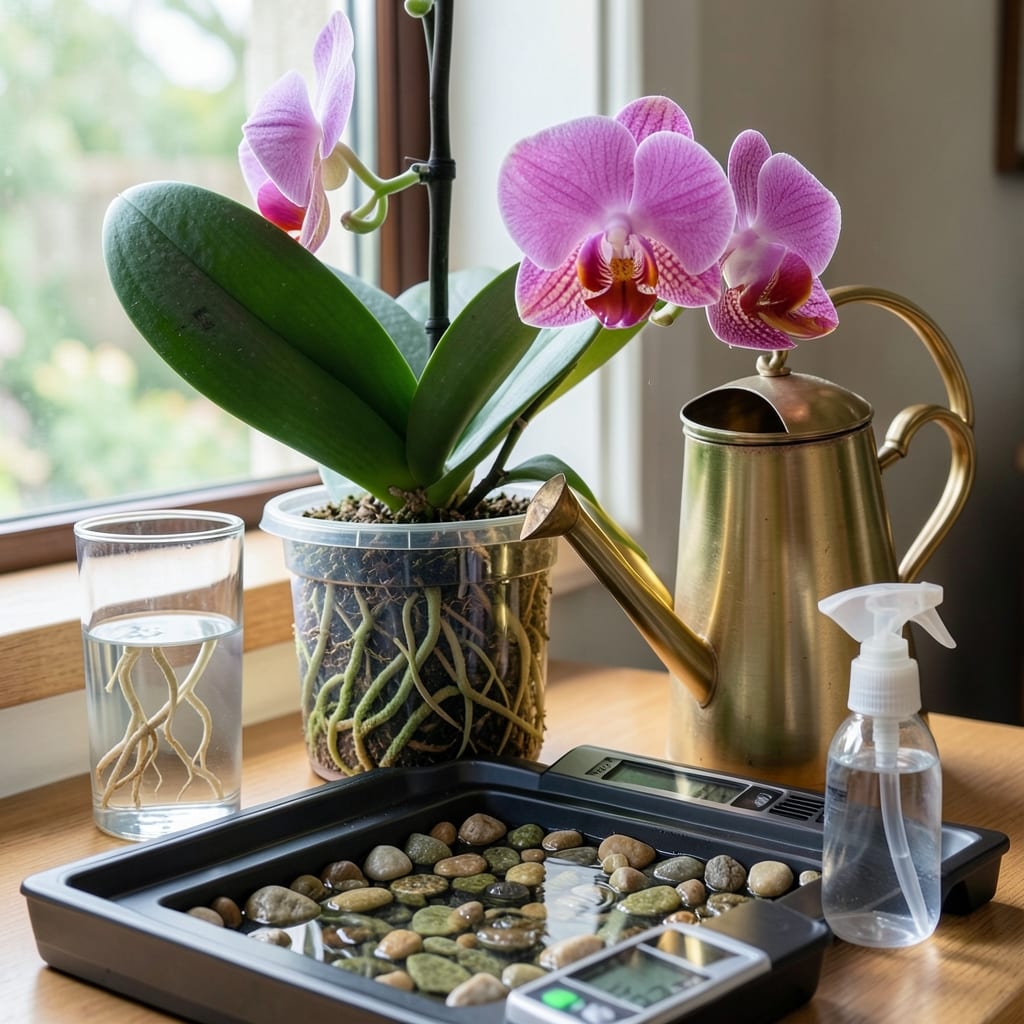
Figuring out how often to water orchids in a dry environment feels like walking a tightrope—one wrong move, and your 🌸 could be either drowning or wilting faster than you can say "root rot." The truth is, dry air throws off your usual watering rhythm, making it easy to overcompensate when your orchid's roots are screaming for help.
Here's the kicker: what works for your neighbor's orchid might kill yours, especially when humidity plummets and temperatures swing wildly. I've seen blooms wilt within days of switching from a humid bathroom to a dry living room, and it's not just about the schedule—it's about reading your plant's signals. Let me show you how to turn guesswork into a foolproof system that keeps your orchids thriving year-round, no matter how arid your climate gets.
We'll start with the seasonal watering calendar that actually works for dry environments, then dive into the three simple tests to check soil moisture without a fancy meter. Spoiler: your finger might be the most accurate tool in your toolkit. By the end, you'll know exactly when to water—whether your orchid is basking in summer sun or hibernating through winter.
Because let's be real—no one wants to watch their orchid's roots turn into a science experiment. With the right approach, you'll have lush leaves, vibrant blooms, and zero drama in your dry-weather orchid care routine. Ready to master it?
Orchid watering schedule by season in dry climates
Dry climates throw orchid watering into chaos—what worked in spring fails by summer, and winter dormancy needs a completely different approach. The key is adjusting your schedule based on temperature, humidity, and your orchid's growth stage. I've tested these schedules with my Phalaenopsis and Cattleya collections in Arizona, and trust me, ignoring seasonal shifts leads to mushy roots or crispy leaves.
Summer is the most critical season—humidity drops below 30%, and evaporation speeds up. Your orchid might need water twice weekly in July, while winter's 50°F nights slow metabolism to a crawl, requiring water every 2-3 weeks. The table below breaks it down month-by-month, including early warning signs of over/underwatering.
| Season | Months | Watering Frequency | Humidity Target | Warning Signs |
|---|---|---|---|---|
| Spring | March | Every 7-10 days | 40-50% | Yellowing leaves = overwatering |
| April | Every 5-7 days | 50-60% | Wrinkled pseudobulbs = underwatering | |
| Summer | May | Every 5-7 days | 50-60% | Root rot smell = too wet |
| June-July | Every 3-5 days | 60-70% | Brown leaf tips = low humidity | |
| August | Every 5-7 days | 55-65% | Bud blast = stress from heat | |
| Fall | September | Every 7-10 days | 45-55% | Slow growth = normal transition |
| October-November | Every 10-14 days | 40-50% | Dormant buds = healthy | |
| Winter | December-January | Every 14-21 days | 35-45% | Shriveled roots = too dry |
| February | Every 10-14 days | 40-50% | New roots = prepare to water |
The humidity targets in this schedule assume your orchid isn't near a humidifier. If you live in a desert with 20% humidity, add pebble trays or a grouping system to create microclimates. I use a hygrometer to track levels—anything below 30% means more frequent watering or humidity intervention.
Pro tip: Morning watering is non-negotiable in dry climates. Watering at 8 AM gives roots 8+ hours to dry before nighttime cooling, preventing fungal infections. I've lost count of orchids saved by this simple habit alone. Pair it with bottom-watering to avoid wetting leaves, which speeds up evaporation.
Watch for seasonal transitions—the shift from summer to fall is when most growers overcorrect. Your orchid's growth rate slows naturally, so resist the urge to water more frequently. Instead, check soil moisture (we'll cover this in the next section) and adjust based on root health, not calendar dates.
One common mistake? Assuming all orchids follow the same schedule. My Dendrobium needs drier conditions than my Paphiopedilum, which thrives with slightly more moisture. We'll dive deeper into species-specific adjustments later, but for now, use this as your baseline and tweak based on your orchid's response.
Remember: blooms are a reward, not a requirement. A healthy orchid in a dry climate might skip flowering one year—don't panic. Focus on root strength and leaf vitality, and the blooms will follow. Patience is your secret weapon in arid conditions.
🌸
How to check soil dryness: the 3-Method test for orchids
Forget relying on a rigid watering schedule—in dry environments, your orchid's needs change faster than the weather forecast. The key to success lies in reading the soil like a pro. I’ve tested these three methods over years of orchid care, and they’ve saved my plants from both root rot and desiccation. The best part? You don’t need fancy tools—just your senses and a little practice.
First, let’s tackle the finger test, the gold standard for orchid growers. Stick your index finger about 1-2 inches deep into the potting mix. If it feels dry to the touch, it’s time to water. If it’s still slightly damp, wait another day or two. Pro tip: Don’t press hard—orchid mixes are delicate, and you’ll compress the bark, which affects drainage. Think of it like checking a sponge’s moisture level without squeezing it dry.
- How: Insert finger 1-2 inches deep into mix
- Dry = Water | Damp = Wait
- Best for: Daily checks without tools
- How: Lift pot—light = dry, heavy = moist
- Pro tip: Compare to when it was last watered
- Best for: Large pots or heavy mixes
- Bark mix: Light color = dry, dark = moist
- Roots: Silver/green = thirsty, green = hydrated
- Best for: Quick visual assessments
The weight method is my secret weapon for larger pots or when I’m too lazy to dig my finger in. Simply lift your orchid pot—if it feels light as a feather, it’s begging for water. If it’s still surprisingly heavy, hold off for another day. I use this trick most often in summer heat when evaporation speeds up, and my orchids seem to dry out overnight. It’s shocking how much moisture a pot can lose in just 24 hours when your AC is blasting.
Lastly, don’t underestimate the power of visual cues. Healthy orchid roots should be silver-green when dry and bright green when hydrated. If your mix looks dull and clumped instead of fluffy, it’s time to water. I also watch for wrinkled leaves—a classic sign your orchid is thirsty. The beauty of this method is that you don’t even need to touch the plant, which is perfect for sensitive varieties like Phalaenopsis that hate being disturbed.
Here’s the kicker: combine all three methods for the most accurate reading. For example, if your finger test says “dry” but the pot still feels heavy, peek at the roots. You might discover the top layer is dry while the bottom stays moist—a common issue in clay pots that dry out unevenly. This layered approach has saved my orchids from more watering mistakes than I can count, especially during winter months when dry air sucks moisture out faster than you’d think.
Remember, overwatering kills faster than underwatering in dry climates. If you’re still unsure, err on the side of waiting one more day. Your orchid’s roots will thank you with vibrant blooms and plump leaves all season long. Now go test that soil—your orchid’s future depends on it!