
Flowers
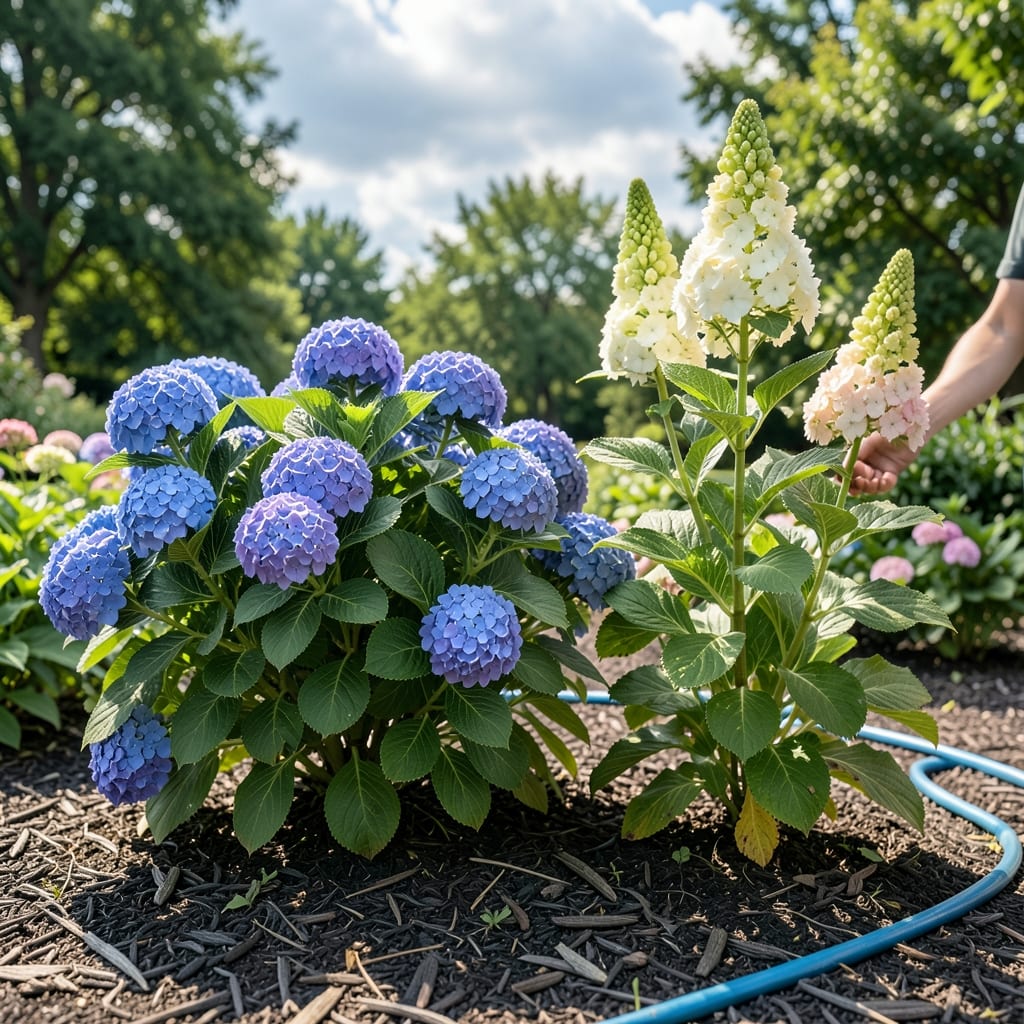
Hydrangea mature size guide: exact heights and widths by popular variety
Hydrangeas aren’t one-size-fits-all—some varieties stay compact enough for containers, while others become small trees. The Bigleaf hydrangea (Hydrangea macrophylla) typically reaches 3-5 feet tall and 3-6 feet wide, making it perfect for foundation plantings. Meanwhile, the Panicle hydrangea (Hydrangea paniculata) can soar to 8-10 feet tall with a 6-8 foot spread, demanding more space and structural support.
If you’re working with limited space, dwarf varieties like 'Little Lime' (Bigleaf) or 'Limelight' (Panicle) stay under 3 feet tall while still delivering stunning blooms. These are ideal for container gardening or small yards. For large landscapes, Oakleaf hydrangeas (Hydrangea quercifolia) grow 4-6 feet tall and 4-8 feet wide, offering year-round interest with their exfoliating bark.
Here’s the key: Growth rates vary based on sunlight, soil quality, and pruning habits. A Panicle hydrangea in full sun may grow 2 feet taller than one in partial shade. Always check the USDA Zone compatibility—most hydrangeas thrive in Zones 4-9, but Smooth hydrangeas (Hydrangea arborescens) can handle colder climates down to Zone 3.
| Variety | Mature Height | Mature Width | Sunlight Needs | Pruning Needs |
|---|---|---|---|---|
| Bigleaf ('Endless Summer') | 3-5 ft | 3-6 ft | Partial shade | Light annual pruning |
| Panicle ('Limelight') | 8-10 ft | 6-8 ft | Full sun | Hard pruning in late winter |
| Oakleaf ('Snow Queen') | 4-6 ft | 4-8 ft | Partial shade | Minimal pruning |
| Smooth ('Annabelle') | 3-5 ft | 3-5 ft | Full sun to partial shade | Deadheading spent blooms |
| Dwarf ('Little Lime') | 2-3 ft | 2-3 ft | Partial shade | Light trimming |
When planning your garden, spacing is critical. Place hydrangeas 3-6 feet apart to allow airflow and prevent fungal diseases like powdery mildew. For container gardening, choose dwarf varieties and use pots at least 15 gallons to accommodate root growth. Remember, hydrangeas are slow to establish—it can take 2-3 years for a new plant to reach half its mature size.
Soil pH also plays a role in size. Acidic soil (pH 5.0-6.0) produces blue flowers in Bigleaf varieties, while alkaline soil (pH 6.0-7.0) yields pink blooms. To test your soil, use a home pH kit or send a sample to your local cooperative extension service. Amending soil with sulfur or lime can adjust pH and influence both flower color and growth vigor.
For fastest growth, fertilize in early spring with a balanced 10-10-10 fertilizer. Apply 1 tablespoon per plant and water deeply to encourage root development. Avoid high-nitrogen fertilizers, which promote leafy growth over blooms. Instead, opt for a low-nitrogen, high-phosphorus formula like 5-10-10 to boost flowering.
Understanding how hydrangeas grow isn’t just about measuring their mature height—it’s about predicting their spread and knowing when to prune. Panicle hydrangeas, like 'Limelight,' can shoot up to 8 feet tall and spread 6-8 feet wide, while Oakleaf varieties like 'Pincushion' stay compact at 3-5 feet. This growth difference means pruning strategies should vary wildly. For example, Bigleaf hydrangeas (like 'Endless Summer') bloom on old wood, so pruning too early can kill next year’s flowers. Meanwhile, Panicle types bloom on new wood, so they can handle aggressive late-winter pruning to control their towering growth. These habits directly impact where you place them in your garden. Here’s the key: Spacing matters. Planting a 6-foot-wide 'Nikko Blue' hydrangea too close to a fence or patio will lead to crowded roots and fewer blooms. Oakleaf hydrangeas, with their 5-6 foot spread, need room to breathe—especially since they’re deciduous and drop leaves in fall. Always leave 3-5 feet of clearance around their base. If you’re designing a low-maintenance garden, choose dwarf varieties like 'Little Lime' (3 feet tall) or 'Penny Mac' (4 feet tall). These stay manageable and require less pruning while still delivering vibrant blooms. For statement-making plants, opt for 'Grandiflora' (6-8 feet tall) but be ready to train them on trellises or provide support stakes. One common mistake? Assuming all hydrangeas grow the same. A 5-foot-tall 'Annabelle' can easily double in width if not pruned, while a 3-foot-tall 'Dart’s Little Dorrit' stays neatly contained. Always check the variety’s growth chart before planting—it’s the difference between a cluttered border and a well-designed landscape. Pro tip: Use mulch to slow root spread in aggressive growers like 'Limelight.' A 3-inch layer of organic mulch (like shredded bark) can reduce their spread by 20-30% over time. This is especially useful if you’re working with limited garden space but still want a bold hydrangea statement. 🌸How hydrangea growth habits affect pruning plans and garden layout
🌿 Growth Habits & Pruning Rules