
Size
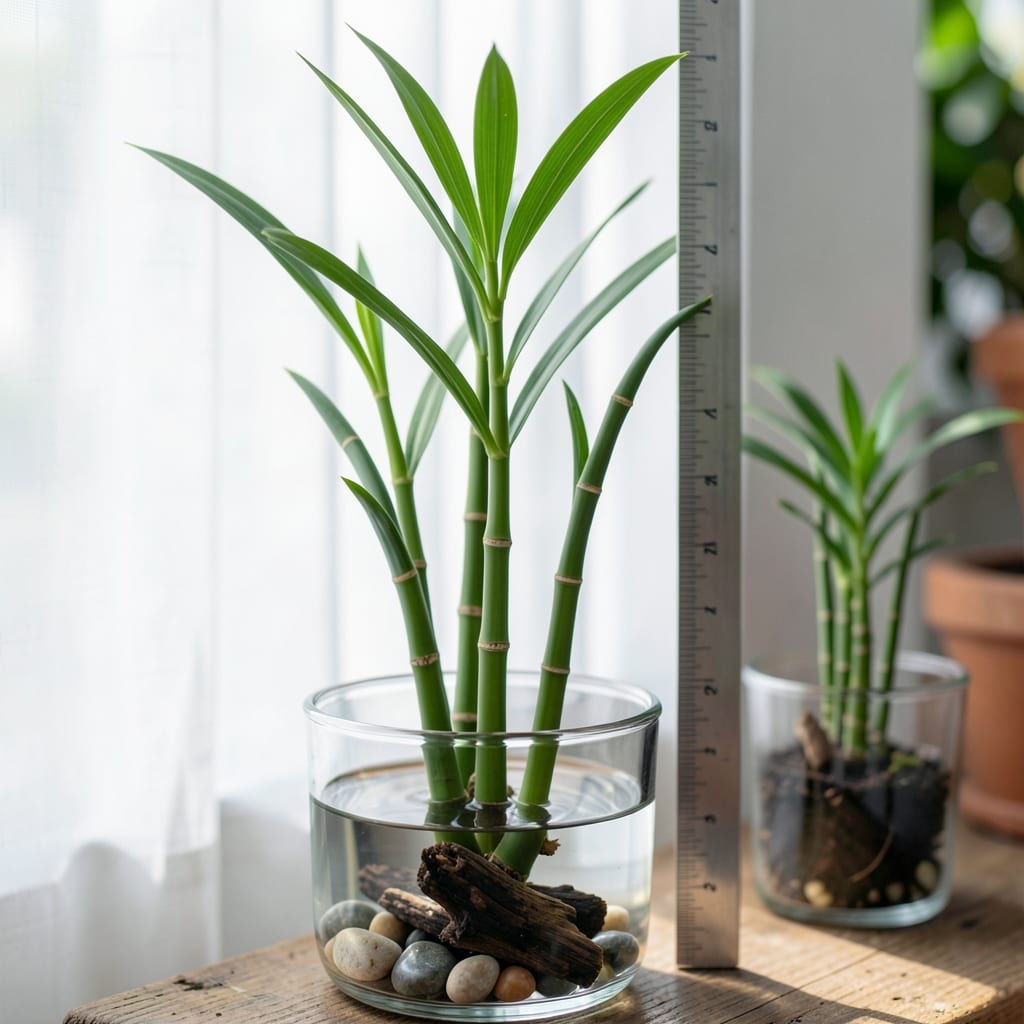
If you’ve ever watched your Lucky Bamboo plant 🌿 grow toward the ceiling and wondered just how tall it can get, the answer might surprise you. This popular houseplant isn’t just about luck—it’s all about the container you choose. The right pot size can keep your Lucky Bamboo at a manageable height, while the wrong one might turn it into a towering jungle in no time.
Under ideal conditions—like bright, indirect light and filtered water—your Lucky Bamboo could reach 3 to 6 feet tall, but that’s not always what you want. The key to controlling its height lies in understanding how container size affects growth. A smaller pot keeps it compact, while a larger one encourages vertical growth, sometimes even double its expected height.
Don’t let myths fool you: water vs. soil doesn’t change its height—it’s all about the roots. Whether you’re growing it in water or soil, the container’s diameter is the real game-changer. With the right care, you can keep your Lucky Bamboo at a height that fits your space perfectly, whether that’s a modest 12 inches or a dramatic 4 feet.
Ready to take control? I’ll show you exactly how to pick the right container and care for your Lucky Bamboo so it stays at the height you love—no guesswork needed.


Lucky bamboo height limits by container size: what science says
Your lucky bamboo (Dracaena sanderiana) height isn’t just a roll of the dice—it’s a direct response to its container size. Science shows that the diameter of your pot determines how tall your plant can grow, with root restriction acting as a natural growth brake. For example, a 6-inch pot typically caps height at 12-18 inches, while a 12-inch container can push growth to 3-4 feet. This isn’t magic; it’s physics and biology working together.
The key lies in how water depth and root space interact. Lucky bamboo thrives in water but needs room to develop aerial roots. When roots become root-bound (crowded in a small pot), they signal the plant to focus on height rather than width. This is why your 3-foot lucky bamboo might suddenly shoot up if you upgrade to a larger vase—it’s not just luck; it’s environmental stress relief.
Here’s the catch: Drainage matters. Lucky bamboo prefers shallow water levels (1-2 inches) to prevent rot. If you use a deep container without proper drainage, roots suffocate, stunting growth entirely. This is why many growers swear by glass vases with pebbles—they create an ideal balance of oxygen and space. Without it, your plant might max out at 12 inches no matter how much you hope for more.
| Container Size | Max Height (Indoors) | Root Space Needs | Water Depth |
|---|---|---|---|
| 6-inch vase | 12–18 inches | Tight, encourages height | 1 inch max |
| 8-inch bowl | 2–3 feet | Moderate, balanced growth | 1.5 inches max |
| 12-inch pot | 3–4 feet | Spacious, encourages width | 2 inches max |
| 16-inch cachepot | 4–6 feet | Very spacious, may need pruning | 2.5 inches max |
Many gardeners assume soil-grown lucky bamboo stays shorter than water-grown varieties, but that’s a myth. In reality, soil can limit height more aggressively because roots dry out faster, triggering a stress response that stunts vertical growth. However, if you use a well-draining potting mix with perlite, your soil-grown plant might still hit 2-3 feet—just not the 6-foot giants you see in water cultures.
Light exposure also plays a sneaky role. While lucky bamboo thrives in low to bright indirect light, too much direct sun can cause leggy growth (long, weak stems reaching for light). Place your plant 2-3 feet from a north-facing window to encourage compact, bushy growth. If you notice your bamboo stretching toward a light source, it’s a sign it’s outgrowing its container’s vertical limits.
One of the biggest mistakes I see is assuming bigger containers always mean taller plants. Not true! If your lucky bamboo is in a 20-inch vase but only grows to 18 inches, check for nutrient deficiencies or poor water quality. Lucky bamboo is sensitive to chlorine and fluoride in tap water, which can stunt growth entirely. Always use filtered or distilled water to avoid this hidden height killer.
For controlled height growth, I recommend starting with an 8-inch container if you want a 2-foot plant. If you’re aiming for a floor-length statement piece, a 12-inch pot is your best bet—but be prepared to prune regularly. The secret? Prune in spring when new growth begins. This encourages bushier, more compact stems instead of a single towering shoot.
Remember, lucky bamboo’s height isn’t just about the pot—it’s about the combination of container size, water quality, and light conditions. Get these right, and you’ll have a plant that grows exactly as tall (or short) as you want, without any guesswork. Now that’s what I call lucky!
How to prune lucky bamboo for controlled height growth
Pruning your lucky bamboo is the secret weapon for keeping it at your desired height—whether that’s a compact 12-inch desk plant or a tall 3-foot statement piece. The best time to prune is spring or early summer, when new growth is just beginning. This encourages bushier, fuller stems instead of letting it grow into a single leggy stalk. Think of it like giving your plant a haircut—timing is everything!
Start by identifying the nodes (those little bumps along the stem where leaves grow). These are your pruning points. To maintain height, cut just above a node using clean, sharp scissors. This encourages new shoots to sprout from that node, creating a fuller, more compact plant. If you want to propagate new plants, you can also cut below a node and place the cutting in water—it’ll root in about 2-4 weeks!
Here’s my step-by-step pruning guide for perfect height control:
- 1 Choose your target height. Measure where you want your plant to stop growing and mark it with a pencil.
- 2 Locate the nearest node below your marked height. This is where you’ll make your cut.
- 3 Use sterilized scissors to cut just above the node at a 45-degree angle. This prevents water from pooling and causing rot.
- 4 Place the cutting in fresh water if you want to propagate a new plant. Change the water every 5-7 days to prevent bacteria.
- 5 Return the pruned plant to its container and place it back in bright indirect light. New shoots will sprout from the node in 4-6 weeks.
Avoid the biggest pruning mistakes that can stunt growth or cause rot. Never cut below a node—this kills the potential for new shoots. Also, don’t use dull tools, as they crush stems and invite disease. And if you’re pruning a water-grown plant,
For extra bushy growth, try the "pinching" method: Simply pinch off the top 1-2 inches of the stem just above a node. This triggers multiple side shoots to grow, creating a fuller, more compact plant in just a few weeks. It’s like giving your lucky bamboo a makeover—suddenly, it’s not just tall, it’s thriving!
Remember, pruning isn’t just about height control—it’s about encouraging healthy growth. When done right, your lucky bamboo will reward you with lush, vibrant foliage and a shape that fits your space perfectly. And the best part? You can propagate new plants from your prunings, giving you even more greenery without spending a dime. Happy pruning!