
Size
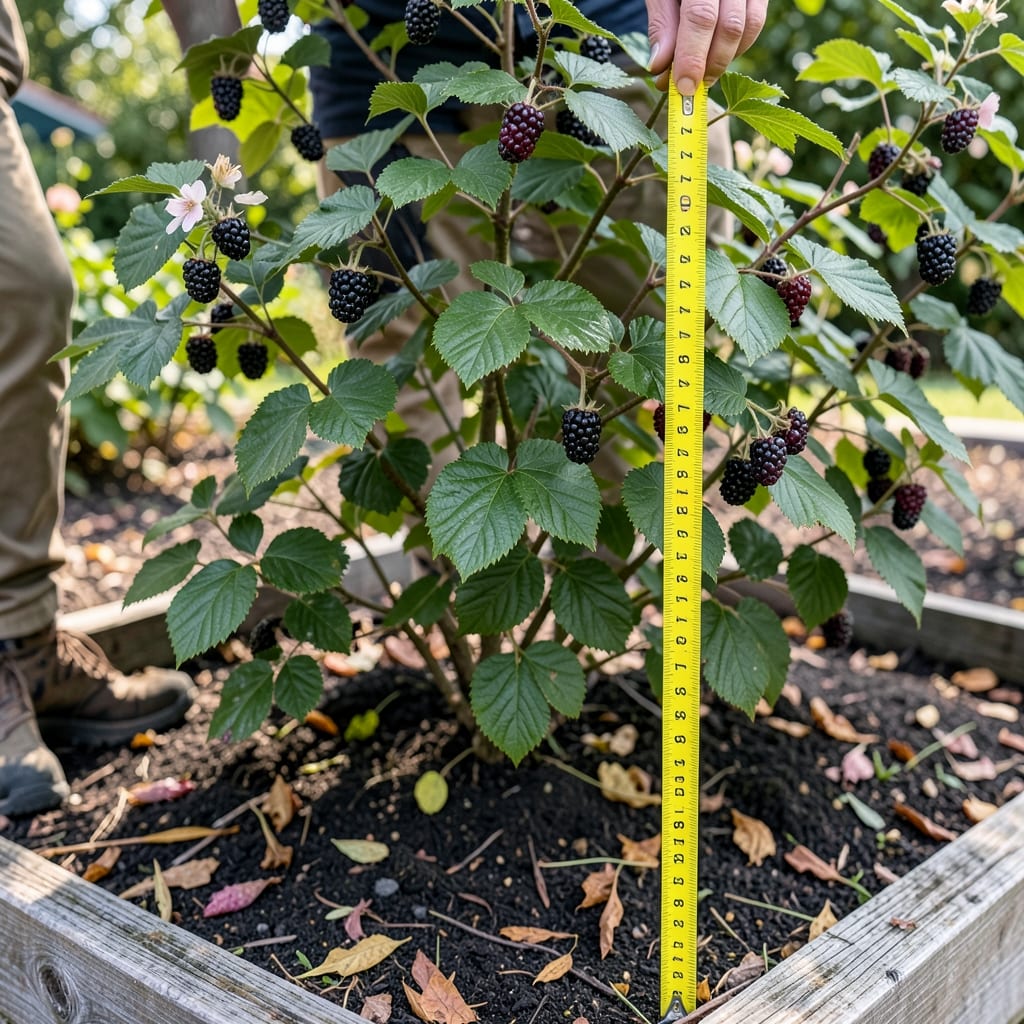
If you’ve ever wondered how tall blackberry bushes grow, the answer might surprise you—these plants can range from compact shrubs to towering vines reaching 15 feet or more! Whether you’re planning a backyard garden or managing an existing patch of 🫐, understanding the height differences between wild and cultivated varieties is key to keeping your space tidy (or embracing the wild side).
The truth is, wild blackberries often stretch skyward, climbing fences and trees with their thorny canes, while many cultivated types stay much more manageable with the right care. If you’re in USDA Zone 6a like me, you’ll want to know which varieties suit your space—and how to control their growth before they take over. Let’s break down the height variations so you can make the best choices for your garden.
From dwarf cultivars that stay under 5 feet to aggressive wild types that can dwarf your backyard, the height of your blackberry bushes depends on more than just genetics. Pruning, trellising, and even soil quality play a huge role in shaping their size. If you’ve ever struggled with unruly vines or wished for a neater look, this guide will help you find the perfect balance between productivity and manageability.
Ready to transform your blackberry patch from a tangled mess into a well-organized, fruit-bearing oasis? Stick around—we’ll cover everything from the tallest varieties to the easiest ways to keep them in check, so you can enjoy those juicy berries without the hassle. Let’s get started!


Wild blackberry bush height: nature’s uncontrolled growth explained
If you’ve ever encountered a wild blackberry patch, you know these plants don’t play by the rules. Left unchecked, wild blackberry bushes can reach staggering heights of 10 to 20 feet, turning your backyard into a dense, thorny jungle. Their aggressive growth isn’t just about height—it’s a survival strategy in nature, where every inch of space matters.
The secret lies in their arching canes, which grow horizontally and root where they touch the ground. This creates a sprawling network that can dominate entire landscapes. Without human intervention, wild blackberries spread uncontrollably, often outcompeting native plants and even encroaching on gardens or forests.
Climate plays a huge role in their growth. In warmer, humid regions like the southeastern U.S., wild blackberries grow faster and taller, sometimes exceeding 15 feet in ideal conditions. Meanwhile, in cooler climates, they may max out around 10 feet but still spread aggressively. Their thorns aren’t just for defense—they help the plant climb and stabilize itself as it reaches for sunlight.
Here’s the kicker: wild blackberries thrive on neglect. Without pruning or training, they’ll keep growing taller and denser each year, forming nearly impenetrable thickets. This is why they’re often considered invasive species in many ecosystems, where their rapid growth can disrupt local plant communities.
🌱
| Factor | Wild Blackberry Height | Key Notes |
|---|---|---|
| Natural Growth Pattern | 10–20 feet | Aggressive vining and arching canes |
| Climate Impact | Warmer = taller (up to 20 ft) | Cooler climates limit height to ~10 ft |
| Pruning Influence | Unlimited (no pruning) | Canes root where they touch soil |
| Thorn Density | High (defense + climbing) | Thorns help stabilize tall canes |
| Invasive Potential | High | Outcompetes native plants |
One of the most fascinating aspects of wild blackberries is how they reproduce vegetatively. When a cane touches the ground, it can form new roots and grow into an entirely separate plant. This means a single wild blackberry bush can become a massive colony over time, spreading outward in all directions. In some cases, these colonies can cover entire acres, especially in abandoned fields or along forest edges.
If you’re dealing with wild blackberries on your property, you might be wondering how to control them. The good news is that their height and spread can be managed with regular pruning and strategic removal of canes. However, without intervention, they’ll continue to grow taller and more aggressive, making them a challenge for even the most experienced gardeners.
For those curious about their ecological role, wild blackberries provide food for wildlife like birds and small mammals, but their dominance can also reduce biodiversity by shading out smaller plants. Balancing their presence—whether for fruit production or natural habitat—requires careful management.
🌿
Understanding wild blackberry growth helps explain why cultivated varieties are bred to be much more manageable. While wild bushes grow with abandon, domesticated blackberries are designed for controlled height and easier harvests. In the next section, we’ll explore how selective breeding and pruning techniques keep these plants at a more practical size for home gardens.
Cultivated blackberry bush height: pruned varieties that stay compact
When you choose cultivated blackberry varieties, you’re opting for plants bred specifically to stay within your garden’s boundaries. Unlike their wild cousins, these domesticated blackberries rarely reach 10 feet tall—many stay well below that with proper care. The key difference? Selective breeding and aggressive pruning keep these bushes manageable, often between 3 and 6 feet tall.
Popular thornless cultivars like 'Natchez' or 'Arapaho' typically max out at 5–6 feet when grown on trellises. Even standard varieties like 'Triple Crown'—known for their large fruit—rarely exceed 6 feet with regular maintenance. This makes them ideal for home gardens where space is limited.
Here’s how cultivated varieties compare to wild types in terms of height and care requirements:
| Variety | Mature Height | Pruning Needs | Best For |
|---|---|---|---|
| 'Natchez' (thornless) | 4–5 ft | Moderate (annual) | Small gardens, containers |
| 'Arapaho' (thornless) | 5–6 ft | Moderate (trellis support) | Fences, trellises |
| 'Triple Crown' | 6–7 ft | High (annual pruning) | Large fruit yield |
| 'Cheyenne' (semi-dwarf) | 5–6 ft | Moderate (summer tip pinch) | Urban gardens |
| Wild types (e.g., 'Dewberry') | 10–20 ft | None (aggressive spread) | Wild areas, invasive |
If you’re growing cultivated blackberries, the trellis system you choose plays a huge role in height control. A 4-foot trellis will naturally limit growth, while a 6-foot structure allows for taller varieties like 'Triple Crown'. Always prune in late winter to remove old canes and encourage new, fruit-bearing growth.
For dwarf varieties, like 'Chester' or 'Ouachita', you can even grow them in large containers—they’ll stay under 4 feet tall with minimal pruning. Just ensure the pot has drainage holes and room for roots to spread. Container-grown blackberries thrive in well-draining soil with regular feeding during the growing season.
Remember, even cultivated blackberries can grow taller if neglected. Without pruning, a 6-foot variety might shoot up to 8–10 feet in just a few years. Stay on top of annual pruning to keep your bushes at your desired height and ensure a bountiful harvest every season.
🌱