
Trees
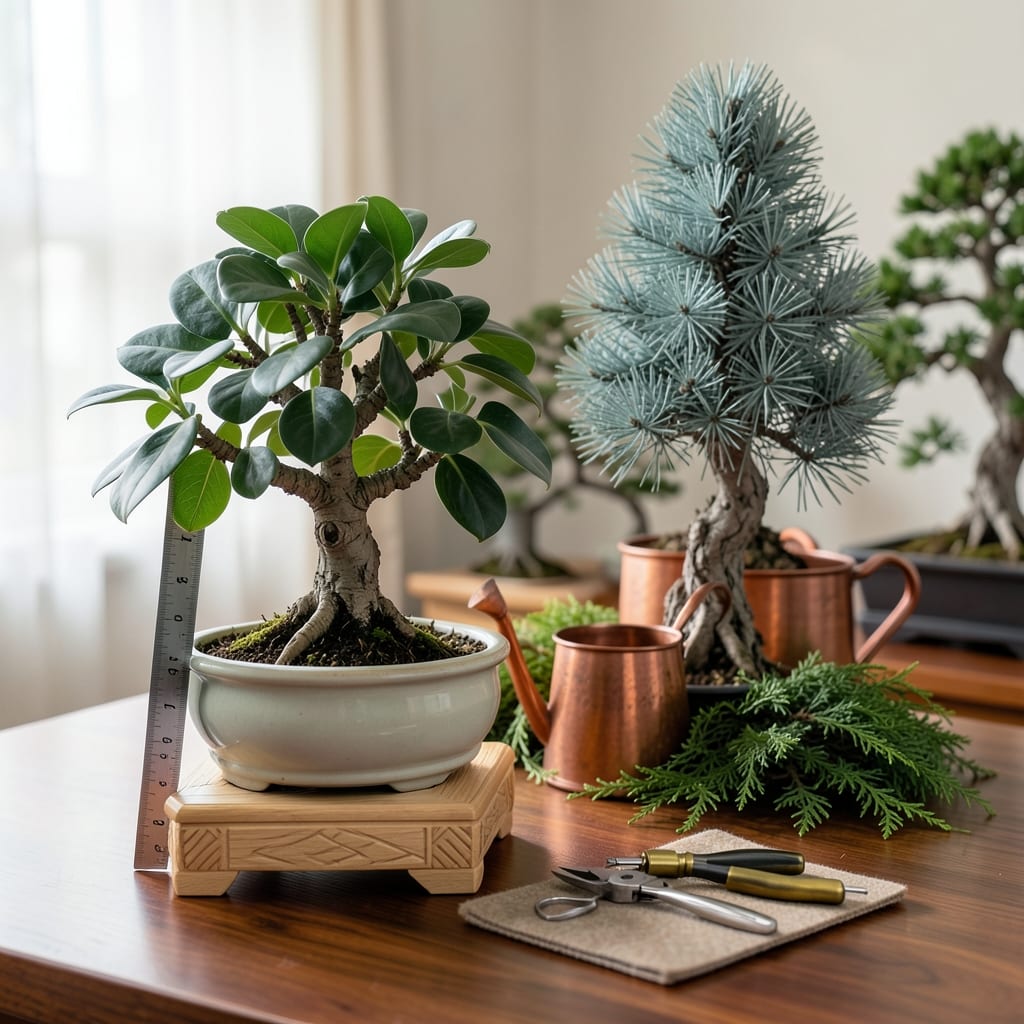
If you’ve ever wondered how tall can bonsai trees grow, you’re not alone—this tiny tree art form hides some surprising height secrets. While most bonsai stay compact enough to perch on a shelf, some species can stretch toward the sky, defying expectations with their natural growth potential.
Think of a bonsai as a living sculpture: its height isn’t just about age or species, but also about the careful hands shaping it. Whether you’re dreaming of a 1-foot tabletop masterpiece or a 6-foot statement piece, understanding these limits is the key to cultivating the perfect bonsai for your space.
In this guide, I’ll break down exactly how tall different bonsai species can grow, from the tiniest miniature varieties to the rare towering examples. You’ll also learn how pruning, pot size, and even your climate play a role in controlling—or encouraging—growth.
Ready to discover the full range of possibilities? Let’s explore how your bonsai could grow from a delicate 3-inch starter to a stunning, full-sized tree—without losing its charm.


Bonsai height ranges by species: from teacup-sized to small tree heights
Bonsai trees are famous for their miniature size, but their height potential varies dramatically depending on the species. While most bonsai enthusiasts aim for 1-3 foot trees perfect for tables or shelves, some species naturally grow much taller—even up to 10 feet—if given the right conditions. The key lies in understanding each species' growth habits and how they respond to pruning and care.
For example, a Juniper bonsai typically stays between 1-3 feet tall, making it ideal for beginners, while a Black Pine can reach 6-8 feet if cultivated as a semi-cascade or broom-style bonsai. Even within the same species, dwarf varieties exist that stay under 1 foot, while others can grow significantly larger with proper care.
Let’s explore the height ranges of popular bonsai species, from the tiniest tabletop varieties to the rare towering examples that defy expectations. Understanding these differences will help you choose the perfect bonsai for your space and goals.
| Species | Typical Height Range | Growth Rate | Best For |
|---|---|---|---|
| Juniper (e.g., Procumbens) | 1–3 feet | Slow to moderate | Beginners, indoor/outdoor |
| Ficus (e.g., Retusa) | 2–5 feet | Moderate | Indoor, fast recovery |
| Pine (e.g., Black Pine) | 3–8 feet | Slow (long-lived) | Advanced, outdoor |
| Azalea | 1–4 feet | Moderate (seasonal) | Floral display, indoor/outdoor |
| Chinese Elm | 2–6 feet | Moderate to fast | Indoor/outdoor, durable |
| Dwarf Varieties (e.g., Miniature Juniper) | 6–18 inches | Very slow | Teacup bonsai, collectors |
🌱 Note: Height ranges assume proper pruning and styling. Without maintenance, some species can grow much taller!
As you can see, the Chinese Elm and Black Pine are among the taller bonsai species, often reaching 6 feet or more when cultivated as semi-cascade or broom-style trees. These varieties require more space and experience but reward enthusiasts with dramatic, tree-like forms. On the other hand, dwarf varieties like the Miniature Juniper stay under 1.5 feet, making them perfect for small spaces or teacup displays.
One common misconception is that all bonsai stay small forever. In reality, many species have natural height limits based on their genetics, but these limits can be exceeded—or controlled—through careful cultivation. For instance, a Ficus bonsai might grow 5 feet tall in a garden but can be kept under 3 feet with regular pruning and root restriction.
If you’re dreaming of a bonsai that looks like a full-sized tree, consider species like Pine or Maple, which can grow 6-10 feet tall when styled as literati or broom-style bonsai. These styles emphasize height and grandeur while maintaining the delicate balance of bonsai art. Just remember: the taller the bonsai, the more frequent the pruning and maintenance required to keep it healthy and proportionate.
For beginners, I recommend starting with Juniper or Ficus bonsai, as they’re easier to manage in smaller heights. Once you’ve mastered the basics of pruning and wiring, you can experiment with taller species like Pine or Elm. The key is to match your bonsai’s potential height with your available space and care capacity.
🌿 Whether you prefer a 6-inch tabletop bons
What determines a bonsai’s maximum height: pruning, age, and species limits
Your bonsai’s height isn’t just about its species—it’s a delicate balance between genetics, pruning techniques, and age progression. While some species like Juniper naturally stay compact, others like Black Pine can grow tall if given the chance. The real magic happens when you understand how these factors interact to control—or encourage—growth.
Let’s start with species genetics, the foundation of your bonsai’s height potential. Some trees, like dwarf varieties of Juniper, are genetically predisposed to stay under 1.5 feet, no matter how much you care for them. Others, such as Maple or Pine, have the potential to grow much taller but can be kept small through careful cultivation. This genetic limit is why a Ficus bonsai might reach 5 feet in a garden but stays under 3 feet in a pot.
The next critical factor is pruning, the art of shaping your bonsai’s growth. There are three key types of pruning that influence height: root pruning, branch pruning, and crown pruning. Root pruning, done by trimming roots during repotting, restricts the tree’s ability to grow taller by limiting its nutrient and water uptake. Branch pruning removes longer shoots to maintain proportions, while crown pruning shapes the top of the tree to control its overall height. Together, these techniques can keep even a fast-growing Chinese Elm under 4 feet.
🌱 Key Factors Controlling Bonsai Height
- 🌿 Species Genetics: Determines natural height limits (e.g., Juniper: 1-3 ft, Pine: 3-8 ft).
- ✂️ Pruning Techniques: Root pruning restricts height; branch/crown pruning shapes growth.
- 📅 Age Progression: Younger trees grow faster; mature trees slow down naturally.
- 🪴 Pot Size: Smaller pots limit root growth, stunting height.
- ☀️ Light Exposure: Too much sun can accelerate growth; shade slows it down.
💡 Pro Tip: Combine root pruning with crown pruning for the best height control.
Age plays a surprising role in height control. Younger bonsai trees grow faster because they’re still establishing their root systems and foliage. However, as a bonsai matures—typically after 5-10 years—its growth naturally slows down. This is why many bonsai enthusiasts find that their trees reach a natural height limit over time, even without aggressive pruning. For example, a Ficus bonsai might grow 1 foot per year in its first few years but only 2-3 inches per year once mature.
Another often-overlooked factor is pot size. The smaller the pot, the more restricted the roots become, which in turn limits the tree’s height. This is why bonsai are often repotted into slightly larger containers every 2-3 years—not to encourage height, but to maintain the tree’s health while keeping its growth in check. If you want to encourage height, you might use a slightly larger pot and reduce root pruning, but this requires careful monitoring to avoid losing the bonsai’s delicate proportions.
Finally, light exposure can either accelerate or slow down growth. Too much direct sunlight can cause a bonsai to grow too quickly, leading to lanky, unbalanced branches. On the other hand, insufficient light can stunt growth entirely. The goal is to provide bright, indirect light—typically 4-6 hours per day—to maintain a steady, controlled growth rate. For indoor bonsai, an east or west-facing window is ideal, while outdoor bonsai should be placed in partial shade during peak afternoon hours.
Understanding these factors gives you the power to shape your bonsai’s height with precision. Whether you’re aiming for a compact tabletop tree or a towering semi-cascade, the key is to balance these elements carefully. Start by choosing a species that matches your height goals, then use pruning, pot size, and light to guide its growth over time.