
Succulent
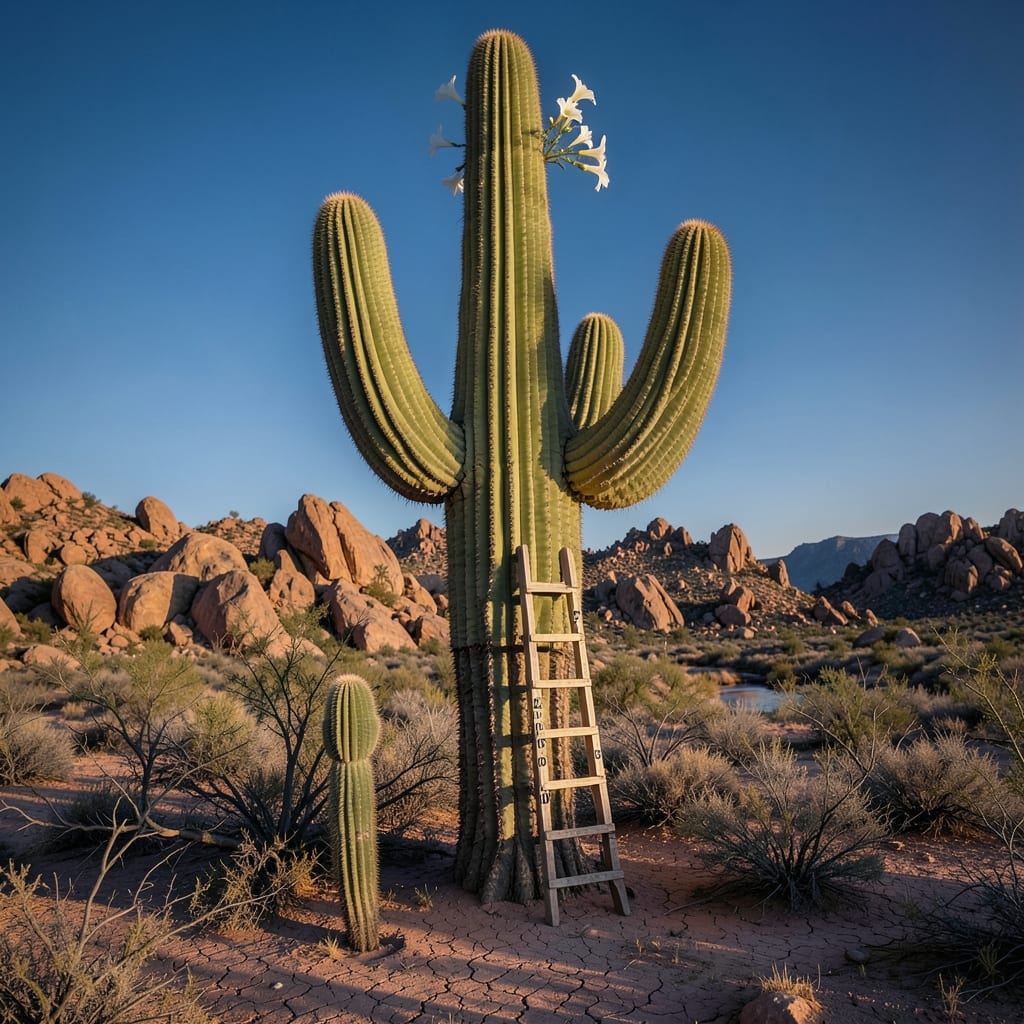
Ever wondered how tall a cactus can grow before it reaches the ceiling—or even your roof? The truth is, its final height depends entirely on the species, and the answers might surprise you.
Some cacti stay small enough for a desk, while others grow tall enough to dwarf a two-story house. Whether you're dreaming of a backyard jungle or just want a low-maintenance plant, understanding these growth patterns helps you pick the perfect fit for your space.
From the dwarf Mammillaria that barely reaches your hand to the massive Saguaro stretching over 50 feet, we’ll break down the heights you can expect—and how to nurture them for maximum growth.
Ready to discover which cacti will thrive in your home or garden? Let’s explore the stunning range of heights these resilient plants can achieve.

Cactus height by species: from tiny to towering giants
If you’ve ever marveled at a Saguaro cactus stretching toward the desert sky or admired a tiny Blossfeldia that fits on your thumbnail, you’ve witnessed the incredible range of cactus heights. Some species stay compact enough for windowsills, while others become architectural giants—like the Carnegiea gigantea, which can reach 50 feet tall in the wild. The key to choosing the right cactus for your space? Understanding these species-specific growth limits.
Cacti grow in every shape and size, from globular forms like the Echinocactus grusonii (barrel cactus) to columnar varieties like the Pachycereus pringlei (Mexican giant cactus). Even within a single genus, like Opuntia, you’ll find species ranging from 3-inch-tall ground huggers to 20-foot-tall trees. Let’s explore the extremes—and everything in between—to help you pick a cactus that thrives in your home or garden.
| Species | Mature Height | Growth Rate | Native Habitat | Best For |
|---|---|---|---|---|
| Blossfeldia liliputiana | 0.4 inches | Extremely slow | Peru/Bolivia | Desks, terrariums |
| Mammillaria spp. | 1–3 feet | Moderate | Mexico/Central America | Containers, windowsills |
| Ferocactus robustus | 3–6 feet | Slow to moderate | Mexico | Xeriscaping, rock gardens |
| Opuntia engelmannii | 6–12 feet | Fast | Southwestern U.S. | Fences, borders |
| Carnegiea gigantea (Saguaro) | 40–50 feet | Very slow (1 inch/year) | Sonoran Desert | Landscaping (large spaces) |
| Pachycereus pringlei | 60+ feet | Slow | Mexico | Specimen plants (rare) |
*Height varies by growing conditions and age.
Take the Blossfeldia liliputiana, for example—the world’s smallest cactus. This 0.4-inch wonder thrives in terrariums or as a desk companion, while its neighbor, the Mammillaria genus, stays between 1–3 feet tall, making them perfect for windowsill gardens. On the opposite end of the spectrum, the Pachycereus pringlei can dwarf a two-story house, requiring decades to reach its full height.
For home gardeners with limited space, columnar cacti like Cereus peruvianus (Peruvian apple cactus) are a great middle ground, growing 10–20 feet tall but staying relatively narrow. These are ideal for vertical gardening or as focal points in sunny backyard corners. Meanwhile, globular cacti like the Echinocactus grusonii (golden barrel) top out at 3 feet, making them versatile for containers or ground planting.
Even within a single species, growing conditions can dramatically alter height. A Saguaro cactus in its native Sonoran Desert might grow 50 feet, but the same species in a container garden in Zone 9 will likely stay under 10 feet. This variability is why container size and sunlight exposure matter so much—more on that in the next section!
If you’re dreaming of a desert oasis in your backyard, consider Opuntia species like Opuntia ficus-indica (prickly pear), which can form living fences up to 12 feet tall. For indoor spaces, smaller cacti like Gymnocalycium or Rebutia stay under 6 inches
What determines how tall a cactus grows: key factors
Your cactus's height isn't just luck—it's a mix of natural genetics, environmental conditions, and care habits. Even the same species can grow taller in ideal conditions versus neglect. Let's break down the five biggest factors that influence how tall your cactus becomes, so you can optimize growth (or keep it compact) based on your space and goals.
First, species genetics set the upper limit. A Saguaro cactus (Carnegiea gigantea) will always reach 40-50 feet in perfect conditions, while a Mammillaria stays under 6 inches. Think of it like choosing between a skyscraper and a tiny house—both are cacti, but their DNA dictates their potential maximum height. Even with perfect care, you can't turn a dwarf into a giant.
Sunlight exposure is the next game-changer. Most cacti crave 6+ hours of direct sun daily, but too much scorching heat (especially in hot climates) can stunt growth. In USDA Zones 9-11, provide afternoon shade to prevent sunburn, while cooler zones (like Zones 3-7) can handle full sun year-round. A cactus in a north-facing window might grow 30% slower than one basking in southern sunlight.
🌵
- ✅ Full sun (6+ hours): Ideal for most species (e.g., Saguaro, Prickly Pear)
- ⚠️ Partial shade (3-6 hours): Best for delicate species (e.g., Christmas Cactus) or hot climates
- ❌ Low light (<3 hours): Causes stretching ("etiolation"), weak growth, and pale color
- ✅ Deep soaks (bi-weekly): Encourages deep root growth in columnar cacti (e.g., Cereus)
- ⚠️ Overwatering: Leads to rot and stunted growth—especially in potted cacti
- ✅ Drought conditions: Mimics natural habitats; triggers slower but stronger vertical growth
- ✅ Root-bound pots: Restricts height in globular cacti (e.g., Echinocactus)
- ⚠️ Oversized containers: Encourages bushier (not taller) growth in columnar types
- ✅ Deep pots (12"+): Ideal for tall species like Pachycereus (up to 20 ft)
- ✅ Desert climates (Zones 9-11): Faster growth for native species (e.g., Ferocactus)
- ⚠️ Cooler zones (Zones 3-7): Slower growth; may need greenhouse protection in winter
- ✅ Humid zones: Risk of fungal issues; choose drought-tolerant species
Your watering habits play a surprising role too. While cacti are drought-lovers, infrequent deep watering (every 2-4 weeks) encourages roots to grow deeper, supporting taller growth in columnar species. Overwatering, however, triggers root rot and weak stems—imagine a skyscraper built on quicksand. For potted cacti, let the soil dry completely between waterings; in-ground plants need even less.
Don't underestimate the power of container size if you're growing cacti in pots. A root-bound cactus in a cramped container will focus energy on survival, not height. For columnar species like Pachycereus, use a deep pot (12"+) to accommodate their vertical growth. Meanwhile, globular cacti (e.g., Echinocactus) stay compact in shallow pots. Pro tip: If you want a bushier (not taller) cactus, repot into a wider container to encourage lateral growth.
Finally, climate and seasonal changes can dramatically alter growth rates. Cacti in desert climates (like Arizona or Mexico) grow aggressively year-round, while those in temperate zones (e.g., Zone 5) may enter dormancy in winter, halting height increases until spring. Even indoor cacti near a south-facing window grow faster than those in dim corners. Pay attention to your local frost dates—many cacti won’t resume growth until soil temps hit 60°F+.
🌵 By mastering these factors, you can either nurture a towering giant or keep your cactus at a manageable size—perfect for small spaces. The key? Observe your plant’s response to its environment and adjust care accordingly. Even the tiniest cactus can become a statement piece with the right conditions!