
Flowers
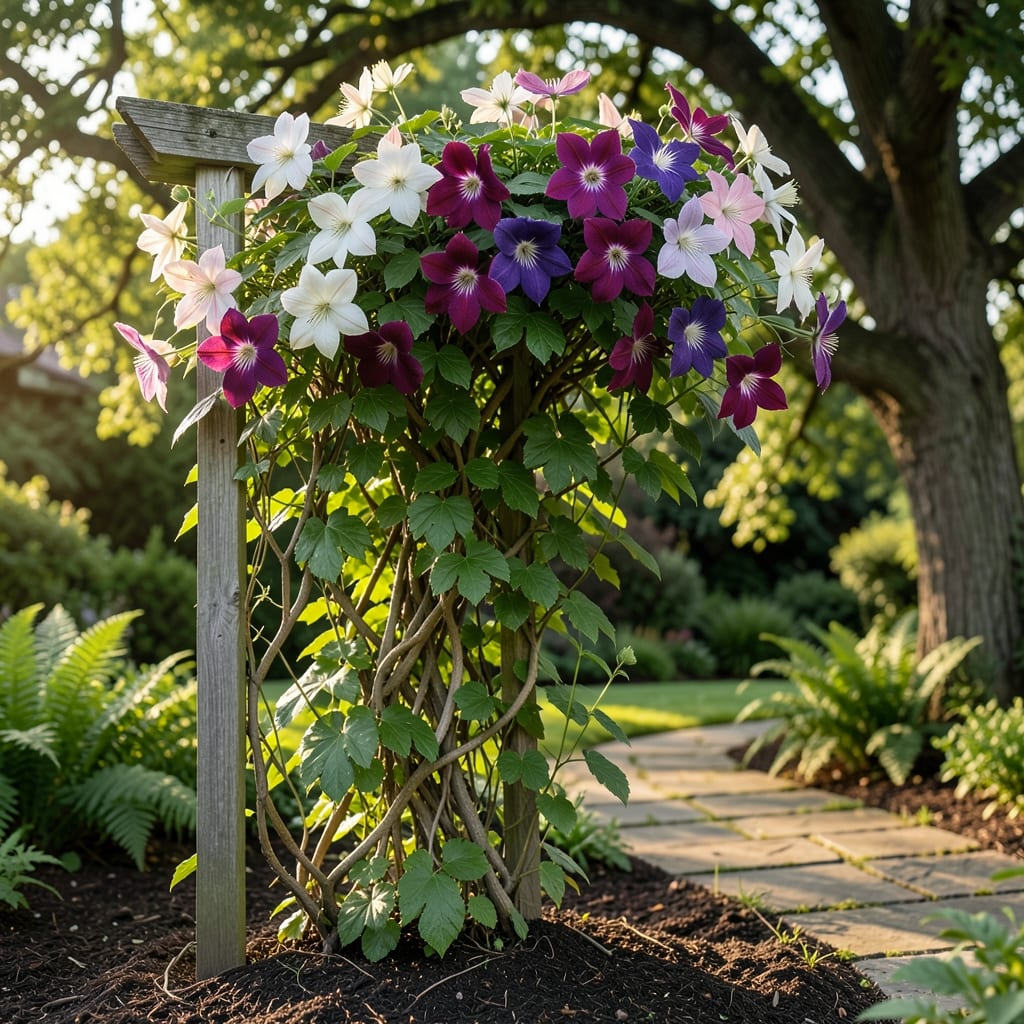
If you've ever dreamed of transforming your garden into a lush vertical paradise, you might be wondering just how tall can clematis grow. These stunning vines—often called the "queens of climbers"—can reach heights that will make your neighbors do a double take, with some varieties stretching up to 20 feet or more when given the right conditions.
The beauty of clematis lies in its incredible diversity. While some compact varieties stay cozy at 3 to 6 feet, others like the classic Clematis 'Jackmanii' can spiral skyward like a living sculpture, reaching 10 to 15 feet with proper care. But here's the kicker: their growth isn't just about genetics—it's also about where you plant them, how you prune them, and whether they have something sturdy to climb.
Whether you're working with a small balcony or a sprawling backyard, understanding these growth patterns is the key to creating your perfect vertical garden. I'll show you how to choose the right variety for your space, when to prune for optimal height, and even how to train these vines to behave—without sacrificing their breathtaking blooms.
Ready to turn your garden into a clematis wonderland? Let's dive into the world of these climbing superstars and discover how to make the most of their incredible height potential—no matter how big (or small) your space may be.


Clematis vine heights by type: from compact to towering giants
Clematis vines are nature's vertical artists, capable of transforming any garden space into a lush, flowering canopy. But their mature height varies dramatically—from 3-foot dwarf varieties to 20-foot giants that dwarf even the tallest shrubs. Understanding these differences helps you choose the perfect vine for your garden's scale and design goals.
The height range of clematis depends on three key factors: the variety you select, the pruning group it belongs to, and the support structure you provide. Some varieties naturally stay compact, while others need strong trellises or arbors to reach their full potential. Let's explore the spectrum from smallest to largest.
| Variety Type | Mature Height | Growth Habit | Best For |
|---|---|---|---|
| Dwarf Varieties | 3-6 ft | Compact, bushy growth | Containers, small gardens, window boxes |
| Semi-Dwarf | 6-10 ft | Moderate climbing | Small patios, trellises, arbors |
| Standard Varieties | 10-15 ft | Aggressive climber | Large pergolas, fences, walls |
| Giant Varieties | 15-20+ ft | Fast-growing, sprawling | Large structures, privacy screens |
🌸 Popular Examples:
- 'Jackmanii' (10-15 ft) – Classic purple giant
- 'Comtesse de Bouchard' (6-10 ft) – Fragrant pink semi-dwarf
- 'Nipponensis' (3-6 ft) – Dwarf with delicate flowers
- 'Perle d'Azur' (15-20 ft) – Blue giant for bold statements
For example, the Jackmanii clematis—a large-flowered variety—typically reaches 10-15 feet with proper care, making it ideal for covering large trellises or privacy screens. In contrast, dwarf varieties like 'Nipponensis' stay between 3-6 feet, perfect for window boxes or small containers on patios.
Your pruning group also plays a role in height control. Group 3 varieties (heavily pruned) often stay shorter than Group 1 (minimal pruning). For instance, 'Comtesse de Bouchard' (Group 2) might reach 8-10 feet with light pruning, while 'Jackmanii' (Group 3) can be kept at 6-8 feet with aggressive spring pruning.
Even within the same height category, growth habits vary. Some varieties like 'Hagley Hybrid' grow 12-15 feet but spread only 3-4 feet wide, making them ideal for narrow spaces. Others, like 'Montana', can sprawl 10-15 feet wide while reaching 10 feet tall, requiring more horizontal space.
If you're working with limited vertical space, consider semi-dwarf varieties like 'Betty Corning' (6-8 ft) or 'The President' (8-10 ft). These still offer stunning blooms without overwhelming smaller gardens. For urban balconies, dwarf clematis in hanging baskets can reach 3-5 feet with proper training.
Remember, support structures directly impact height potential. A weak trellis may limit growth, while a strong arbor encourages vines to climb higher. For giant varieties, consider metal or wooden arbors that can support 20+ feet of vine weight. Smaller varieties may thrive on obelisks or wire cages in containers.
When planning your garden layout, measure your available vertical space and choose clematis varieties that match. A 10-foot fence could accommodate
How pruning affects clematis height: when & how to control growth
Pruning isn't just about keeping your clematis neat—it's the secret weapon for controlling vine height and encouraging bigger blooms. Different clematis varieties respond to pruning in unique ways, so understanding your plant's pruning group is key. Group 1, like 'Jackmanii', needs minimal pruning, while Group 3, such as 'Comtesse de Bouchard', thrives with aggressive cuts back to strong buds.
Timing matters too. Prune Group 1 clematis in late winter or early spring before new growth begins. For Group 2 and 3 varieties, wait until late winter or early spring, but be prepared to make cuts after flowering if needed. This ensures you don’t remove next year’s blooms by accident.
Here’s how pruning directly impacts height: Hard pruning (cutting back by ⅓ to ½) keeps vines manageable, often reducing height by 30-50% in a single season. Light pruning (removing only dead or weak stems) lets vines grow taller but may lead to overgrowth if not monitored. Always use sharp, clean pruners to avoid disease and encourage faster regrowth.
🌿 Step-by-Step Pruning Guide by Group
- Step 1: Identify your clematis pruning group (1, 2, or 3) based on bloom time and growth habit.
- Step 2: Wait until late winter or early spring (just before new growth starts) for Groups 1 and 2. Group 3 can be pruned after flowering if needed.
- Step 3: Use sterilized pruners to cut back Group 1 to 2-3 feet tall, leaving 2-3 buds on each stem.
- Step 4: For Group 2, prune to 3-4 feet, keeping 4-6 buds per stem. Group 3 should be cut back to 12-18 inches, leaving 3-5 buds.
- Step 5: Remove dead or weak stems at the base, and thin out crowded growth to improve airflow and reduce disease risk.
- Step 6: Apply a balanced fertilizer (5-10-10) after pruning to encourage strong regrowth and abundant blooms.
Common pruning mistakes can backfire—like cutting too late in the season, which stunts new growth, or using dull tools that tear stems instead of cleanly cutting them. Always prune on a dry, sunny day to reduce stress on the plant. If your clematis is overgrown beyond control, don’t panic: gradual pruning over 2-3 years can bring it back to a manageable height.
For tall clematis varieties like 'Nelly Moser', pruning isn’t just about height—it’s about encouraging upward growth. Train vines along a strong trellis or arbor and prune side shoots to direct energy toward the main stems. This technique can turn a 15-foot vine into a stunning vertical focal point without overwhelming your garden.
Remember, every cut is an investment in next year’s blooms. With the right pruning strategy, you can keep your clematis at your ideal height—whether that’s a compact 6 feet or a soaring 20 feet. Start small, observe how your plant responds, and adjust your approach each year for the best results. 🪴