
Size
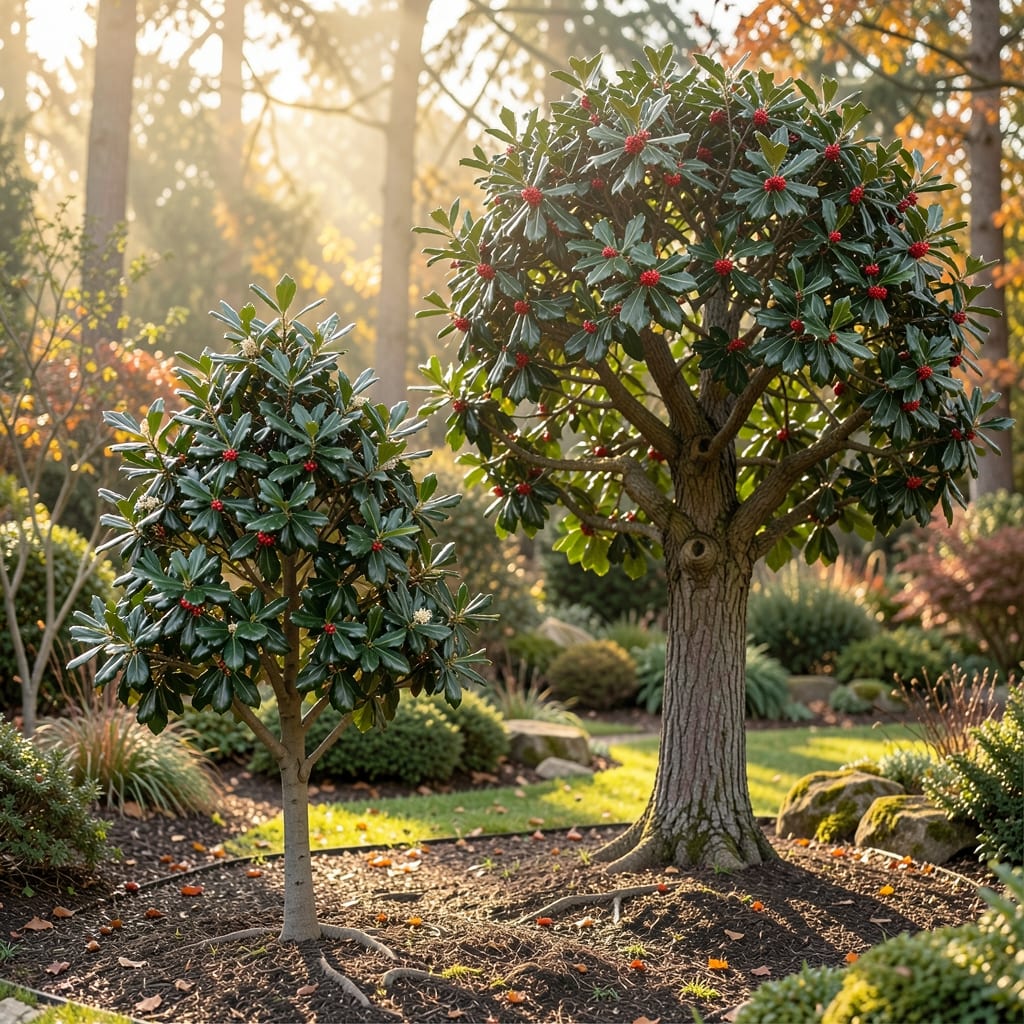
If you're wondering how tall can holly trees grow, the answer might surprise you—these evergreen beauties can stretch from tiny 8-foot shrubs to towering 60-foot giants, depending on the species. Whether you're planning a cozy backyard hedge or a dramatic privacy screen, knowing the right variety for your space is key.
The Holly Tree 🌳 you choose makes all the difference. American holly, for example, can reach heights of 25-60 feet in ideal conditions, while dwarf varieties like Ilex crenata stay neatly between 8-12 feet. Even in USDA Zone 6a, where many gardeners live, the right pruning and care can help you control their growth naturally.
But height isn’t the only factor—growth speed and climate play a huge role. Some holly trees grow 12-24 inches per year, while others take their time. If you're working with limited space, we’ll show you how to keep them manageable without sacrificing their stunning berries and glossy leaves.
Ready to find the perfect holly for your garden? Let’s dive into the details so you can make an informed choice that fits your landscape dreams—and your yard’s reality.

Holly tree height by species: from dwarf varieties to towering giants
Choosing the right holly tree means understanding their height potential. Some varieties are perfect for small gardens, while others become majestic focal points. The American holly (Ilex opaca), for example, can grow a stunning 25-60 feet tall—taller than most two-story homes! But if you’re working with limited space, dwarf varieties like Ilex crenata stay between 8-12 feet, making them ideal for hedges or container gardening.
Not all holly trees follow the same growth pattern. Some, like the English holly (Ilex aquifolium), reach 30-50 feet in ideal conditions, while others, such as Ilex × 'Blue Princess', remain compact at 6-10 feet. The key is matching the species to your yard’s size and your landscaping goals—whether you want a privacy screen, an ornamental accent, or a low-maintenance hedge.
Below is a quick reference table to help you visualize how tall different holly varieties can grow at maturity. This will help you plan your garden layout with confidence and avoid overcrowding or underutilized space.
| Variety | Mature Height (ft) | Best For |
|---|---|---|
| American Holly (Ilex opaca) | 25-60 | Privacy screens, large yards |
| English Holly (Ilex aquifolium) | 30-50 | Ornamental trees, hedges |
| Dwarf Holly (Ilex crenata) | 8-12 | Containers, small gardens |
| Inkberry Holly (Ilex glabra) | 10-20 | Wet soils, shrub borders |
| Winterberry (Ilex verticillata) | 6-12 | Wetland gardens, wildlife habitats |
| Nellie R. Stevens (Ilex × 'Nellie R. Stevens') | 15-25 | Hedges, privacy screens |
| Blue Princess (Ilex × 'Blue Princess') | 6-10 | Containers, bonsai-style |
| Golden King (Ilex aquifolium 'Golden King') | 10-15 | Accent plants, small yards |
If you’re in USDA Zone 6a or similar climates, most holly trees will thrive, but their height can vary based on soil quality, sunlight exposure, and pruning habits. For instance, the American holly grows fastest in full sun with well-draining soil, while Ilex crenata (dwarf holly) prefers partial shade and stays smaller even with minimal care.
One of my favorite compact options is the winterberry holly, which typically stays
How fast do holly trees grow? Growth rates by species and climate zones
Holly trees don’t grow overnight, but their annual growth rates can vary dramatically—from 6 inches per year in dwarf varieties to a robust 24 inches per year in fast-growing species like Ilex opaca. Understanding these rates helps you predict how quickly your holly will reach its mature height, whether you’re planning for a privacy screen or a backyard accent.
Climate plays a huge role in growth speed. In USDA Zones 7-9, holly trees often grow faster due to longer growing seasons, while colder zones like Zone 5 may see slower growth. For example, Ilex × 'Nellie R. Stevens' can add 12-18 inches annually in warm climates but may only grow 6-12 inches in cooler regions.
Here’s how different holly species compare in terms of growth speed, so you can set realistic expectations for your garden:
If you’re in a warmer climate, you can expect faster growth, but even in cooler areas, holly trees are slow to moderate growers. For instance, Ilex glabra (inkberry) typically grows 12 inches per year, while Ilex verticillata (winterberry) may grow 18-24 inches annually in ideal conditions. Patience is key—most holly trees take 10-15 years to reach their full height potential.
To maximize growth, focus on soil quality, consistent watering, and seasonal care. Holly trees thrive in well-draining soil with partial shade to full sun, and a balanced fertilizer in spring and summer can give them the nutrients they need to grow faster. Avoid over-fertilizing, though—too much nitrogen can lead to leafy growth at the expense of berries.
For gardeners in USDA Zone 6a, like many in the Midwest, winter can slow growth, but spring and summer are prime times to encourage healthy expansion. If you’re planting a holly for privacy or shade, choose a faster-growing variety like Ilex × 'Blue Princess' (12-18 inches/year) to see results sooner. For smaller spaces, dwarf varieties like Ilex crenata will grow at a more manageable pace.
Remember, even the fastest-growing holly trees won’t reach their full height overnight. With the right care, you’ll see steady progress—whether you’re aiming for a 60-foot giant or a compact 10-foot shrub. The key is choosing the right species for your space and climate, then giving it the time and attention it needs to thrive. 🌿