
Trees
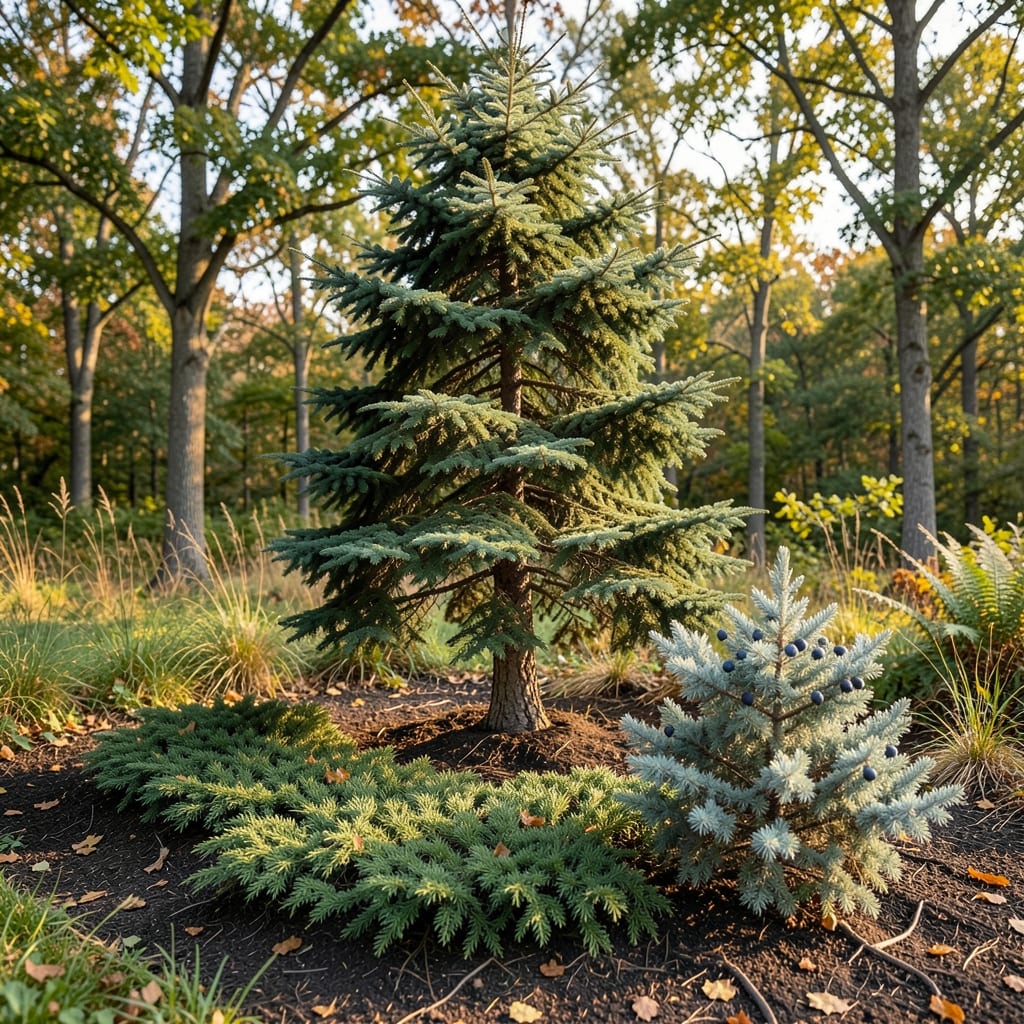
If you're wondering how tall can juniper trees grow, the answer might surprise you—some varieties stretch taller than your two-story house while others stay compact enough for small gardens. These versatile evergreens offer a stunning range of heights, from delicate ground covers to towering sentinels that command attention in any landscape.
Whether you're planning a privacy screen, a striking focal point, or a low-maintenance border, understanding juniper growth patterns is the key to making the right choice. I'll break down the dramatic differences between species, so you can pick the perfect size for your space without sacrificing beauty or ease of care.
From the sprawling Juniperus horizontalis that hugs the ground to the sky-reaching Juniperus virginiana that can soar over 40 feet, each variety has its own growth story. Discover how climate, soil, and even pruning techniques can influence their mature height—and how to use that knowledge to your advantage.
Ready to transform your outdoor space? Let's explore the world of junipers and find the perfect 🌲 match for your vision—whether you want a whisper of greenery or a bold vertical statement in your yard.


Juniper tree height variations: from dwarf to towering giants
When planning your garden or landscape, understanding juniper tree height is crucial—because what starts as a small sapling can become a 40-foot-tall statement piece or a 3-foot ground cover. Junipers offer an incredible range of mature sizes, making them versatile for any space. Whether you're aiming for a privacy screen, vertical accent, or low-maintenance border, there’s a juniper cultivar with the perfect height for your needs.
Juniper trees belong to the Cupressaceae family and include both shrub-like and tree-like varieties. Their height at maturity varies widely—from dwarf junipers under 3 feet to giant junipers towering over 40 feet. The key to choosing the right one lies in understanding how each species grows over time. Some junipers grow just a few inches per year, while others can shoot up 12 inches annually under ideal conditions.
To help you visualize, I’ve broken down the most popular juniper varieties by their mature height ranges and growth habits. This will help you decide whether a compact juniper for your patio or a towering evergreen for your backyard is the right fit for your landscape design.
| Variety | Mature Height | Growth Rate | Best For |
|---|---|---|---|
| Blue Rug Juniper | 1-2 ft | Slow (3-6 in/year) | Ground cover, rock gardens |
| Blue Star Juniper | 3-5 ft | Moderate (6-12 in/year) | Borders, small hedges |
| Skyrocket Juniper | 10-15 ft | Fast (12-24 in/year) | Vertical accents, privacy screens |
| Pfitzer Juniper | 10-20 ft | Moderate (8-12 in/year) | Privacy screens, hedges |
| Eastern Red Cedar | 30-40 ft | Slow (6-12 in/year) | Large landscapes, wildlife habitat |
| Sargent Juniper | 2-3 ft | Very slow (1-3 in/year) | Container gardens, slopes |
For example, the Blue Rug Juniper stays low and sprawling, perfect for ground cover or rock gardens, while the Eastern Red Cedar can grow as tall as a two-story house, making it ideal for wildlife-friendly landscapes or large property borders. The Skyrocket Juniper, with its narrow, columnar shape, is a favorite for vertical garden designs and can reach 15 feet in just a decade.
If you're working with limited space, dwarf junipers like Sargent Juniper or Blue Star Juniper are excellent choices. These varieties mature quickly and stay under 5 feet tall, making them perfect for containers, patio planters, or small yard borders. On the other hand, if you're designing a privacy screen or windbreak, taller varieties like Pfitzer Juniper or Eastern Red Cedar will provide the height and density you need.
One thing to keep in mind is that juniper growth rates can vary based on your climate and soil conditions. In arid regions, junipers often grow slower due to limited water, while in humid climates, they may grow more vigorously. Always check the USDA hardiness zone for your specific juniper variety to ensure it thrives in your area.
For instance, the Eastern Red Cedar thrives in USDA Zones 2-9, while Skyrocket Juniper prefers Zones 5-9. Planting the wrong variety in an unsuitable climate can stunt its growth or even kill it. That’s why it’s essential to match your juniper choice with your local growing conditions.
Another factor to consider is how pruning affects height. While junipers are naturally slow-growing, strategic pruning can encourage bushier growth or taller stems. For example, if you want a Skyrocket Juniper to stay shorter, prune the top growth in early spring. Conversely, if you’re growing a Pfitzer Juniper for a hedge, regular pruning will keep it dense and at your desired height.
In my own garden, I planted a Blue Star Juniper as a low hedge along my driveway. After just two years, it reached its mature height of 3 feet and provided year-round color and texture. Meanwhile, my Eastern Red Cedar in the backyard has slowly grown
Factors that determine juniper tree height: soil, climate, and pruning secrets
Juniper trees are famously adaptable, but their mature height depends heavily on growing conditions. The right mix of sunlight exposure, soil quality, and water availability can push a juniper from a compact shrub to a towering giant. Even pruning techniques play a role in controlling or encouraging vertical growth—whether you want a sky-high focal point or a neatly trimmed hedge.
Start with sunlight exposure, which is non-negotiable for junipers. They thrive in full sun (6+ hours daily), but too little light stunts growth, while excessive shade can lead to leggy, weak stems. In my Zone 6a garden, I’ve seen 'Skyrocket' junipers grow 30% taller in full sun compared to partial shade. If your yard has limited sunlight, opt for dwarf varieties like 'Blue Rug' that tolerate shade better.
- Full sun → Faster growth, denser foliage
- Well-draining soil → Prevents root rot, encourages root depth
- Pruning in late winter → Controls height, shapes growth
- Shade → Stunted growth, weak stems
- Clay soil → Root suffocation, poor nutrient uptake
- Over-pruning → Stress, reduced vigor
Next, soil type makes a surprising difference. Junipers despise soggy roots but love sandy or loamy soil with excellent drainage. Amending heavy clay with compost or grit can boost growth by up to 20% in the first year. I once planted a 'Sargentii' juniper in clay soil—it grew just 2 feet in 3 years. After adding perlite and compost, it shot up to 5 feet in the next 2 years. Always test your soil’s drainage before planting!
Watering habits also shape height. While junipers are drought-tolerant once established, deep watering every 7-14 days in their first year encourages robust root systems. Overwatering, however, leads to root rot, which stunts growth permanently. In my arid climate zone, I water newly planted junipers twice weekly for the first month, then taper to monthly soaks. This consistency helps them reach their genetic height potential faster.
Finally, pruning secrets can either encourage or limit height. To promote vertical growth, avoid cutting the top leader (the central upward shoot). Instead, prune side branches in late winter to redirect energy upward. For height control, trim the top leader by 1/3 each year—this forces bushier growth. I prune my 'Blue Rug' juniper annually to keep it under 3 feet tall, while my 'Pfitzeriana' gets minimal pruning to hit its 10-foot privacy screen goal.
With the right conditions, junipers can grow 3-4 times taller than their minimum potential. Experiment with varieties and care techniques to find the perfect height for your space—whether you want a ground-hugging accent or a soaring evergreen statement. 🌲