
Trees
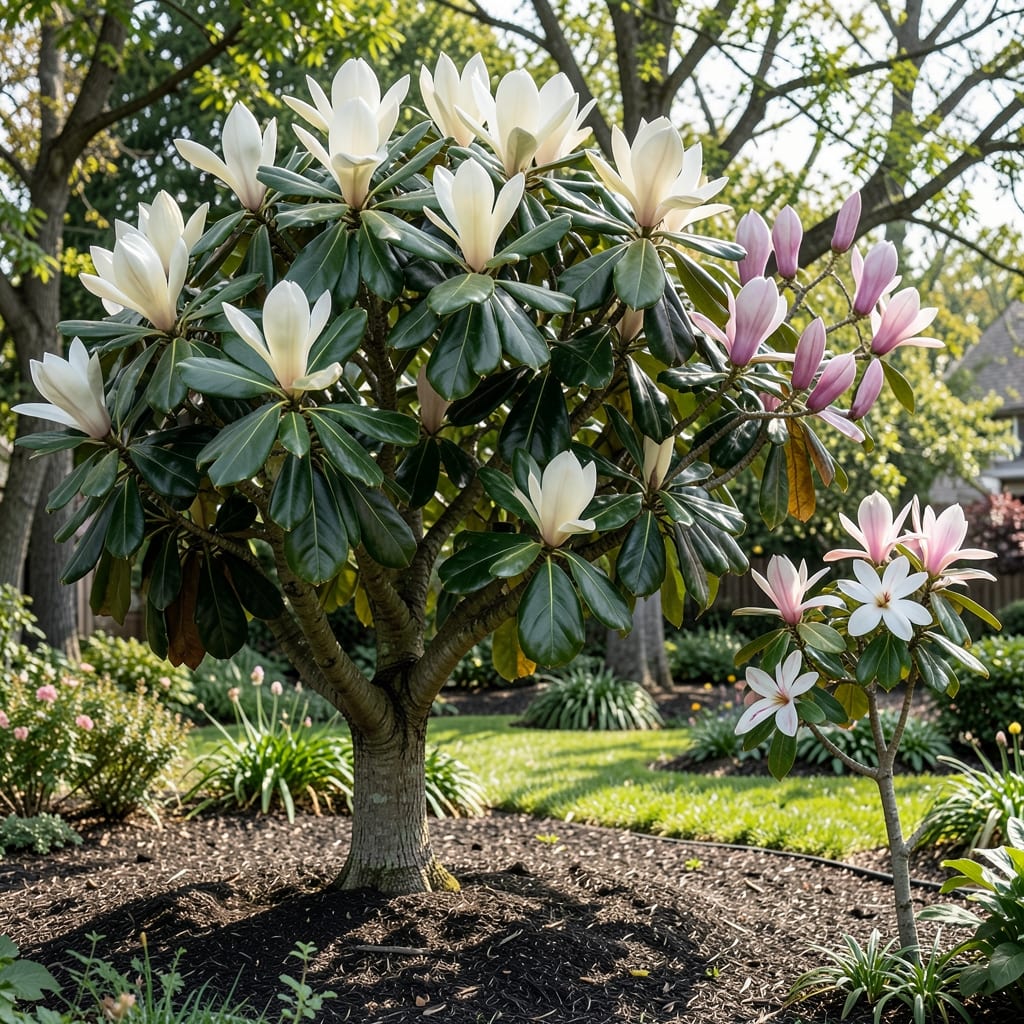
If you're wondering "how tall can magnolia trees grow", the answer might surprise you—these stunning 🌸 trees can stretch from cozy backyard heights to towering giants that dwarf your home. Some dwarf varieties stay under 15 feet, while species like the Southern magnolia reach 80-100 feet at maturity, making them one of the most dramatic trees in your landscape.
But their height isn't just about species—climate, soil quality, and proper care play huge roles in how tall (or contained) your magnolia becomes. Whether you're dreaming of a fragrant canopy or need a compact ornamental tree, understanding these factors will help you pick the perfect variety for your space and zone.
From the delicate blooms of Magnolia stellata (which maxes out around 20 feet) to the majestic Magnolia grandiflora (a 60-80 foot giant), we'll break down the height ranges and what you can do to shape your tree's growth. Ready to find the perfect fit for your garden?
The best part? With the right spacing, pruning, and care, you can enjoy a magnolia that thrives without overwhelming your yard. Let's explore how to get the height you want—whether that's a small accent tree or a grand statement piece.


Magnolia tree height by species: from dwarf to giant varieties
Magnolia trees come in a stunning range of sizes, from compact dwarf varieties perfect for small gardens to towering giants that dominate landscapes. The species and cultivar you choose will determine whether your magnolia stays under 15 feet or stretches toward the sky at 100 feet or more.
For example, the Magnolia stellata (star magnolia) typically reaches 15-25 feet at maturity, making it ideal for medium-sized yards. In contrast, the Magnolia grandiflora (Southern magnolia) can grow 60-80 feet tall, requiring ample space and careful planning.
If you're short on space, consider Magnolia 'Little Gem', a dwarf variety that tops out at 15-20 feet while still delivering fragrant blooms. On the other end of the spectrum, the Magnolia campbellii can reach 30-40 feet, offering a balance between grandeur and manageability.
Here’s a quick comparison to help you visualize the differences:
| Variety | Mature Height | Best For | USDA Zones |
|---|---|---|---|
| Magnolia stellata | 15-25 ft | Small to medium gardens | 4-8 |
| Magnolia 'Little Gem' | 15-20 ft | Urban yards, containers | 7-10 |
| Magnolia grandiflora | 60-80 ft | Large estates, parks | 6-10 |
| Magnolia campbellii | 30-40 ft | Medium to large gardens | 6-9 |
| Magnolia tripetala | 40-50 ft | Woodland gardens | 4-8 |
Your climate zone also plays a role in how tall your magnolia will grow. For instance, Magnolia grandiflora thrives in USDA Zones 6-10 and can reach its full height potential in warmer regions, while Magnolia stellata prefers cooler zones (4-8) and grows more slowly in heat.
For small spaces, hybrid varieties like Magnolia 'Black Tulip' (20-25 feet) or Magnolia 'Jane' (15-20 feet) are excellent choices. These cultivars deliver vibrant blooms without overwhelming your landscape.
If you're planning to plant a magnolia near your home, always check the mature height of the species and ensure it won’t interfere with power lines or foundations. A well-placed magnolia can add timeless beauty to your property for decades—just choose the right size for your space!
🌸
How to control magnolia tree height: pruning, spacing, and care tips
Magnolia trees grow at their own pace, but with the right techniques, you can guide their height to fit your garden. The key lies in pruning strategies, planting spacing, and understanding how soil and sunlight influence growth. Even towering varieties like Magnolia grandiflora can be managed to stay within bounds—if you know when and how to intervene.
For dwarf varieties (like Magnolia 'Black Tulip'), minimal pruning is needed, but standard trees may require annual shaping to prevent overgrowth. The best time to prune is late winter or early spring, just before new growth begins. This ensures you’re not removing next year’s blooms, which form on old wood in most magnolias.
🌸 Pro Tip: Always use sterilized pruning tools to avoid spreading disease. Wipe blades with rubbing alcohol between cuts, and make clean cuts just above a bud or branch collar to promote faster healing.
Give your magnolia room to grow! Dwarf varieties need 8-10 feet of clearance, while standard trees require 20-30 feet from structures or other plants. Planting too close forces competition for nutrients and sunlight, stunting growth or encouraging uncontrolled height spikes.
Remove suckers and water sprouts (thin, vertical shoots) to redirect energy into stronger branches. For height control, focus on topping only as a last resort—it can create unsightly regrowth. Instead, prune side branches to encourage a fuller, shorter silhouette.
Use a balanced fertilizer (10-10-10) in early spring to promote steady growth. Avoid heavy nitrogen in summer, which can spur rapid, weak growth that’s prone to breakage. Mulch around the base with 2-3 inches of organic mulch to retain moisture and regulate soil temperature.
Magnolias thrive in well-draining, slightly acidic soil (pH 5.0-6.5). Poor soil or excessive shade slows growth, while too much sun can stress the tree, leading to heightened vulnerability to pests. Test your soil annually and amend with compost or peat moss if needed.
Deep watering once a week during dry spells encourages strong root development, which supports controlled height growth. Overwatering can lead to root rot, while underwatering stresses the tree, causing it to grow taller and leggier in search of sunlight.
If you’re dealing with a mature magnolia that’s already outgrown its space, don’t despair. Structural pruning can help restore balance, but it’s best done by a professional for large trees. For younger trees, consistent care in their first 5 years sets the foundation for a lifetime of controlled growth.
🌿 Remember: Magnolias grow slower than many other trees, so patience is key. With the right approach, you can enjoy their stunning blooms and lush foliage without sacrificing your garden’s layout.