
Trees
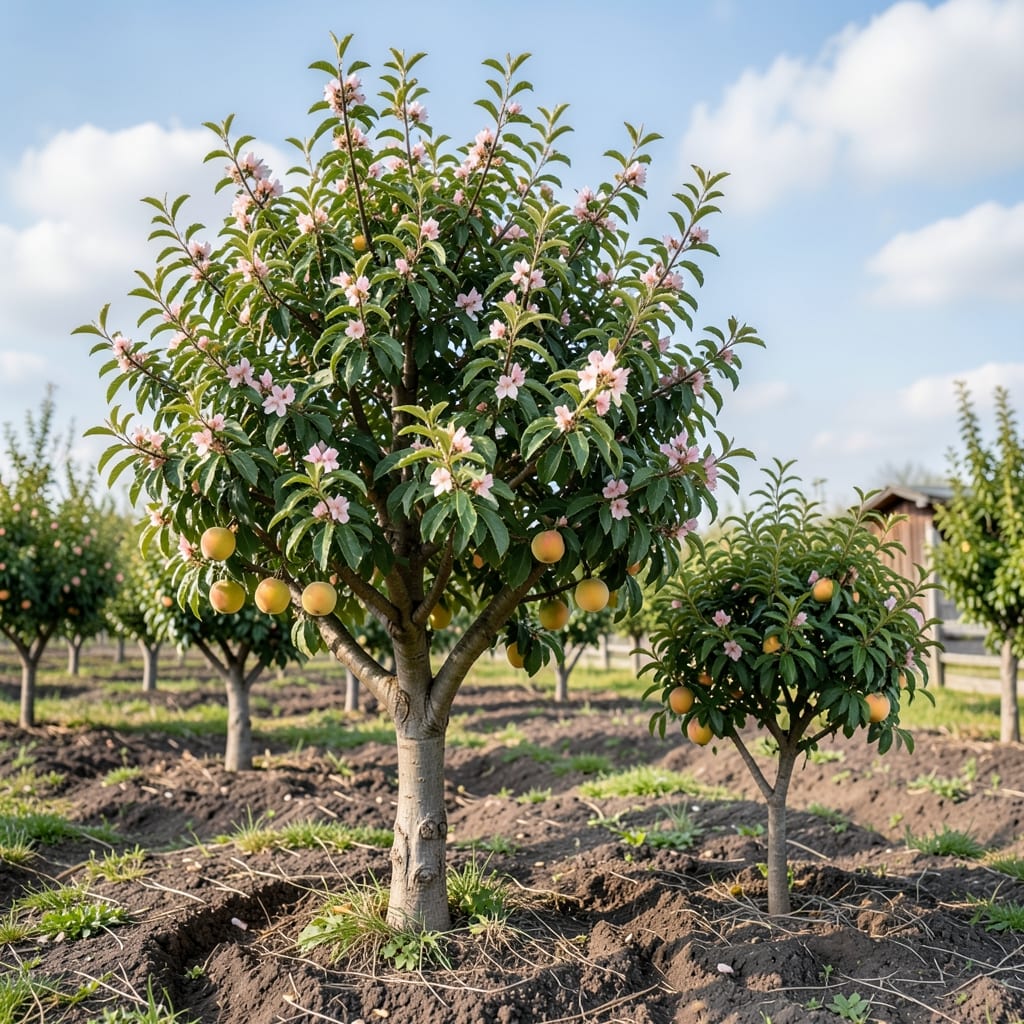
If you’ve ever dreamed of plucking fresh peaches straight from your backyard, you might be wondering just how tall that 🍑 peach tree could grow—because the answer isn’t one-size-fits-all. Some varieties stretch toward the sky like a two-story skyscraper, while others stay compact enough to fit cozy patios.
The height of your peach tree depends on its variety, rootstock, and how you prune it. Standard trees can reach 20 to 25 feet, towering over fences and rooftops, while dwarf varieties stay a manageable 8 to 12 feet. Choosing the right size for your space is the first step to avoiding a backyard jungle.
But here’s the good news: with the right techniques, you can control growth and keep your tree at your ideal height. Whether you’re working with a sprawling standard or a compact dwarf, I’ll show you how to balance size, fruit production, and long-term care.
Ready to pick the perfect peach tree for your garden? Let’s break down the heights, spacing needs, and pruning secrets that’ll keep your tree thriving—and your yard looking its best.

Peach tree height by variety: dwarf, semi-dwarf, and standard size ranges
Peach trees are stunning additions to any garden, but their mature height can vary dramatically depending on the variety and rootstock. Standard varieties often reach 20-25 feet tall, while dwarf and semi-dwarf options stay much more manageable. Understanding these differences helps you choose the perfect tree for your space and maintenance style.
For home gardeners with limited space, dwarf peach trees are ideal—they typically grow 8-12 feet tall. These compact trees are grafted onto special rootstock like Lovell or Nemaguard, which restrict their growth while maintaining fruit quality. Semi-dwarf varieties bridge the gap, reaching 12-18 feet at maturity.
The rootstock plays a crucial role in determining height. Standard trees, grafted onto seedling rootstock, can soar to 25 feet or more, while dwarf rootstock keeps them under control. Always check the label when buying a tree to ensure it matches your yard’s dimensions.
Popular varieties also influence height. For example, the Elberta peach tree is a standard variety that can reach 20 feet, while the Redhaven stays slightly shorter at 15-18 feet. Dwarf varieties like Reliance or Bonanza are perfect for containers or small backyards.
Here’s how these heights compare in real-world scenarios:
| Variety | Rootstock | Mature Height | Best For |
|---|---|---|---|
| Elberta | Seedling | 20-25 ft | Large yards |
| Redhaven | Seedling | 15-18 ft | Medium spaces |
| Reliance (Dwarf) | Lovell | 8-12 ft | Containers, small yards |
| Bonanza (Dwarf) | Nemaguard | 8-10 ft | Urban gardens |
| Sanguinelle (Semi-Dwarf) | Half-dwarf | 12-15 ft | Balconies, patios |
If you’re planting near a fence or power line, dwarf varieties are your best bet. They require less pruning and fit neatly into smaller spaces. However, even dwarf trees need proper spacing—plant them at least 6-8 feet apart to ensure airflow and prevent disease.
For larger properties, standard trees offer better fruit production and longevity. Just be prepared for their towering presence—these trees can cast massive shadows and may require regular pruning to manage height and shape.
Another factor to consider is growth rate. Dwarf trees mature faster, often reaching fruit-bearing age in 2-3 years, while standard trees may take 5-7 years to produce significant yields. This makes dwarf varieties ideal for impatient gardeners!
No matter which variety you choose, always research local climate suitability. Some peach trees thrive in USDA Zones 5-9, while others prefer warmer regions. Matching your tree to your climate ensures healthier growth and better fruit production.
Pruning techniques to control peach tree height and fruit production
Controlling the height of your peach tree isn’t just about aesthetics—it’s about maximizing fruit production and tree health. With strategic pruning techniques, you can guide growth to fit your space while ensuring abundant harvests. The key lies in understanding when and how to prune, as well as which method suits your tree’s natural shape.
Most peach trees grow using either an open-center (vase-shaped) or central leader (single-trunk) form. Open-center trees are easier to prune for height control, while central leader trees require more careful pruning to avoid weak branch structures. I recommend starting with the open-center form for beginners, as it naturally lends itself to better airflow and sunlight penetration.
🌱
Step-by-Step Pruning Guide for Height Control
- 🌿 Early Spring (Dormant Season)
Remove dead, diseased, or crossing branches using clean, sharp pruners. Aim to open the center for better airflow. - ✂️ Late Winter (Before Bud Break)
Cut back suckers and water sprouts to redirect energy to fruit production. Limit height increase by trimming 1/3 of new growth from last season. - ☀️ Summer (After Harvest)
Lightly prune to thin out crowded branches. Remove any shoots growing straight up (vertical growth) to encourage outward branching. - 🍑 Fall (Minimal Pruning)
Avoid heavy pruning; only remove weak or diseased wood. Focus on cleaning up fallen fruit to prevent pests.
For dwarf varieties, you’ll want to prune more aggressively in early spring to maintain their compact size. These trees can grow 8-12 feet tall without intervention, but regular pruning keeps them at 6-8 feet. Use a 3-cut method when removing larger branches to prevent tearing the bark and invite disease.
One common mistake is pruning too late in the season, which can stimulate new growth that won’t harden off before winter. Always prune during the dormant season (late winter/early spring) for best results. And remember, never remove more than 25% of the tree’s foliage in one season—this can stress the tree and reduce fruit production.
If your peach tree is already too tall, don’t panic. You can gradually reduce its height over 2-3 years by making 1-foot cuts annually. Just be patient—rushing the process can shock the tree. For a more dramatic change, consider topping the tree (cutting the main trunk), but this should only be done as a last resort, as it can reduce fruit quality.
🪴