
Size
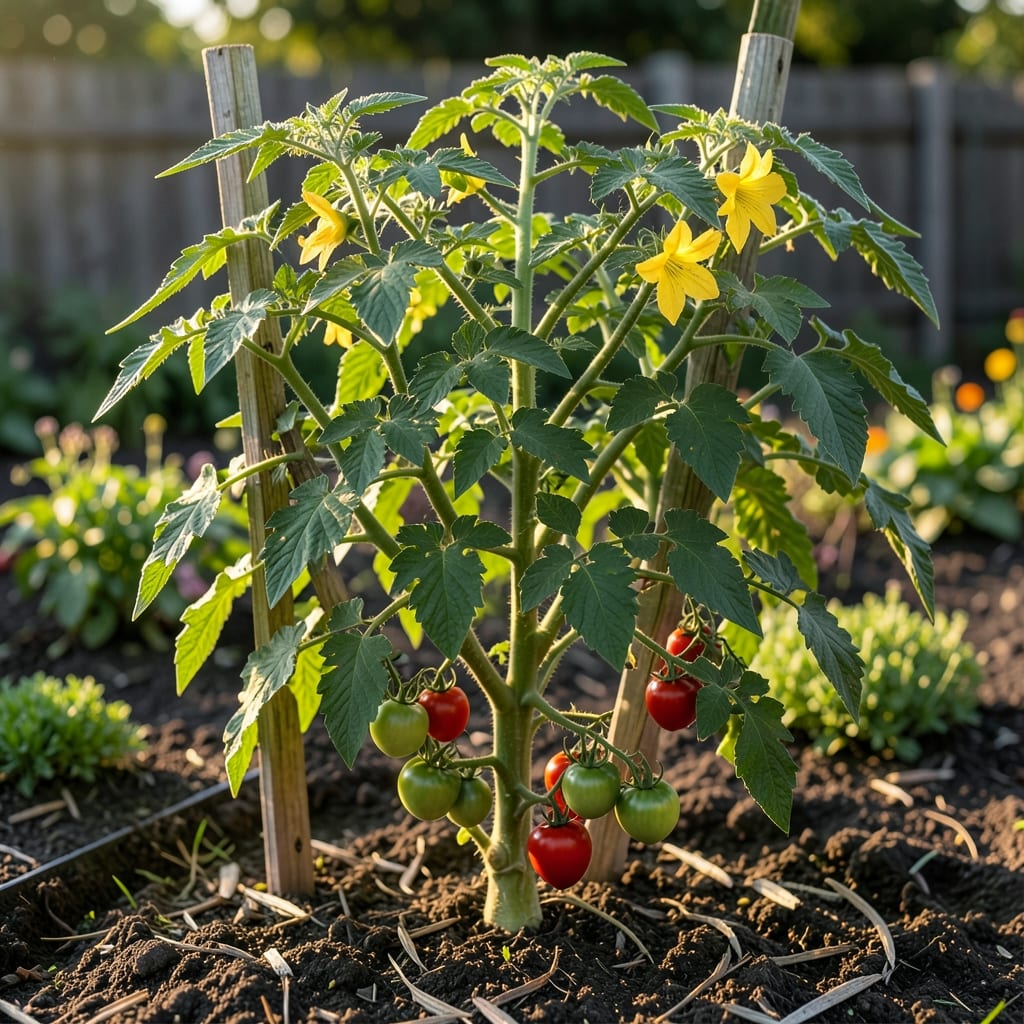
Have you ever wondered how tall tomatoes can grow in your garden—or if those sprawling vines are secretly plotting to take over your fence? The answer depends entirely on the variety, and the difference between a compact bush and a towering vine can be staggering.
Some tomato plants stay neatly under 3 feet, perfect for containers or small gardens, while others can stretch toward 12 feet if given the right conditions. The key lies in understanding whether you’re growing determinate (bush) or indeterminate (vining) varieties—and how to support (or contain) them without sacrificing yield.
In this guide, I’ll break down the height ranges of popular tomato types, share space-saving hacks for urban gardeners, and debunk myths about how much room these plants really need. Whether you’re dealing with a 3-foot dwarf or a 10-foot giant, you’ll learn how to maximize your harvest—no matter how much (or little) space you’ve got.
Ready to turn your tomato patch into a vertical wonderland? Let’s get growing.

Tomato varieties ranked by height: from dwarf to sky-high giants
Tomatoes aren’t one-size-fits-all when it comes to height—some stay compact enough for windowsills, while others climb like jungle vines. The key difference lies in determinate (bush) vs. indeterminate (vining) growth habits. Determinate varieties top out at 3-5 feet, making them ideal for containers or small gardens, while indeterminate types can stretch 10+ feet if left unchecked. Choosing the right variety isn’t just about space; it also impacts yield, disease resistance, and even flavor.
If you’re working with limited space, dwarf varieties like 'Tiny Tim' or 'Patio Princess' max out at 1-3 feet—perfect for balconies or hanging baskets. These bushy plants produce smaller yields but ripen quickly (often in 60-70 days). On the opposite end, giant indeterminate types like 'Cherokee Purple' or 'Brandywine' can reach 12 feet with proper support, delivering heavier harvests over a longer season (80-90 days).
Climate also plays a role: warmer zones (8-10) can support taller vining types, while cooler regions (6-7) may struggle with indeterminate varieties unless given extra protection. For example, 'Sungold' (indeterminate) thrives in heat but needs strong trellising to avoid sprawling, while 'Roma' (determinate) handles cooler temps better but stays compact.
🌱
| Variety Type | Height Range | Growth Habit | Yield Potential | Best For |
|---|---|---|---|---|
| Dwarf/Compact | 1-3 ft | Determinate | Moderate (5-10 lbs) | Containers, small spaces |
| Semi-Dwarf | 3-5 ft | Determinate | High (10-20 lbs) | Balconies, raised beds |
| Standard | 5-8 ft | Indeterminate | Very High (20-30 lbs) | Trellises, fences |
| Giant/Vining | 8-12+ ft | Indeterminate | Extreme (30+ lbs) | Large gardens, greenhouses |
🌿 Note: Indeterminate varieties produce fruit all season but need staking or pruning to control height.
Heirloom tomatoes often fall into the taller indeterminate category, prized for their flavor but requiring more space. For example, 'Black Krim' can hit 8 feet and produce heirloom-sized fruits, while hybrids like 'Celebrity' (determinate) stay at 4 feet with disease resistance. If you’re growing in containers, opt for grafted dwarf varieties—they’re less prone to soil-borne diseases and thrive in 5-gallon pots with proper support.
Another misconception is that taller tomatoes always mean bigger yields. In reality, determinate varieties like 'Better Boy' (6-8 ft) produce heavy clusters of fruit in one go, while indeterminate types like 'Sweet 100' (10+ ft) yield smaller cherries continuously. Match your variety to your goals: quick harvests (dwarf), long-season production (indeterminate), or space efficiency (bush types).
For urban gardeners, vertical gardening with indeterminate types can maximize space—imagine a 12-foot trellis along a fence producing pounds of tomatoes in a tiny footprint. Just ensure your support structure is buried 12 inches deep and reinforced for wind. In contrast, determinate varieties like 'Patio' or 'Balcony Red' are perfect for patio planters and require minimal support.
🌿
Pro tip: Label your plants at transplanting to track growth habits. I once grew 'Sungold' in a 5-gallon bucket with a tomato cage, and it hit 6 feet—proof that even vining types can adapt with the right care. Start with 3-4 plants of each type to test what thrives in your space before committing to a full garden.
🌱
How to control tomato height: pruning, trellising & space-saving hacks
If you’ve ever watched a tomato vine spiral out of control—or struggled to fit a towering plant into your garden—you’re not alone. The good news? With the right techniques, you can train tomatoes to grow exactly how you want them. Whether you’re working with a tiny balcony or a sprawling backyard, controlling height is all about pruning, support systems, and a few smart tricks that keep your plants happy and productive.
First, let’s tackle the pruning paradox: pruning can either limit height (for compact plants) or encourage vertical growth (for trellised vines). The key is timing and technique. For indeterminate varieties (those endless climbers), prune aggressively in early spring to shape the plant and redirect energy upward. For determinate tomatoes (bushy types), minimal pruning keeps them tidy without sacrificing yield.
Next up: support structures are your secret weapon. A sturdy trellis, cage, or stake doesn’t just keep plants upright—it improves air circulation, reduces disease, and boosts fruit production. For tall varieties like 'Sungold' or 'Brandywine', a 6-foot wooden trellis or a floppy file system (yes, it’s a thing!) can turn a chaotic vine into a neat, harvest-friendly vertical garden. Even dwarf varieties can benefit from a small cage to keep them off the ground and pest-free.
Step-by-Step Guide to Managing Tomato Height
- Step 1: Choose Your Support
Install a trellis, cage, or stake at planting time. For indeterminate varieties, opt for a 6-10 ft tall structure; for determinate, a 3-4 ft cage suffices. - Step 2: Prune for Shape
Remove suckers (side shoots) regularly to direct energy upward. For bushy varieties, prune only to remove damaged leaves. - Step 3: Train the Vine
Gently tie vines to supports every 1-2 weeks as they grow. Use soft plant ties to avoid damaging stems. - Step 4: Fertilize Strategically
Use a balanced fertilizer (5-10-10) to encourage strong stems. Avoid over-fertilizing, which can lead to weak, floppy growth. - Step 5: Monitor for Pests
Check for aphids or whiteflies, which can weaken stems and stunt growth. Spray with neem oil if needed.
Don’t overlook the power of space-saving hacks for small gardens. Container growing is a game-changer: choose compact varieties like 'Tiny Tim' or 'Patio Princess' and plant them in 5-gallon buckets with trellises. For ground space, try espalier training, where you prune vines into a flat plane against a fence or wall—perfect for urban gardens!
Finally, climate matters. In USDA Zone 6a, where winters are cold and summers can be hot, indeterminate varieties may need extra support to handle heavy fruit loads. If you’re in a windy area, secure your trellis with stakes or guy wires to prevent toppling. And if your summers are scorching, mulch heavily to retain moisture and reduce stress on the plant.
With these techniques, you’ll transform your tomato plants into a neat, productive, and space-efficient powerhouse—no matter how much (or little) room you’ve got. Ready to give it a try? Your garden—and your fence—will thank you!