
Size
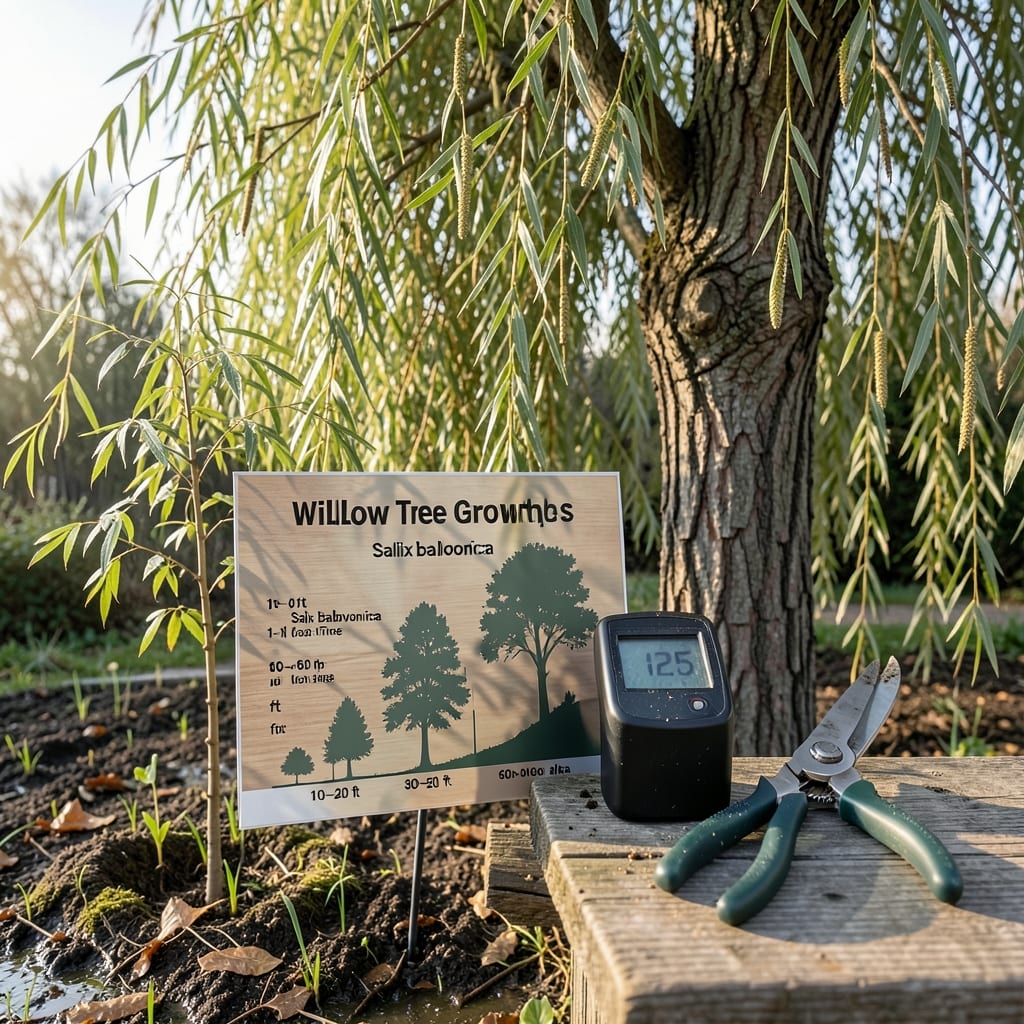
If you’ve ever dreamed of a towering 🌳 Willow Tree that grows faster than you can say "spring planting," you’re in for a surprise—how tall can willow trees grow? These trees can reach heights that will make your yard feel like a fairy-tale forest, with some varieties shooting up 10 feet per year, turning a sapling into a skyscraper in just a few seasons. But before you rush to plant, there's a catch: their staggering growth means space planning is everything.
Willow trees aren't just tall—they're diverse in size, with some varieties topping out at 50 feet or more, while others stay compact enough for small gardens. The key to managing their height lies in understanding which species fit your space and how to prune them effectively. Whether you're dealing with a weeping willow's graceful drapes or a crack willow's sturdy branches, knowing their growth habits can save you headaches down the road.
What makes willow trees truly fascinating is their fast growth rate, but that speed comes with trade-offs. Without proper care, they can outgrow their welcome, invading neighboring properties or overwhelming your landscape. The good news? With the right techniques—like strategic pruning and root barriers—you can harness their rapid growth while keeping them in check. Let's break down how to make these giants work for you, not against you.
From urban backyards to rural landscapes, willow trees offer both beauty and challenges. In this guide, you'll discover which varieties thrive in USDA Zone 6a, how to control their height, and when to let them reach their full potential. Whether you're planting in March or April, these insights will help you turn your willow tree dreams into reality—without the unwanted surprises.

Willow tree height by variety: fastest-growing species and their maximum heights
Willow trees are nature's speed demons, capable of shooting up 3 to 10 feet per year under ideal conditions. But not all willows reach the same sky-piercing heights—some stay modest while others become towering giants. The weeping willow, for example, can dwarf your backyard with heights of 40 to 75 feet, while the pussy willow remains a compact 10 to 20 feet shrub. Understanding these differences helps you choose the perfect willow for your space, whether you have acres or just a small urban yard.
Height isn't the only factor—growth rate and spread matter too. A crack willow might only grow 20 to 30 feet tall but spreads aggressively with wide-reaching roots, while a white willow can soar 50 to 80 feet with a more contained canopy. Below, I’ve broken down the fastest-growing varieties and their maximum heights, so you can plan accordingly.
🌳 Visual Comparison: Imagine a weeping willow as tall as a 6-story building vs. a dwarf willow fitting in a large planter. The difference in space needs is dramatic!
| Variety | Mature Height (ft) | Growth Rate (ft/year) | Best For |
|---|---|---|---|
| Weeping Willow (Salix babylonica) | 40–75 ft | 5–10 ft | Ponds, large yards |
| White Willow (Salix alba) | 50–80 ft | 3–8 ft | Riversides, open spaces |
| Crack Willow (Salix fragilis) | 20–30 ft | 2–5 ft | Small yards, containers |
| Pussy Willow (Salix discolor) | 10–20 ft | 1–3 ft | Urban gardens, borders |
| Dwarf Willow (Salix purpurea) | 5–10 ft | 1–2 ft | Bonsai, small spaces |
| Purple Osier (Salix purpurea) | 12–20 ft | 2–4 ft | Privacy screens, hedges |
| Golden Willow (Salix alba 'Vitellina') | 30–50 ft | 3–6 ft | Landscaping accents |
The weeping willow and white willow are the tallest, often reaching over 50 feet in ideal conditions. These giants need ample space—at least 30 feet in diameter—to avoid crowding other plants or structures. If you’re in an urban area, consider dwarf varieties like pussy willow or purple osier, which stay under 20 feet and thrive in smaller yards.
For fastest growth, prioritize moist, well-draining soil and full sun exposure. Willow trees adore water, so planting near a pond, stream, or rain garden gives them a growth boost. In drier climates, you’ll see slower growth rates—expect 3 to 5 feet per year instead of the 10-foot sprints possible with plenty of moisture.
One common mistake? Assuming all willows grow at the same rate. A weeping willow might shoot up 10 feet in a year, while a dwarf willow gains only 1 to 2 feet. Match your patience level and space to the variety—some willows are short-term investments (fast but temporary), while others are long-term commitments (slow but lasting decades).
If you’re planting near a power line or house foundation, avoid tall varieties like the white willow. Instead, opt for purple osier or crack willow, which stay compact and won’t become a nuisance. Always check your local municipality’s tree ordinances—some areas restrict willow planting due to their aggressive root systems.
Pro tip: Mulch heavily around the base of your willow to retain moisture and encourage faster growth. Use organic mulch like wood chips or straw, keeping it 2 to 3 inches deep but not touching the trunk. This mimics their natural wetland habitat and helps them reach their maximum height potential
How to control willow tree growth: pruning, root barriers, and space planning
Willow trees grow with unmatched speed, but their rapid expansion can quickly overwhelm even spacious yards. The key to managing their height lies in timely pruning, root barriers, and smart space planning. Unlike slower-growing trees, willows respond aggressively to pruning—cutting them back too late can stimulate even faster growth, while early pruning helps control their vertical and horizontal spread. Let’s break down the best methods to keep your willow tree’s height in check without stunting its natural beauty.
First, pruning timing is critical. For most willow varieties, late winter or early spring (just before buds swell) is ideal. This encourages balanced growth and prevents the tree from sending up vigorous new shoots in response to summer cuts. Avoid pruning in fall or winter, as this can stress the tree and lead to dieback. If you must prune in summer, do so early in the season and remove no more than 25% of the canopy to avoid shocking the tree.
🌿 Pruning Tips: Always use clean, sharp tools to make smooth cuts just above a bud or branch collar. Seal larger cuts with pruning sealant to prevent disease. For weeping willows, focus on removing lower branches to create clearance while preserving the dramatic, cascading silhouette from above.
Step-by-Step Pruning Guide
- Step 1: Remove dead/diseased branches first to improve air circulation.
- Step 2: Thin out crowded branches (aim for 6-8 inches between branches).
- Step 3: Cut back overgrown limbs to 1/3 of their length to encourage bushier growth.
- Step 4: Shape the canopy by trimming outer branches to control spread.
- Step 5: Fertilize lightly after pruning to support recovery (use 10-10-10 balanced fertilizer).
For aggressive varieties like weeping willows, install a root barrier at planting to prevent underground expansion. Bury a 30-inch-deep, corrugated metal or plastic barrier at least 3 feet from the trunk. This stops sucker growth and root intrusion into sidewalks or foundations. Combine barriers with regular pruning for best results—willows can penetrate most barriers if left unchecked above ground.
If your willow is already too large for its space, consider gradual reduction pruning. Over 2-3 years, remove 1/4 of the canopy each year to slow vertical growth without shocking the tree. For small-space solutions, choose dwarf varieties like pussy willow or purple osier, which stay under 20 feet and require minimal pruning. Always measure your space before planting—willows can double in height within 5 years!
One common mistake is assuming container planting will limit height. While dwarf willows thrive in pots, even standard varieties can grow 30+ feet tall in large containers. Use root-pruning during repotting to encourage bushier growth and slow vertical expansion. For urban gardens, pair willows with fast-growing ground covers like creeping thyme to define their root zones naturally.
Pro tip: Monitor soil moisture—willows grow faster with more water. In dry climates, reduce irrigation to slow growth and encourage smaller stature. Mulch with gravel or bark to suppress weeds and regulate moisture, which indirectly controls height. With the right approach, you can enjoy a willow tree’s beauty without sacrificing your yard’s layout or sanity!