
Trees
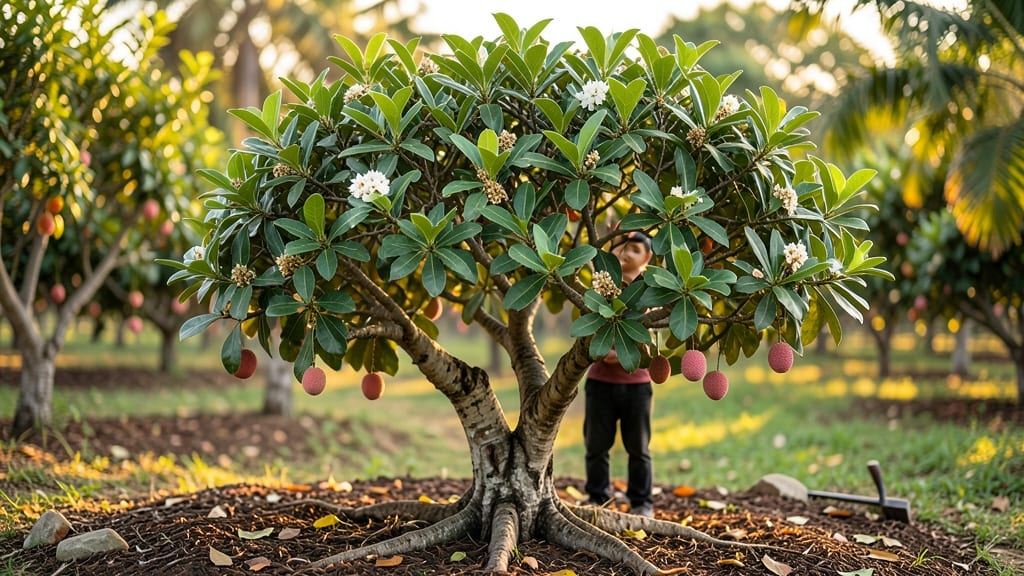
If you’ve ever wondered how tall do lychee trees grow, the answer might surprise you—these tropical beauties 🍈 can stretch between 20 and 50 feet when left unchecked, easily dwarfing your backyard or even a two-story house!
But here’s the good news: with the right care, you can keep them at a manageable height without sacrificing those sweet, aromatic fruits.
Growing a lychee tree isn’t just about space—it’s about strategy. Whether you’re in USDA zones 10-11 or a container in a warmer climate, understanding their growth habits is key.
Some varieties, like the fast-growing 'Bengal,' can shoot up quickly, while others stay more compact. The secret? Pruning at the right time and knowing when to intervene.
In this guide, I’ll break down everything you need to know—from typical height ranges by variety to natural pruning techniques that keep your tree both healthy and within your space. You’ll also learn how to avoid common mistakes that turn your lychee into an unruly giant. Let’s get started!
Ready to grow a lychee tree that fits your space and your schedule? The first step is understanding how to shape it—before it shapes your yard. Let’s dive into the details.


Lychee tree height guide: mature size by variety and growing conditions
Lychee trees (Litchi chinensis) are tropical giants that can reach staggering heights—some varieties grow up to 50 feet tall under ideal conditions. Without proper care, these trees can easily become backyard monsters, overshadowing patios and fences.
The good news? Their mature size varies dramatically by cultivar, climate, and even pruning practices, giving you control over their growth trajectory.
In tropical climates like USDA Zones 10-11, lychee trees thrive year-round, reaching their full potential. However, in cooler regions, they may grow more slowly, staying shorter unless protected from frost.
Understanding these factors helps you plan for space and manage growth effectively, whether you’re dreaming of a dwarf lychee tree for your balcony or a full-sized tree in your orchard.
🌱
🌱 Lychee Tree Height Summary
| Variety | Mature Height | Growth Rate | Best For |
|---|---|---|---|
| Tai So | 10–15 ft | Slow to moderate | Containers, small yards |
| Bengal | 30–50 ft | Fast | Orchards, large properties |
| Kwai Mi | 25–40 ft | Moderate | Balconies (with pruning) |
| Salathiel | 20–30 ft | Moderate | Small orchards |
| Mauritius | 40–50 ft | Fast | Commercial farms |
🌿 Note: Height varies with pruning, soil quality, and sunlight exposure.
If you’re growing lychees in containers, expect their height to stay more manageable—typically between 10–20 feet—but root-bound conditions can stunt growth or cause stress.
Use large pots (at least 24-inch diameter) with well-draining soil to mimic outdoor conditions. In-ground plantings, however, will reach their full potential unless pruned regularly.
Sunlight plays a critical role in height control. Lychee trees need 6+ hours of direct sun daily to thrive, but excessive shade can lead to leggy, weak growth. If your tree isn’t getting enough light, it may stretch upward rapidly, reaching heights faster than expected.
Position your tree in the sunniest spot in your garden to encourage balanced growth.
Soil quality also impacts height. Well-draining, slightly acidic soil (pH 5.5–6.5) promotes healthier root systems, which in turn supports controlled vertical growth.
Amend heavy or clay soils with organic matter like compost or sand to prevent root rot, which can weaken the tree and lead to erratic height spikes.
🌳
One of the biggest misconceptions about lychee trees is that they’ll always grow to their maximum height. In reality, with proper pruning, you can keep a lychee tree at a height that fits your space—even in urban settings.
For example, the Tai So variety is naturally more compact, making it ideal for home gardens. Meanwhile, varieties like Bengal or Mauritius are better suited for large estates or commercial orchards where space isn’t an issue.
Watering habits also influence height. Overwatering can lead to weak, spindly growth, while underwatering stresses the tree, causing it to grow taller in search of moisture. Aim for deep, infrequent watering—about 10–20 gallons per week during dry spells—to encourage strong, stable growth.
Mulching around the base of the tree helps retain moisture and regulate soil temperature, further supporting healthy height development.
💧
Lychee tree height guide: mature size by variety and growing conditions
Lychee trees (Litchi chinensis) are tropical giants that can reach staggering heights of 20 to 50 feet at maturity, depending on the variety and growing conditions. If you're envisioning a backyard-friendly lychee tree, you’ll need to plan carefully—these trees don’t stay small by nature!
The 'Bengal' variety, for example, often tops out at 40–50 feet, while the 'Tai So' cultivar remains slightly more manageable at 10–15 feet with proper care.
Your lychee tree’s height isn’t just about genetics—climate, soil quality, and sunlight exposure play huge roles. In USDA Zones 10–11, where lychees thrive year-round, they grow fastest and tallest. But even in these ideal conditions, pruning and container growing can help control their size.
For instance, a lychee tree in a large container (20+ gallons) may max out at 15–20 feet if pruned regularly, making it a better fit for patios or small yards.
🌱 Lychee Tree Height Summary
| Variety | Mature Height | Growth Rate (Annual) | Best For |
|---|---|---|---|
| 'Bengal' | 40–50 ft | 2–4 ft/year | Orchards, large properties |
| 'Tai So' | 10–15 ft | 1–2 ft/year | Containers, small yards |
| 'Kwai Mi' | 25–35 ft | 2–3 ft/year | Medium yards, urban landscapes |
| 'Salathiel' | 30–40 ft | 2–3.5 ft/year | Orchards, warm climates |
Sunlight is another critical factor in height control. Lychee trees need 6+ hours of direct sun daily to thrive, but partial shade can slow their vertical growth—though it may also reduce fruit production.
If you’re growing your lychee in a container, choose a spot with morning sun and afternoon shade to balance growth and fruit quality. Just remember, less sun = slower growth, but it won’t stop your tree from reaching its genetic potential over time.
Soil drainage is equally important. Lychee trees hate soggy roots, which can stunt growth or even kill the tree. Amend heavy clay soil with compost or sand to improve drainage, and avoid planting in low-lying areas where water pools.
Well-draining soil not only supports healthier roots but also encourages compact, bushier growth—a win for both height control and fruit yield.
If you’re in a cooler climate (Zones 9 or below), your lychee tree’s growth will naturally slow down. These trees are not frost-tolerant, so they’ll need to be potted and moved indoors during winter or grown in microclimates with frost protection.
In these conditions, expect slower annual growth (1–2 feet per year) compared to the 3–4 feet per year seen in tropical zones.
For home gardeners, the key to managing height lies in early pruning and strategic planting. Start by choosing a dwarf-friendly variety like 'Tai So' if space is limited, and pair it with regular pruning to encourage a fuller, shorter shape.
With patience and care, you can enjoy homegrown lychees without sacrificing your backyard to a 50-foot giant!