
How To
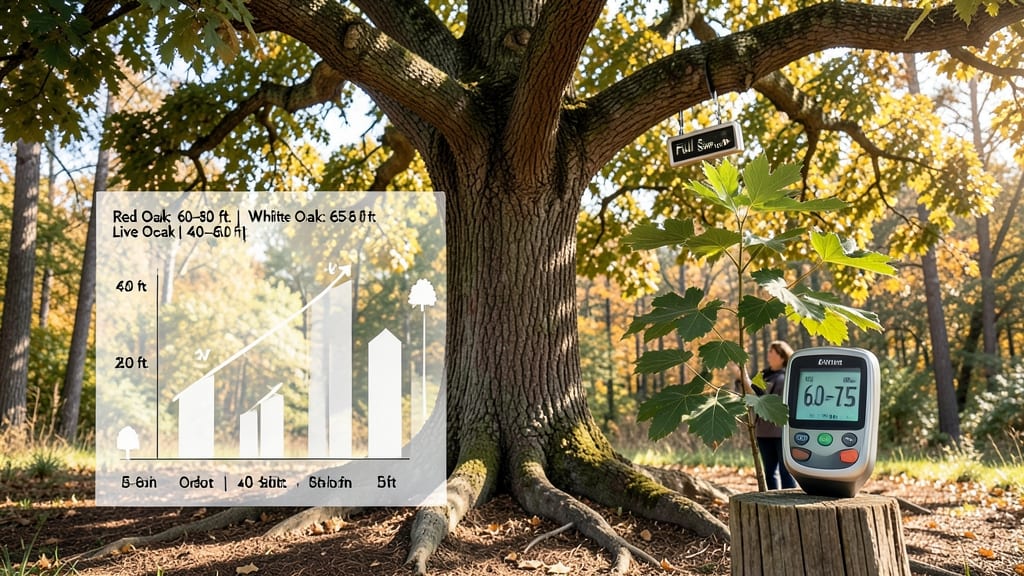
If you're dreaming of a backyard that feels like a forest retreat, understanding how tall do oaks grow is your first step. These iconic 🌳 trees can reach heights that dwarf even the tallest buildings—some species stretching over 100 feet—while others stay manageable for smaller spaces.
The difference often comes down to the species, growing conditions, and a little patience.
Picture this: a white oak standing proudly at 80 feet or more, its sprawling branches providing decades of shade. Meanwhile, a bur oak might top out around 70 feet, while dwarf varieties stay cozy at just 20-30 feet.
These variations make oaks surprisingly versatile for any landscape, whether you're planting a single specimen or designing an entire woodland garden.
But here's the catch—growth isn't just about genetics. Soil quality, sunlight, and even your local climate play huge roles in determining how tall your oak will become.
In USDA Zone 6a, where spring planting is ideal, proper care can help you steer an oak toward your desired height—or keep it in check if space is limited.
Ready to make an informed choice? I'll break down the fastest-growing species, tips for managing size, and how to create the perfect conditions for your oak's full potential. Let's get started!


Oak tree height by species: from dwarf varieties to towering giants
If you're dreaming of a stately oak tree in your yard, knowing the species-specific heights is crucial. Oaks range from compact dwarf varieties to monumental giants, with mature heights spanning 20 feet to over 100 feet.
The right choice depends on your space, climate, and long-term vision for your landscape.
For example, a white oak typically reaches 60-80 feet at maturity, while a bur oak can grow 50-80 feet tall. On the smaller end, dwarf varieties like the chinquapin oak max out around 20-30 feet, making them ideal for urban gardens or small backyards.
Here’s a quick comparison of popular oak species and their mature heights:
| Species | Mature Height (ft) | Growth Rate (in/year) | Best For |
|---|---|---|---|
| White Oak | 60-80 | 6-12 | Large estates, parks |
| Red Oak | 60-75 | 12-24 | Fast shade, rural areas |
| Bur Oak | 50-80 | 8-16 | Drought-resistant zones |
| Pin Oak | 40-70 | 12-24 | Urban landscapes |
| Chinquapin Oak | 20-30 | 4-8 | Small yards, containers |
| Live Oak | 60-80 | 6-12 | Southern climates |
| Scarlet Oak | 50-70 | 10-18 | Colorful foliage |
The fastest-growing oaks, like the pin oak and scarlet oak, can add 1-2 feet per year in ideal conditions. In contrast, white oaks grow more slowly but live for centuries, making them a long-term investment for your property.
If you're working with limited space, consider dwarf or semi-dwarf varieties. For instance, the chinquapin oak stays under 30 feet and thrives in containers or small gardens. Even these smaller oaks provide year-round interest with their lobed leaves and acorn crops.
For urban landscapes, the pin oak is a top choice due to its moderate height (40-70 feet) and tolerance for city conditions. Its pyramidal shape also makes it easier to fit into tight spaces compared to broader species like the white oak.
When planning, always check your local climate zone and soil type, as these can affect how tall an oak grows. For example, live oaks thrive in humid southern climates but may struggle in dry western regions unless given extra care.
Pro tip: If you love the look of oaks but need a smaller stature, look for grafted dwarf varieties. These are genetically modified to stay compact while retaining the characteristics of mature oaks, like deep green foliage and durable wood.
🌳
What determines an oak tree’s final height? Growth factors explained
An oak tree’s final height isn’t just about its species—it’s a mix of nature and nurture. While genetics set the baseline, factors like soil quality, sunlight exposure, and even pruning practices can push a tree toward its maximum potential or hold it back.
For example, a white oak might reach 80 feet in ideal conditions but stay under 50 feet in a cramped urban yard with poor soil.
Let’s break down the key variables that shape an oak’s height, so you can optimize growth for your space. Understanding these will help you decide whether to plant a towering giant or a more manageable variety. The right conditions can even accelerate growth rates, giving you quicker shade and beauty.
🌱 Key Takeaway: Oak Height Factors
- Genetics: Species determines max height (e.g., white oak 60-80 ft vs. pin oak 40-70 ft).
- Soil Quality: Rich, well-draining soil = faster growth. Compacted or poor soil stunts height.
- Sunlight: Full sun (6+ hours/day) maximizes growth; shade slows it significantly.
- Water Access: Deep watering in dry spells boosts height; drought stress limits growth.
- Pruning: Strategic pruning early on can shape height (e.g., removing leader shoots).
- Climate: Warmer zones with long growing seasons encourage taller growth.
Pro Tip: Test your soil’s pH (ideal: 6.0-7.5) and amend with compost to support taller growth.
One of the most critical factors is soil quality. Oak trees thrive in well-draining, slightly acidic soil (pH 6.0-7.5). If your soil is clay-heavy or nutrient-poor, roots struggle to expand, limiting the tree’s ability to reach its full height.
Amending with compost or organic matter can make a dramatic difference, especially for young oaks. For instance, a bur oak planted in amended soil might grow 2 feet per year in its prime, while one in poor soil could barely reach 1 foot annually.
Don’t underestimate the power of sunlight exposure. Oak trees are sun lovers, and those planted in full sun (6+ hours daily) will grow significantly taller than those in partial shade.
For example, a red oak in full sun might hit 75 feet, while the same tree in dappled shade could max out at 40 feet.
If you’re planting in a shady area, consider a dwarf variety like the ‘Green Vase’ bur oak, which stays under 30 feet tall.
Pruning plays a surprising role in height control. While many assume pruning stunts growth, strategic pruning can actually encourage a tree to grow taller by removing competing branches. However, over-pruning—especially cutting the leader shoot—can redirect energy toward lateral branches, resulting in a wider, shorter tree.
If you want a tall, straight oak, focus on removing lower branches and thinning the canopy to allow light to reach the lower trunk.
Finally, climate and microclimates matter. Oak trees in warmer USDA zones (7-9) grow faster and taller than those in cooler zones (4-6).
For example, a live oak in Florida might reach 60 feet in 30 years, while the same tree in Minnesota could take 50 years to reach half that height. Even within your yard, a south-facing slope will produce taller oaks than a north-facing valley.
By tweaking these factors, you can steer an oak’s growth toward your goals—whether that’s a sky-scraping giant or a compact shade tree for your patio. Start with soil prep, ensure full sun, and monitor growth closely to guide its development.
With the right conditions, even a slow-growing oak can become a stunning centerpiece. 🌳