
Trees
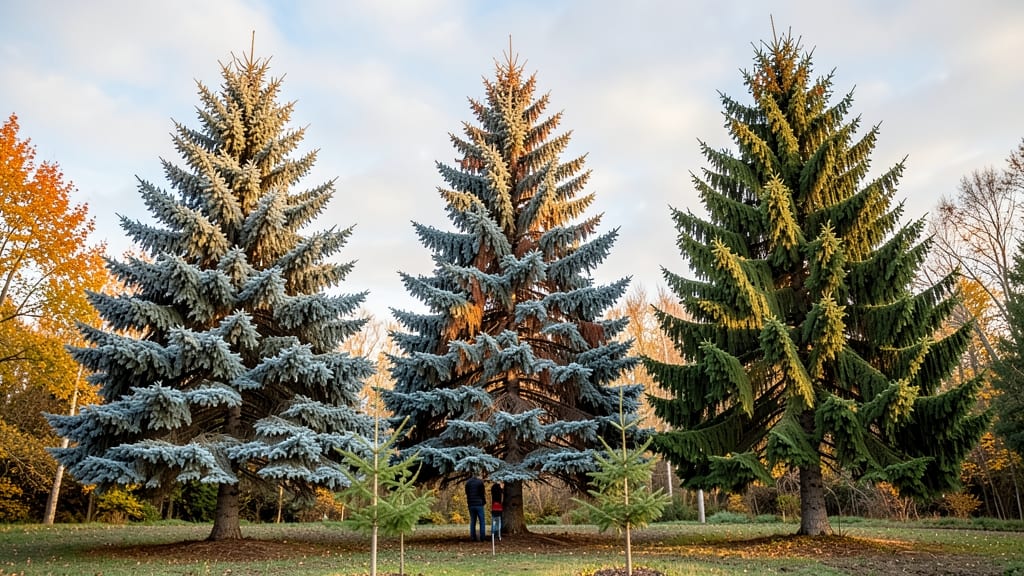
If you’ve ever dreamed of adding a towering spruce tree 🌲 to your landscape but wondered how tall these trees can grow, you’re not alone. Some spruce varieties stretch toward the sky like natural skyscrapers—reaching heights of 60 feet or more—while others stay compact, perfect for small spaces.
The key? Knowing which species fits your goals and space.
Fast-growing spruce trees can transform your outdoor area in just a few years, offering privacy, shade, and year-round greenery. Whether you’re eyeing a Colorado blue spruce for its striking blue foliage or a Norway spruce for its classic evergreen look, understanding their mature heights helps you plan wisely.
Some even grow 2–3 feet per year, making them ideal for quick results.
But here’s the catch: not all spruce trees are created equal. Dwarf varieties stay under 15 feet, while giants like the Sitka spruce can dwarf even the tallest redwoods in your neighborhood.
I’ll break down the fastest-growing species, their height ranges, and how to pick the perfect one for your yard—no guesswork required.
Ready to find the perfect spruce for your space? Let’s dive into the details so you can plant with confidence and watch your tree grow into the stunning centerpiece you’ve always wanted.


Mature heights of fastest-growing spruce species compared
Spruce trees offer a stunning range of sizes, from dwarf varieties perfect for containers to giant evergreens that dominate landscapes. If you're planning your garden layout, knowing these mature heights will help you avoid overcrowding while maximizing beauty.
Some spruce species grow over 60 feet tall, while others stay under 10 feet—ideal for small yards or urban patios.
Growth rates vary dramatically too. Fast-growing spruces like the Colorado Blue Spruce can add 2-3 feet per year in ideal conditions, while slower varieties like the Dwarf Alberta Spruce grow just 6 inches annually. Let’s compare the fastest-growing species to help you visualize their potential impact on your property.
🌲 Visual Comparison Table: Spruce Tree Heights at Maturity
| Species | Mature Height (ft) | Annual Growth (ft) | Best For | Sunlight Needs |
|---|---|---|---|---|
| Colorado Blue Spruce | 60–100 ft | 2–3 ft | Large yards, privacy screens | Full sun |
| Norway Spruce | 50–75 ft | 1.5–2.5 ft | Windbreaks, shade trees | Full sun |
| Black Hills Spruce | 40–60 ft | 1–2 ft | Small to medium yards | Full sun |
| Dwarf Alberta Spruce | 8–15 ft | 0.5–1 ft | Containers, small gardens | Full sun to partial shade |
| Glauca Globosa (Blue Mound Spruce) | 3–5 ft | 0.3–0.5 ft | Rock gardens, borders | Full sun |
| Serbian Spruce | 30–50 ft | 1.5–2 ft | Medium yards, hedges | Full sun |
To put these heights into perspective, a 60-foot spruce is taller than a two-story house, while a 3-foot dwarf variety fits perfectly on a patio. Always check the mature height before planting—some spruces can outgrow their space within 10–15 years.
Fast-growing spruces like the Colorado Blue Spruce or Norway Spruce are ideal if you need quick privacy or shade. For smaller spaces, opt for dwarf varieties like the Glauca Globosa, which stays under 5 feet tall and thrives in containers.
Another key factor is growth rate. If you’re impatient, the Colorado Blue Spruce can grow 3 feet per year in optimal conditions, while slower growers like the Dwarf Alberta Spruce take decades to reach their full height. Always consider your long-term landscape goals before selecting a species.
For urban gardens, pruning young spruces can help control height, but avoid heavy pruning—it stresses the tree and can reduce its natural beauty. Instead, focus on selective pruning to shape the tree while preserving its characteristic dense foliage.
Soil and sunlight also play a role in height. Most spruces thrive in
How to choose a spruce tree based on space and growth rate
Selecting the right spruce tree depends on your available space and desired growth speed. Dwarf varieties like 'Glauca Globosa' stay under 10 feet—ideal for containers or small yards—while giants like Norway spruce can reach 100 feet in ideal conditions.
Always measure your yard and check mature height ranges before planting.
For urban gardens, prioritize slow-growing or semi-dwarf spruces like 'Concolor' (15–30 ft). These need 6–10 feet of clearance from structures and power lines. Use pruning to control height, but avoid cutting into old wood, which won’t regrow.
If you need fast privacy, opt for Colorado blue spruce or Black Hills spruce, which grow 1–2 feet per year. Plant them 10–15 feet apart for dense screens. Always check local frost dates—spruces planted too late may struggle in Zone 5 or colder.
- 'Glauca Globosa' (8–10 ft, slow-growing)
- 'Little Gem' (6–8 ft, compact)
- 'Concolor' (15–25 ft, drought-tolerant)
- 'Picea pungens 'Glauca' (20–30 ft, blue foliage)
- Norway spruce (40–60 ft, fast-growing)
- Engelmann spruce (50–70 ft, cold-hardy)
Soil type matters too! Sandy or loamy soil with good drainage works best. Avoid clay-heavy or waterlogged areas, which can stunt growth. Amend soil with compost before planting to improve aeration and nutrient uptake.
Pro tip: Test your soil’s pH (ideal range: 5.0–7.0). Acidic soil (below 5.0) may require lime or sulfur adjustments. Spruces thrive in full sun, but partial shade (3–6 hours of sun) works for dwarf varieties in hot climates.
Plan for long-term maintenance. Tall spruces need professional pruning every 3–5 years to remove dead branches. Mulch around the base with wood chips to retain moisture and suppress weeds—just keep mulch 3 inches away from the trunk to prevent rot.