
How To
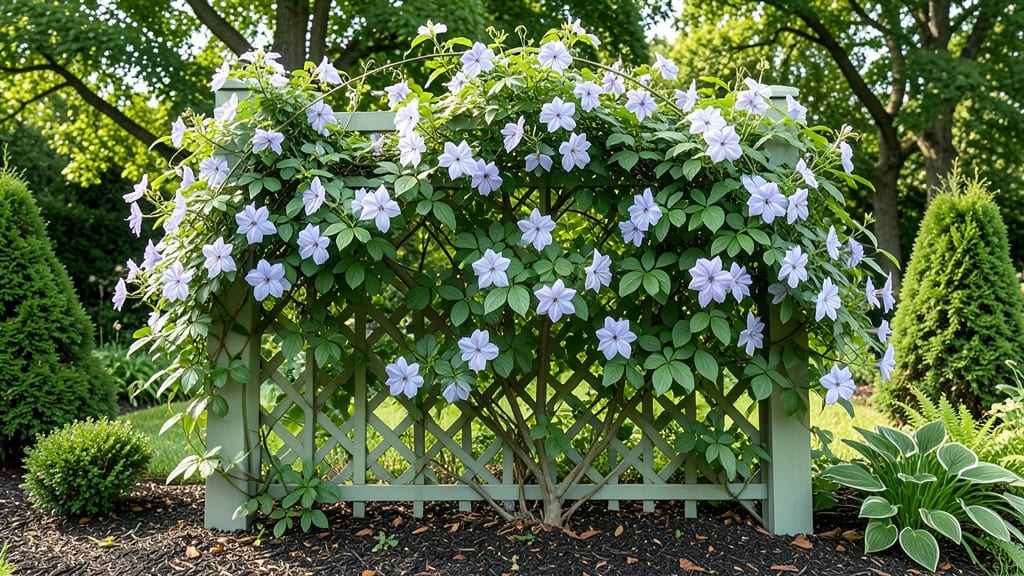
If you’ve ever dreamed of a garden that climbs like a fairy-tale vine but feared how tall a clematis grows might overwhelm your space, you’re not alone.
The truth is, the height of a clematis depends entirely on the variety—and the difference between a delicate 3-foot ground cover and a towering 20-foot giant can be night and day.
I’ve seen firsthand how a single clematis plant can transform a small balcony into a lush vertical garden or turn a backyard fence into a stunning floral display. The key lies in choosing the right variety for your space and understanding how to guide its growth.
Whether you’re working with a dwarf clematis for containers or a large-flowered giant for a pergola, knowing these heights will help you plan trellises, select locations, and avoid structural headaches.
What most gardeners don’t realize is that pruning groups, sunlight exposure, and even soil quality play a huge role in determining whether your clematis will stay compact or reach for the sky.
I’ll walk you through the most common varieties, their mature heights, and the simple techniques to keep them in check—so you can enjoy those breathtaking blooms without the chaos.
Ready to turn your garden into a vertical masterpiece? Let’s dive into the heights, varieties, and secrets to managing clematis growth like a pro—no guesswork required.


Clematis height ranges by variety: from ground covers to towering giants
Clematis vines are nature’s vertical artists, but their mature heights vary wildly—from compact ground covers to 20-foot sky-scraping behemoths.
Choosing the right variety for your space means understanding these growth categories, because a 10-foot trellis won’t cut it for some varieties while others will flop dramatically if given too much room. Let’s break down the height spectrum so you can match your clematis to your garden’s architecture.
Most gardeners group clematis into four height categories: dwarf (3–6 ft), semi-dwarf (6–12 ft), standard (12–20 ft), and giant (over 20 ft). The key difference? Pruning groups and genetic growth habits.
For example, Clematis montana (a giant) can climb 30+ feet on a sturdy tree, while Clematis ‘Jackmanii’ (standard) typically maxes out at 12–15 feet with proper support. Your trellis choice hinges on these distinctions.
Here’s where things get practical: Dwarf varieties like Clematis ‘Freckles’ (3–5 ft) thrive in container gardens or as low borders, while large-flowered hybrids (Clematis ‘Nelly Moser’, 8–12 ft) demand pergolas or arbors.
The mistake I see most often? Assuming all clematis need 10+ feet of vertical space—when in reality, half the varieties stay under 6 feet. Let’s dive into the specifics.
| Variety | Height Range (ft) | Ideal Trellis Type | Pruning Group | Best For |
|---|---|---|---|---|
| Clematis ‘Freckles’ | 3–5 ft | Obelisk or small trellis | 2 (Early spring) | Containers, borders |
| Clematis ‘Jackmanii’ | 10–15 ft | Arbor or pergola | 3 (Summer) | Vertical gardens, fences |
| Clematis montana | 20–30+ ft | Tree or strong wall | 1 (Late winter) | Large walls, trees |
| Clematis ‘Durandii’ | 6–10 ft | Trellis or fence | 2 (Early spring) | Small pergolas, arches |
| Clematis ‘Nelly Moser’ | 8–12 ft | Arbor or wall | 3 (Summer) | Vertical accents, gazebos |
| Category | Variety | Mature Height | Ideal Trellis |
|---|---|---|---|
| Dwarf | Clematis montana | 3–6 ft | Small obelisk or container |
| Medium | Clematis viticella | 6–12 ft | Arbor or fence |
| Large | Clematis jackmanii | 12–16 ft | Pergola or wall |
| Giant | Clematis lanuginosa | 15–20 ft | Strong trellis or tall fence |
For example, the Clematis montana stays compact at just 3–6 feet, making it ideal for small gardens or containers, while the Clematis lanuginosa can climb up to 20 feet, perfect for large structures like pergolas or walls. Always consider the mature height when planning your garden layout.
Another critical factor is the growth rate. Clematis can grow 3–6 feet per year, so even dwarf varieties may outpace your expectations. Regular pruning helps control height and encourages healthier blooms. For instance, large-flowered clematis typically require group 2 or 3 pruning to manage their rapid growth.
If you’re unsure which variety to choose, start with medium-height clematis like Clematis viticella. These offer a balance of manageable size and stunning blooms, making them perfect for both beginners and experienced gardeners alike.
Remember, the right trellis is just as important as the variety. A weak trellis can’t support a 15-foot clematis, while a sturdy structure ensures your vine thrives and blooms beautifully year after year.