
How To
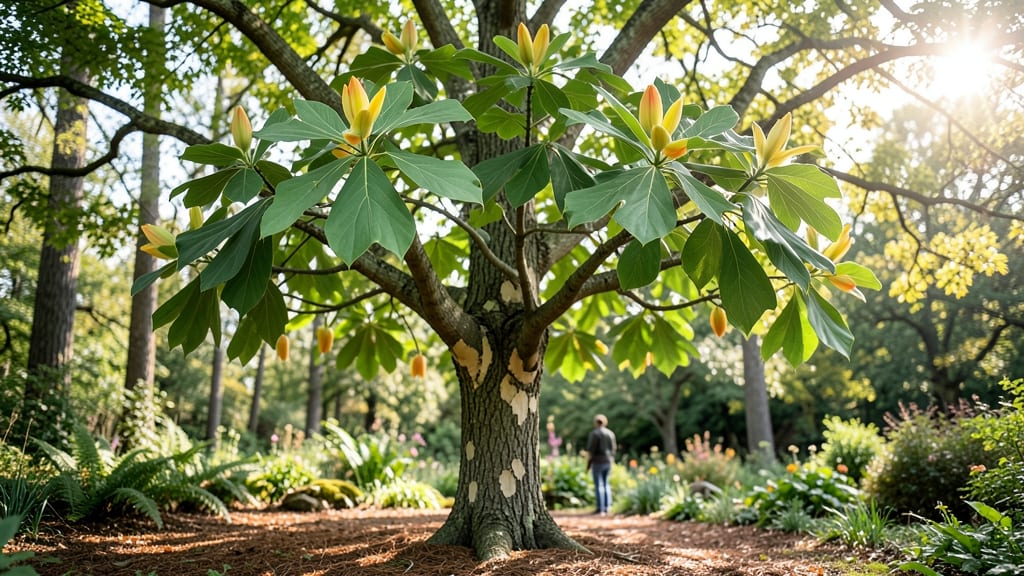
If you're wondering how tall does a tulip tree grow, you're not alone—this majestic 🌳 can reach heights that leave most backyard trees in the dust.
Imagine a towering giant that starts as a delicate sapling and grows into a 70- to 90-foot shade provider, making it one of the fastest-growing native trees in North America.
But here's the catch: its growth isn't just about time—it's about the right conditions. Whether you're in USDA Zone 6a or further south, soil quality, sunlight exposure, and even your local climate play a huge role in how quickly and tall your tulip tree will become.
Let’s break down what you need to know to give your tree the best shot at reaching its full potential.
From its rapid early growth to the factors that can slow it down, we'll cover everything you need to plan for a tulip tree that thrives in your landscape. Whether you're dreaming of a shade canopy or just curious about its staggering height, this guide has you covered.
Ready to learn how to nurture a tree that could outgrow your grandkids? Let’s dive into the science—and the secrets—behind the tulip tree’s impressive stature.


Tulip tree height by variety: exact growth expectations
If you're considering adding a tulip tree (Liriodendron tulipifera) to your landscape, its height potential is likely top of mind. These native North American trees are among the fastest-growing hardwoods, but their mature size can vary dramatically based on growing conditions and variety.
In ideal settings, a standard tulip tree can reach an astonishing 70 to 90 feet tall, with some specimens exceeding 100 feet in the wild. That's taller than a 3-story building!
However, not all tulip trees grow this massive. Urban varieties and those grown in restricted spaces often stay between 40 to 60 feet. The key difference? Growing conditions like soil quality, sunlight exposure, and available space.
Let's break down the exact height expectations for different scenarios so you can plan accordingly.
🌳
| Variety/Scenario | Mature Height Range | Growth Rate (Annual) | Ideal Conditions |
|---|---|---|---|
| Standard Tulip Tree (Wild Type) | 70–90 ft | 3–5 ft/year (young) | Full sun, rich soil, no restrictions |
| Urban/Container-Grown | 40–60 ft | 1–2 ft/year (restricted) | Root-bound, limited space |
| Fast-Growing Hybrid (e.g., 'Arnoldiana') | 60–80 ft | 4–6 ft/year (juvenile) | Full sun, moist soil |
| Dwarf Cultivars (Rare) | 25–35 ft | 1–1.5 ft/year | Pruned regularly, compact soil |
| Shade-Grown (Partial Sun) | 50–70 ft | 2–3 ft/year | Dappled sunlight, moist soil |
The standard tulip tree in wild conditions will naturally reach its full 70–90 ft potential, but even in suburban yards, you can expect it to grow 50+ feet if given enough space.
The 'Arnoldiana' variety, for example, is a fast-growing hybrid that can add 4–6 feet per year in its juvenile phase, making it a favorite for quick shade solutions.
For those with limited space, root restriction (like planting in a large container or using root barriers) can significantly slow growth. However, even restricted trees will eventually reach 40–60 feet if left unpruned. If you're planting near power lines or structures, plan for regular pruning to manage height and spread.
One common misconception is that tulip trees grow uniformly. In reality, their height is heavily influenced by soil fertility. Well-drained, nutrient-rich soil can accelerate growth by 30–50% compared to poor soil.
If your yard has clay-heavy or compacted soil, consider amending it with compost or planting in a raised bed to encourage faster, healthier growth.
🌿
When planning your landscape, also account for the canopy spread, which can reach 40–60 feet wide for mature trees. This means a tulip tree needs a minimum of 50 feet of clearance in all directions to avoid crowding other plants or structures.
If you're working with a smaller yard, consider planting it as a solitary specimen rather than in a row or cluster.
For gardeners in USDA Zones 4–9, tulip trees thrive in a wide range of climates, but their height potential is highest in humid subtropical zones (like the Southeast U.S.), where they experience rapid growth due to warm temperatures and high humidity.
In cooler climates (Zones 4–5), growth may be slower, with mature heights clustering around 50–70 feet.
If you're still unsure whether a tulip tree fits your space, start with a young sapling (3–5 ft tall) and monitor its growth rate for the first 3 years. This will give you a clear picture of how it will mature in your specific conditions.
Just remember: once established, these trees are low-maintenance giants that reward patience with decades of shade and beauty.
How fast do tulip trees grow? Annual height increases explained
If you've ever wondered how quickly a tulip tree transforms from a sapling to a towering giant, you're in for a surprise—these trees grow astonishingly fast during their prime years.
In ideal conditions, a young tulip tree can shoot up 3-5 feet per year for the first few decades, making it one of the fastest-growing native trees in North America.
But don't let that speed fool you; their growth slows dramatically as they mature, shifting from vertical sprints to steady, majestic expansion.
The first three years are the most dramatic. A 1-year-old tulip tree might only reach 3-5 feet tall, but by year two, it can more than double in height to 8-12 feet. By year three, you're looking at a 15-20 foot tree—taller than most garage doors!
This rapid growth is why many gardeners choose tulip trees for quick shade solutions, though it also means you'll need to plan for their eventual 70-90 foot mature height sooner than you might expect.
🌱
📏 Annual Growth Timeline
Note: Growth rates vary based on soil quality, sunlight exposure, and climate conditions.
After the initial growth spurt, tulip trees begin to mature, and their annual height gain tapers off. By the time they reach 20 years old, most only add 1-2 feet per year.
This slower growth phase is when they start putting more energy into developing their massive, spreading canopies rather than vertical height.
In USDA Zone 6a or warmer, where tulip trees thrive, you'll see the most dramatic early growth, while colder climates may slow their ascent—though they'll still reach impressive heights given enough time.
What truly accelerates their growth? Full sun exposure and rich, well-draining soil are non-negotiable. If your tulip tree gets less than 6 hours of sunlight daily, expect stunted growth and weaker wood structure. Similarly, compacted or waterlogged soil can choke their roots, leading to slower height gains.
I once planted a tulip tree in heavy clay soil and watched its growth nearly halve compared to one in amended loam—proof that soil quality makes a huge difference in their early years.
🌿
One common misconception is that tulip trees grow at a steady rate throughout their lives. In reality, their growth is exponential in youth and linear in maturity.
This means the first 10 years are when they do most of their "catching up," while the next 50 years are about refining their stature.
For gardeners with limited space, this growth pattern is a double-edged sword: you get quick shade early on, but you'll need to plan for their eventual size from day one.
If you're planting near power lines or sidewalks, consider strategic pruning or root restriction methods to manage their height over time.
🌳