
How To
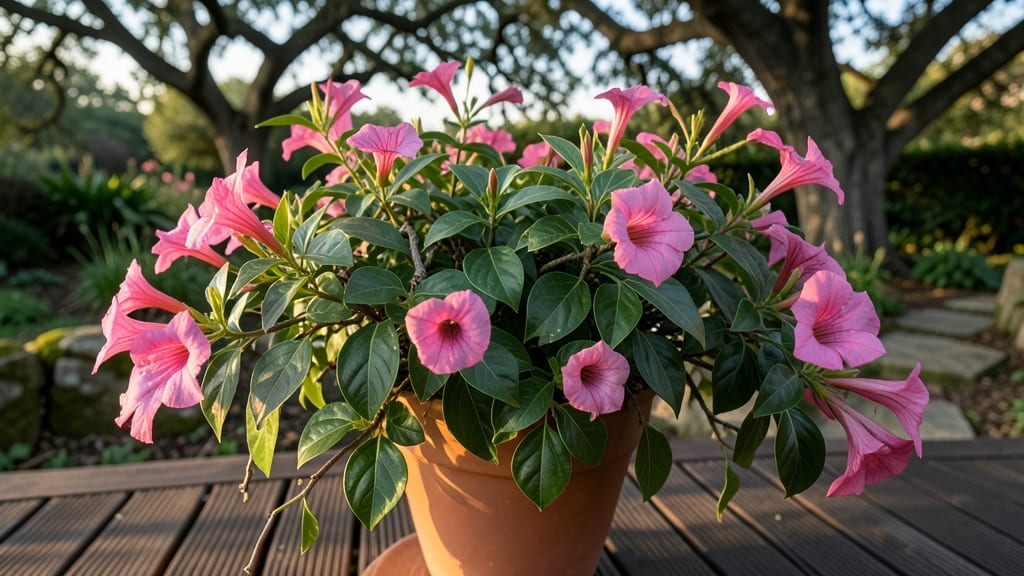
If you're planning to grow Dipladenia 🌸 in your garden, you might be wondering just how tall this stunning vine can climb.
The answer isn't as straightforward as you'd think—because with the right support, it can reach dramatic heights of 6 to 10 feet, while without guidance, it might sprawl unpredictably.
What makes Dipladenia so fascinating is its adaptability. Whether you're cultivating it in Zone 6a or a warmer climate, understanding its growth habits is key to maximizing its potential.
This fast-growing vine thrives when given proper care, but its height depends heavily on pruning, trellising, and even the season you plant it.
In this guide, I'll break down exactly how tall Dipladenia can grow, what influences its height, and how you can control its size to fit your garden perfectly. From choosing the right support structure to timing your pruning, these insights will help you create a showstopping display without losing control.
Ready to transform your space with cascading blooms? Let's dive into the secrets of managing Dipladenia's height so you can enjoy its beauty year after year.


Dipladenia vine growth height: expected size & mature dimensions explained
Dipladenia, often called Mandevilla, is a tropical vine that thrives on vertical support, but its height depends heavily on your growing conditions. Without proper trellis or pruning, it can sprawl 10+ feet in ideal climates, while container-grown plants typically max out at 3-6 feet.
Understanding these growth patterns helps you plan for stunning cascades or compact displays.
In outdoor gardens, Dipladenia grows 6-10 feet tall when given full sun (6+ hours daily) and a sturdy trellis, fence, or pergola. In containers, expect 3-5 feet of growth, making it perfect for balconies or patios.
The key difference? Root space—potted plants grow slower due to restricted roots, while in-ground vines stretch aggressively for sunlight.
Here’s how Dipladenia’s height evolves over time:
- Year 1: 1-3 feet (focuses on root establishment)
- Year 2: 4-6 feet (rapid vine elongation)
- Mature (Year 3+): 6-10 feet (full bloom potential)
This growth curve shows why early pruning is critical to manage height in small spaces.
Climate plays a huge role. In USDA Zones 9-11, Dipladenia grows year-round and can reach 10+ feet with minimal care. In cooler zones (Zone 8 or colder), treat it as an annual—it’ll grow 3-5 feet in one season before dying back.
Even in cold climates, container growing extends its lifespan by letting you move it indoors during winter.
Sunlight directly impacts height. Full sun (6+ hours) encourages taller, bushier growth with more blooms, while partial shade keeps vines shorter but leggier.
For example, a Dipladenia on a south-facing trellis in Florida may hit 10 feet, but the same plant in morning sun only might stay under 5 feet. This makes sunlight a simple lever to control height naturally.
Soil moisture also affects growth. Overwatering leads to weak, floppy vines that struggle to climb, while underwatering stunts height. Aim for deep watering every 3-5 days (check soil dryness) to balance vigorous growth and structural support. A well-hydrated Dipladenia will climb aggressively—perfect for covering arbors or fences.
Now, let’s break down the key factors influencing Dipladenia’s height in one easy-to-scan table:
| Factor | Height Impact | Example |
|---|---|---|
| Sunlight | Full sun = 6-10 ft; partial shade = 3-6 ft | South-facing trellis → 10 ft; east-facing fence → 5 ft |
| Container Size | Small pot = 3-5 ft; large pot = 6-8 ft | 5-gallon pot → 4 ft; 15-gallon pot → 7 ft |
| Pruning Frequency | None = 10+ ft; regular = 3-6 ft | No pruning → sprawling; trim monthly → compact |
| Climate Zone | Zone 9-11 = 6-10 ft; Zone 8 = 3-5 ft | Florida → 9 ft; New York (potted) → 4 ft |
| Watering | Consistent = taller growth; dry soil = stunted | Daily water → 8 ft; weekly water → 3 ft |
For small-space gardeners, the table reveals that pruning and container size are the most effective ways to control height. For example, a 5-gallon pot with monthly pruning will keep your Dipladenia under 5 feet, ideal for balcony railings or hanging baskets.
Meanwhile, full-sun outdoor plants will naturally reach their 6-10 foot potential—perfect for privacy screens or shady pergolas.
Pro tip: If you’re using Dipladenia for vertical gardens, choose a strong trellis (like metal or wooden arbors) to support its weight. Weak supports (e.g., plastic stakes) may bend under the 10+ pounds a mature vine can weigh when fully bloomed.
Think of it like training a grapevine—patience and structure pay off with dramatic, flowering cascades.
Remember, Dipladenia’s height isn’t set in stone—it’s a collaboration between you and the plant. With the right support, sunlight, and pruning, you can coax it into the exact size that fits your garden vision, whether that’s a romantic balcony spill or a grand backyard focal point. 🌸
Dipladenia vine growth height: expected size & mature dimensions explained
Understanding how tall Dipladenia grows is key to planning your garden layout. In ideal conditions, this tropical vine can reach 6 to 10 feet in height, but its growth depends heavily on support structures and care.
Without proper training, it may sprawl horizontally instead of climbing vertically, which is why many gardeners use trellises or cages to guide its growth.
In its first year, you’ll typically see 1 to 3 feet of growth, while mature plants in years 2-3 can surge to 6 to 10 feet with consistent care.
This rapid growth makes Dipladenia a favorite for quick vertical interest in gardens, especially in warmer climates like USDA Zones 9-11. Even in cooler zones, container growing allows you to bring it indoors during winter and resume outdoor growth in spring.
Here’s what influences its height:
| Factor | Impact on Height | Example |
|---|---|---|
| Sunlight | Full sun (6+ hrs) = 6-10 ft; partial shade = 3-6 ft | South-facing trellis vs. east-facing fence |
| Pruning | Regular pruning = controlled 3-6 ft; no pruning = 10+ ft sprawl | Trim back by 1/3 in spring |
| Support | Trellis/cage = vertical 6-10 ft; no support = horizontal 3-5 ft | DIY bamboo trellis vs. no structure |
| Climate | Warm zones = 10 ft; cooler zones = 3-6 ft (container-grown) | Florida vs. Zone 7 patio |
For container gardening, Dipladenia’s height can be managed more easily, often staying between 3 to 6 feet if pruned regularly. I’ve seen it thrive in 15-gallon pots on balconies, where its vines cascade over the edges beautifully.
The key is to choose a pot with drainage holes and a sturdy trellis to encourage upward growth rather than sprawling.
If you’re planning to grow Dipladenia against a fence or pergola, aim for a structure that’s at least 8 feet tall to accommodate its mature height. Without support, its vines will trail along the ground, which can lead to weaker stems and fewer blooms.
I’ve found that Mandevilla hybrids (a close relative) often grow slightly taller, reaching up to 12 feet in perfect conditions.
One common mistake is assuming Dipladenia will grow tall on its own—it won’t! Without training, it defaults to a trailing habit, which is why many gardeners pair it with obelisks or cages to shape its growth.
Even in my own garden, I’ve had to install a 6-foot trellis just to keep it from taking over my patio furniture! 🪴
To maximize height while keeping your Dipladenia manageable, focus on pruning in early spring and providing a sturdy support system. With the right care, you’ll enjoy those stunning tropical blooms at eye level or higher—perfect for adding drama to any garden space. 🌸