
How To
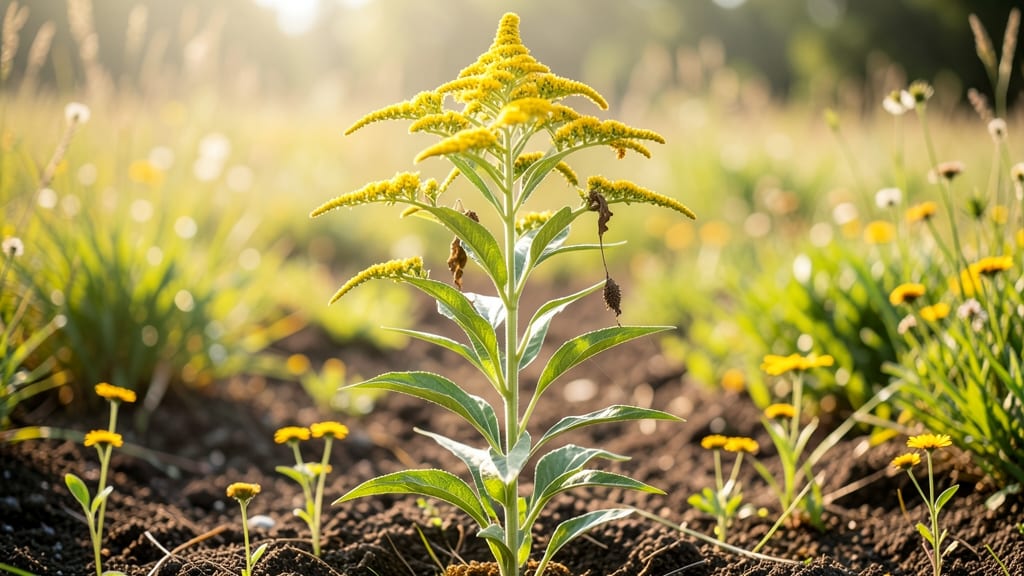
Goldenrod height by variety: exact growth ranges for popular species
Goldenrod (Solidago spp.) is a showstopper in late-summer gardens, but its height varies dramatically by variety. Some stay compact at 1–2 feet, while others reach 6 feet or taller. Knowing your goldenrod’s mature size helps you plan spacing, pruning, and even companion plants to avoid overcrowding.
Most gardeners focus on three height categories: dwarf (under 3 ft), medium (3–4 ft), and giant (4+ ft). The difference often comes down to genetics and growing conditions.
For example, Solidago canadensis (Canada goldenrod) typically grows 2–4 feet tall, while Solidago gigantea (giant goldenrod) can soar to 5–6 feet.
Here’s how to choose the right variety for your space, whether you’re aiming for a pollinator-friendly border or a wildflower meadow:
| Variety | Mature Height | Best For | Notes |
|---|---|---|---|
| Solidago canadensis | 2–4 ft | Borders, pollinator gardens | Hardy, drought-tolerant |
| Solidago rugosa (Rough-stemmed) | 3–5 ft | Wildflower meadows | Native to eastern U.S. |
| Solidago gigantea | 5–6 ft | Background planting | Tallest variety; needs support |
| Solidago sphacelata (Dwarf) | 1–2 ft | Container gardens, rockeries | Compact, great for small spaces |
| Solidago odora (Sweet goldenrod) | 2–3 ft | Fragrant borders | Leaves smell like anise |
If you’re unsure which variety to pick, consider your garden’s sunlight exposure. Most goldenrods thrive in full sun (6+ hours daily), but partial shade can reduce height by 20–30%.
For example, S. rugosa might only reach 2–3 feet in shadier spots, making it perfect for woodland garden edges.
Pro tip: Check the seed packet or nursery tag for height ranges—some hybrids (like 'Climax' or 'Fireworks') are bred for specific heights. 'Fireworks' goldenrod, for instance, stays around 3 feet tall but bursts with deep red blooms, adding a dramatic twist to classic yellow.
Goldenrod’s height isn’t just about aesthetics—it also affects pollinator attraction. Taller varieties (like S. gigantea) provide landing platforms for bees and butterflies, while dwarf types (S. sphacelata) work well in ground covers or container gardens.
Balance is key to keeping your garden both functional and beautiful.
For first-year growth, expect goldenrod to reach only 25–50% of its mature height. For example, a 4-foot variety might only hit 1–2 feet its first season. Patience pays off—by year three, most goldenrods hit their full height potential.
One common mistake? Assuming all goldenrods are wild and unruly. With the right variety and care, you can keep even 6-foot giants in check. In the next section, I’ll share my top pruning and spacing tricks to manage height without sacrificing those stunning plumes.
Goldenrod height by variety: exact growth ranges for popular species
If you’re wondering how tall goldenrod grows, the answer varies wildly depending on the species. Solidago canadensis (Canada goldenrod) is the most common, reaching 3 to 5 feet at maturity, while S. gigantea (giant goldenrod) can tower up to 6 feet or more.
Even dwarf varieties like S. microcephala stay compact at 1 to 2 feet, making them perfect for borders.
Goldenrod’s height isn’t just about genetics—soil fertility, sunlight, and pruning play huge roles. For example, S. rugosa (rough-stemmed goldenrod) typically grows 2 to 4 feet, but in rich soil with plenty of phosphorus, it can stretch closer to 5 feet.
Meanwhile, S. nemoralis (gray goldenrod) maxes out around 3 feet, even in ideal conditions.
Here’s a quick comparison of the most popular goldenrod varieties and their mature heights:
| Variety | Mature Height | Best For |
|---|---|---|
| Solidago canadensis | 3–5 ft | Pollinator gardens, meadows |
| Solidago gigantea | 4–6 ft | Wildflower borders, tall backdrops |
| Solidago rugosa | 2–4 ft | Native landscapes, erosion control |
| Solidago microcephala | 1–2 ft | Rock gardens, containers |
| Solidago nemoralis | 2–3 ft | Woodland edges, partial shade |
Even within the same species, first-year growth is often half the mature height. For example, a S. canadensis seedling might only reach 1 to 2 feet its first year but can double in height by year two.
This gradual growth makes goldenrod a great choice for low-maintenance gardens—just don’t expect instant drama!
For taller varieties, consider their spread too. S. gigantea, for instance, can spread 3 feet wide, so give it space or use it as a backdrop plant to avoid crowding smaller perennials.
If you’re short on space, opt for S. microcephala or S. nemoralis, which stay neatly contained.
Pro tip: If your goldenrod starts leaning or flopping, it’s a sign it needs staking or thinning. Overcrowded plants compete for nutrients, leading to taller but weaker stems. A little pruning in early spring can encourage bushier, sturdier growth and keep heights in check.