
How To
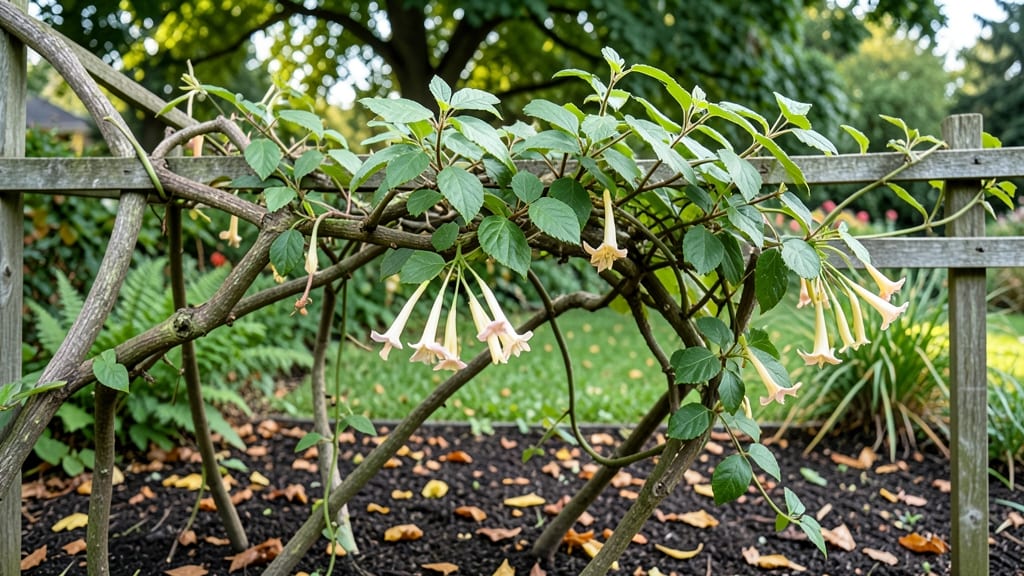
Wondering how tall does honeysuckle grow in your garden? The answer might surprise you—this fragrant 🌿 vine can stretch from a compact shrub to a towering trellis-climber, all depending on the type you choose.
Climbing varieties like the evergreen honeysuckle can reach 20-25 feet when given proper support, while bush types typically stay between 3-10 feet. The key difference? One needs a sturdy fence or arbor, while the other thrives as a standalone hedge.
If you're working with limited space, dwarf varieties are your best bet—but even standard types can be managed with smart pruning. Let’s break down how to pick the right size for your garden and keep it growing beautifully.
Whether you're planning a fragrant privacy screen or a delicate border, understanding honeysuckle’s growth habits will help you create the perfect setup. Ready to transform your outdoor space?


Climbing honeysuckle growth: how tall can it really get?
When I first planted climbing honeysuckle (Lonicera sempervirens), I assumed it would stay neatly contained—until it reached my second-story porch! The truth is, these vines are aggressive growers, capable of scaling trellises, fences, or even tree branches with their twining stems.
Some varieties, like the Japanese honeysuckle (Lonicera japonica), can climb up to 30 feet if given the right conditions.
But don’t let that intimidate you. With the right support structure and pruning habits, you can harness this growth to create a stunning vertical garden. The key is understanding how climbing honeysuckle attaches itself—using aerial rootlets and twining stems—to climb without smothering nearby plants.
If you’ve ever seen honeysuckle clinging to a wooden fence or metal trellis, you’ve witnessed its natural climbing prowess.
| Variety | Mature Height | Growth Rate | Best For |
|---|---|---|---|
| Lonicera sempervirens (Trumpet Honeysuckle) | 10–20 ft | 2–3 ft/year | Trellises, arbors, fragrant climbs |
| Lonicera japonica (Japanese Honeysuckle) | 20–30 ft | 3–5 ft/year | Fast coverage, privacy screens |
| Lonicera periclymenum (European Honeysuckle) | 15–25 ft | 2–4 ft/year | Wooden structures, rustic gardens |
The growth rate of climbing honeysuckle is one of its most impressive traits. In ideal conditions—full sun, well-draining soil, and consistent moisture—these vines can add 2–5 feet per year. That means a 3-foot vine in its first year could easily become a 15-foot masterpiece by year three.
Seasonal growth isn’t uniform, though: most of the climbing happens in late spring and summer, when the plant is actively flowering and setting new stems.
If you’re planning to grow climbing honeysuckle, pruning is non-negotiable. Without regular maintenance, vines can become woody, leggy, and overcrowded, reducing both blooms and fragrance.
I prune mine twice a year: once in late winter to remove dead or weak growth, and again in early summer to encourage bushier, more compact vines. Always prune just above a leaf node to promote new growth.
Another critical factor is support structure. Honeysuckle needs something sturdy to climb—whether it’s a trellis, arbor, fence, or even a sturdy tree. Without support, vines sprawl along the ground, which can look messy and invite pests.
I’ve seen metal trellises bend under the weight of a mature honeysuckle, so choose materials that can handle 10–20 pounds of vine weight per plant.
One common misconception is that all climbing honeysuckle grows equally tall. That’s not true! For example, Lonicera sempervirens (Trumpet Honeysuckle) typically maxes out at 10–20 feet, while Lonicera japonica can easily surpass 25 feet if left unchecked.
If you’re working with limited vertical space, opt for dwarf or semi-dwarf varieties, which stay between 5–15 feet tall.
Finally, don’t underestimate the power of seasonal pruning to control height. If your honeysuckle is getting too tall for your space, prune the longest stems back by 1/3 in early spring.
This encourages lateral branching and a fuller, more manageable plant. Just avoid heavy pruning in fall or winter, as it can stress the plant before dormancy.
With the right variety and care, climbing honeysuckle can be a fragrant, low-maintenance addition to any garden—just be prepared for its vertical ambitions! 🌿🪴
Climbing honeysuckle growth: how tall can it really get?
If you're envisioning a lush, fragrant curtain of climbing honeysuckle cascading over your arbor or trellis, you're not alone. But here's the truth: these vines can grow wildly different heights, depending on the species and growing conditions.
Some varieties stretch toward the sky like eager children, while others stay more modest—yet still impressive. Let’s break down the tallest players in the honeysuckle world and what makes them reach for the clouds.
At the top of the list is Lonicera japonica, the Japanese honeysuckle, which can climb 15 to 25 feet tall if given the right support and conditions.
This aggressive grower is known for its rapid growth rate of 3 to 5 feet per year, making it a favorite for quick garden transformations.
Meanwhile, Lonicera sempervirens, or trumpet honeysuckle, typically reaches 10 to 20 feet but can top out at 30 feet in ideal conditions with a sturdy trellis or fence to cling to.
| Variety | Mature Height | Growth Rate | Best For |
|---|---|---|---|
| Lonicera japonica | 15–25 ft | 3–5 ft/year | Fast coverage, trellises |
| Lonicera sempervirens | 10–30 ft | 2–4 ft/year | Arbors, pergolas |
| Lonicera periclymenum | 10–20 ft | 2–3 ft/year | Fragrant blooms, hedges |
What makes these vines grow so tall? Sunlight is the number one factor—6+ hours of direct sun fuels rapid vertical growth. Soil quality also plays a role: well-draining, nutrient-rich soil encourages stronger stems and more vigorous climbing.
Without proper support, like a trellis or fence, climbing honeysuckle can sprawl instead of soar, which might limit its height but still create a lush ground cover.
Seasonal growth isn’t uniform, either. Most climbing honeysuckle varieties experience a growth spurt in spring, followed by a slower pace in summer and dormancy in winter. However, Lonicera japonica can grow year-round in mild climates, which is why it’s often considered invasive in some regions.
Pruning in late winter or early spring helps control height and encourages bushier growth, but avoid heavy pruning if you want that towering effect.
If you’re planning your garden layout, consider the support structure you’ll provide. A strong trellis or metal arbor can handle the weight of a mature climbing honeysuckle, while a simple fence might not be enough for the heaviest varieties.
For smaller spaces, opt for dwarf climbing varieties like 'Manteau d'Hermine,' which maxes out around 6 to 8 feet but still delivers that signature sweet fragrance.
Remember, the height of your honeysuckle isn’t just about aesthetics—it’s about balancing growth with maintenance. A vine that’s too tall for your space can become a pruning nightmare, while one that’s too short might not fulfill your vision.
Choose wisely, and you’ll have a fragrant, eye-catching centerpiece that thrives for years.