
How To
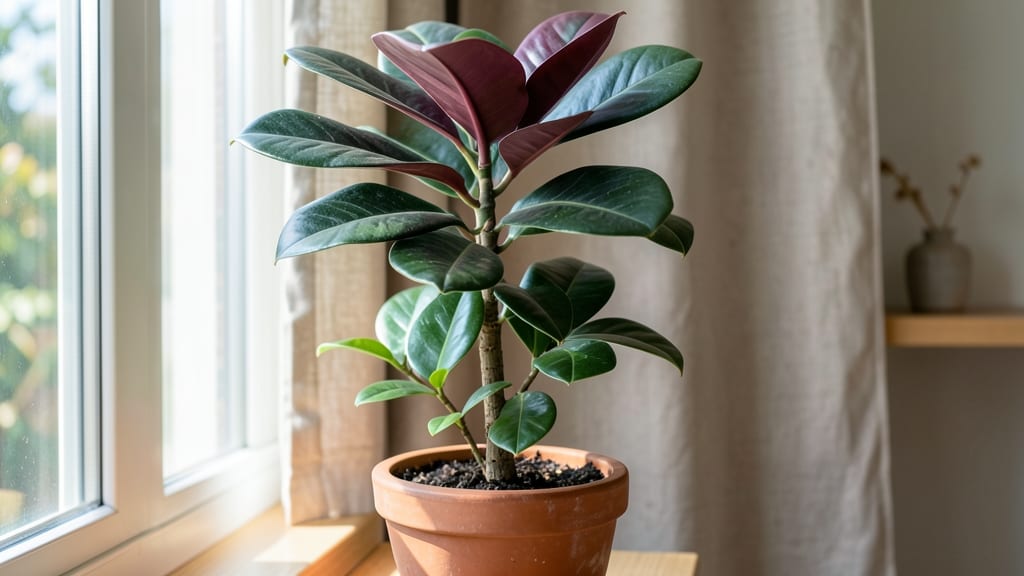
Rubber plant height by variety: from compact to towering giants
Rubber plants (Ficus elastica) are famous for their dramatic height potential, but not all varieties reach the same towering heights. Some stay compact enough for small apartments, while others grow into impressive indoor trees.
The standard rubber plant can reach 6-10 feet tall indoors with proper care, but dwarf and variegated varieties often stay shorter. Let’s explore the height ranges for popular types so you can choose the perfect fit for your space.
First, consider that growth conditions like light, soil, and pruning can adjust these ranges by 20-30%. For example, a 'Robusta' variety might hit 8 feet in a sunroom but only 4 feet in a dim corner.
Always measure your space before selecting a variety—some growers report 12-foot rubber plants in ideal greenhouse settings!
Here’s a quick comparison of how tall different rubber plant varieties grow under average home conditions:
If you’re working with limited ceiling space, dwarf varieties like 'Tineke' or 'Black Prince' are excellent choices. These stay under 5 feet even with minimal pruning. For statement-making plants, the 'Robusta' variety is unbeatable—expect 1 foot of growth per year in ideal conditions!
Pro tip: Measure your plant’s growth every 3 months to track its progress. Most rubber plants grow fastest in spring and summer, so you’ll see the biggest jumps during those seasons. Use a growth chart to predict when your plant might need pruning or repotting.
For outdoor rubber plants in USDA zones 9-11, heights can exceed 15 feet when grown as shrubs or small trees. However, these are rarely sold as houseplants—stick to the indoor varieties listed above for manageable sizes.
Remember, height isn’t the only factor—leaf size and spread also vary. A 6-foot 'Robusta' might have 12-inch leaves, while a 4-foot 'Tineke' will have smaller, variegated foliage. Choose based on both height and visual impact for your space!
🌿
How fast do rubber plants grow and what affects their height?
Rubber plants (Ficus elastica) grow at different speeds depending on their environment. Under ideal conditions, they can add 1-2 feet per year, but growth slows in winter months. Young plants grow faster than mature ones, often reaching 3-4 feet in just two years with proper care.
The growth rate depends heavily on factors like light exposure, soil quality, and humidity levels. For example, a plant in bright indirect light with well-draining soil can grow 25% faster than one in low light. Let’s break down the key influences:
- Light Exposure
- Soil Quality
- Humidity
- Pruning
- Season
Seasonal growth patterns are critical. In spring and summer, rubber plants enter their fastest growth phase, often adding 6-12 inches if conditions are ideal. During fall and winter, growth slows dramatically, sometimes halting entirely if temperatures drop below 60°F.
This dormancy period is natural and shouldn’t be confused with poor care.
Another factor is container size. Rubber plants in small pots grow slower because their roots are restricted. Upgrading to a 12-inch pot can trigger a growth spurt as the plant has more room to establish. For outdoor plants, well-draining soil and partial shade help maintain steady growth without stress.
If you’re aiming for a taller rubber plant, focus on bright indirect light and consistent watering. Avoid over-fertilizing, as this can lead to leafy but leggy growth rather than sturdy height. For compact varieties like 'Tineke,' prune regularly to encourage bushiness while still allowing vertical growth.
Remember, every rubber plant has its own pace. With patience and the right conditions, your plant can reach its full mature height—whether that’s a 6-foot indoor statement piece or a 10-foot outdoor specimen. 🌿