
Plants
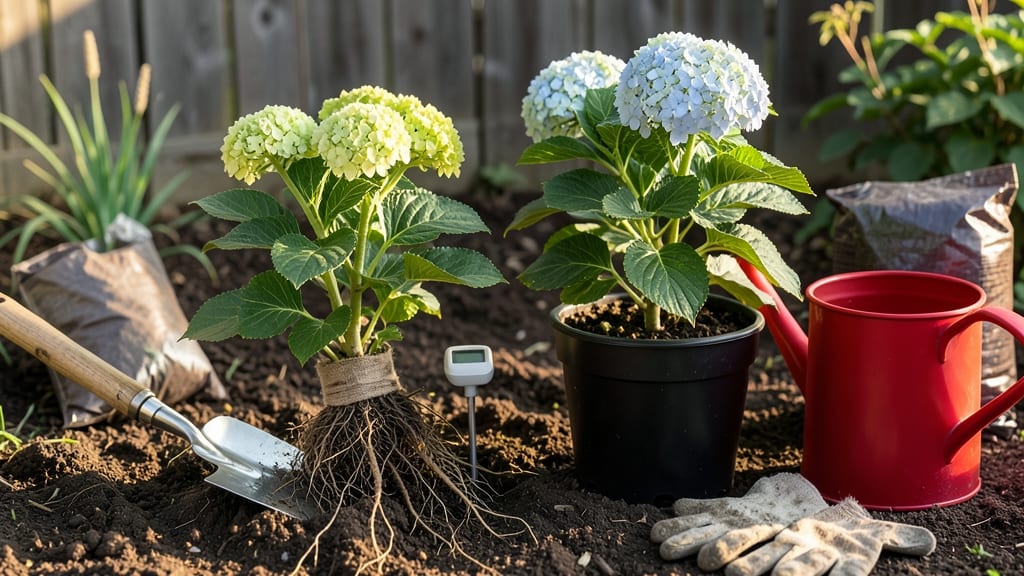
Timing your hydrangea planting in Kentucky could mean the difference between stunning blooms next year and struggling shrubs. The Zone 6B climate gives you two prime windows—spring and fall—but getting it wrong risks weak roots or winter damage.
Let’s cut through the guesswork so you can plant your 🌸 hydrangea at the perfect moment for Kentucky’s conditions.
Most gardeners in Kentucky swear by planting in April-May or September-October, but why? Spring planting lets roots establish before summer heat, while fall gives them time to settle before winter. The key is avoiding Kentucky’s unpredictable frost dates—especially around mid-April—which can shock tender new growth.
You’ll also want to know whether to plant bare-root or container-grown hydrangeas, how Kentucky’s clay-heavy soil affects timing, and which varieties thrive best in your specific microclimate. I’ll walk you through the exact steps, from soil prep to post-planting care, so your hydrangeas get off to a strong start.
Whether you’re a first-time gardener or a seasoned pro, these insights will help you plant with confidence—so you can enjoy vibrant blooms from your Kentucky garden next season. Ready to get growing?
Best planting windows for hydrangeas in Kentucky’s zone 6B climate
Kentucky’s Zone 6B climate offers two ideal windows for planting hydrangeas: early spring (April–May) and early fall (September–October). These periods align with soil temperatures that encourage root growth without stressing the plant.
Spring planting gives hydrangeas a full growing season to establish roots before winter, while fall planting allows roots to settle before dormancy.
For bare-root hydrangeas, aim to plant as soon as soil temperatures rise above 50°F (10°C), typically mid-April in Kentucky. Container-grown plants can handle slightly cooler soil, so you can start as early as late March if nights stay above freezing.
Fall planting should wrap up by early October to avoid exposing tender roots to early frost risks.
Kentucky’s microclimates can shift planting deadlines by 1–2 weeks. Urban areas like Louisville and Lexington may warm up faster than rural regions, so monitor local frost data.
Use the USDA Plant Hardiness Zone Map for your county to fine-tune timing—most of Kentucky falls within Zone 6A–7A, but elevation changes near the Cumberland Mountains can create cooler pockets.
Soil temperature is your best guide: hydrangeas thrive when roots can grow actively, which happens when soil stays consistently above 55°F (13°C) for at least 2 weeks. Use a soil thermometer to check depths of 4–6 inches before planting. In Kentucky, this usually aligns with mid-April for spring and early September for fall.
| Planting Window | Ideal Soil Temp | Kentucky Deadline | Best For |
|---|---|---|---|
| Early Spring (April–May) | 50°F–60°F (10°C–15°C) | Mid-April (bare-root), Late March (potted) | Full-season growth |
| Early Fall (September–October) | 55°F–65°F (13°C–18°C) | Early October (before frost) | Root establishment before winter |
| Avoid Planting | Below 45°F (7°C) or above 85°F (29°C) | June–August (extreme heat) | Root shock or transplant failure |
If you’re planting container-grown hydrangeas, they adapt more easily to timing shifts than bare-root plants. However, even potted hydrangeas struggle if planted during Kentucky’s summer heat waves (June–August), when temperatures often exceed 90°F (32°C).
Transplant shock becomes severe, and roots can bake in pots. For summer planting, opt for shade-cloth protection and deep watering every 2–3 days.
Kentucky’s clay-heavy soils can delay soil warming in spring. Amend planting holes with compost or peat moss to improve drainage and warmth retention. In sandy soils (common in western KY), add organic matter to hold moisture longer.
Always dig a hole twice as wide as the root ball to encourage root spread—this is critical for hydrangeas, which hate root-bound conditions.
For Bigleaf hydrangeas (like 'Endless Summer'), prioritize spring planting to ensure blooms on old wood. Oakleaf and Panicle varieties can handle fall planting better because they bloom on new wood. Label your plants at planting time to track varieties—this helps you adjust care for next year’s blooms.
Monitor your local frost dates using the National Weather Service or Kentucky Mesonet. Rural areas like Paducah often see frost 2 weeks earlier than Louisville. If you plant in fall, aim to finish by October 1st in most of KY to avoid winter stress.
Mulch heavily (3–4 inches) after planting to insulate roots during Kentucky’s chilly winters.
Remember: hydrangeas planted in Kentucky’s Zone 6B will reward you with vibrant blooms next year if you nail the timing. Spring planting gives you the edge for first-year flowers, while fall planting sets up stronger roots for bigger blooms in Year 2.
Choose based on your schedule—and don’t forget to water deeply after planting!
Best planting windows for hydrangeas in Kentucky’s zone 6B climate
Kentucky’s Zone 6B climate offers two prime windows for planting hydrangeas: early spring and early fall. These periods give roots time to establish before Kentucky’s hot summers or cold winters.
For best results, aim for April to May in spring or September to October in fall, when soil temperatures hover between 50°F and 65°F—ideal for root growth without stress.
Spring planting lets hydrangeas take advantage of Kentucky’s long growing season, while fall planting avoids summer heat and gives roots a head start before dormancy. Bare-root plants thrive in these windows, but container-grown hydrangeas can also be planted if you water them deeply afterward.
Just avoid transplanting during Kentucky’s extreme heat waves or late fall freezes.
🌱 Did You Know? Kentucky’s microclimates can shift planting times by weeks—rural areas may have earlier last frosts than cities like Louisville or Lexington. Check your local USDA frost map for precise timing.
| Planting Window | Soil Temp | Best For | Kentucky Notes |
|---|---|---|---|
| Early Spring (April-May) | 50°F–65°F | Bare-root plants | Avoid after last frost (avg. April 15) |
| Early Fall (Sept-Oct) | 55°F–60°F | Container-grown | Stop by 6 weeks before first frost (avg. Oct 15) |
| Late Fall (Nov) | 45°F–50°F | Bare-root only | Risk of winter kill; not recommended |
For container-grown hydrangeas, Kentucky’s humid summers mean you can plant up to June, but prioritize morning shade to prevent leaf scorch. If planting in late fall, opt for bare-root varieties and mulch heavily to insulate roots.
Remember: Bigleaf hydrangeas (like 'Endless Summer') need 6–8 weeks to establish roots before winter, while Panicle hydrangeas (like 'Limelight') are more drought-tolerant and adapt faster.
Pro tip: Test your soil’s pH level before planting—Kentucky’s clay-heavy soil often needs organic matter (like compost or peat moss) to improve drainage. Aim for a pH of 5.5–6.2 for blue blooms or 6.0–7.0 for pink.
Amend the soil 2–3 weeks before planting to give microbes time to break it down.
Timing isn’t just about months—it’s about Kentucky’s weather patterns. If your area experiences unusually early frosts (like in the Appalachian region), shift fall planting to early September. Conversely, western Kentucky’s warmer microclimate may allow mid-May planting. Always monitor your local weather forecast and adjust accordingly.
Once you’ve picked your window, water deeply after planting to settle the soil and eliminate air pockets. Mulch with 2–3 inches of wood chips to retain moisture and regulate soil temperature—critical in Kentucky’s hot summers and cold snaps.
With the right timing and care, your hydrangeas will reward you with lush blooms next year! 🌸