
Plants
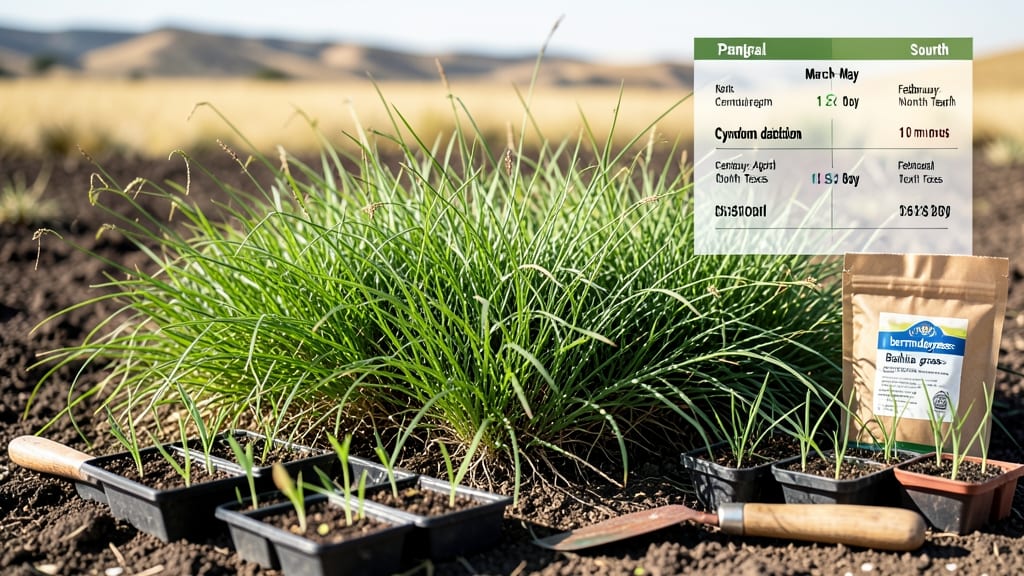
Texas pasture grass planting calendar by region: best months for fast germination
Texas’ diverse climate—from the Panhandle’s chilly winters to the Rio Grande Valley’s subtropical heat—means one planting schedule doesn’t fit all.
Cool-season grasses like ryegrass and fescue thrive in fall and early spring, while warm-season varieties such as bermudagrass and bahiagrass need spring or late summer to establish before summer’s intensity. Missing these windows can leave your pasture struggling under heat stress or drought, costing you time and money.
I’ve broken down the optimal planting months by Texas’ five key regions, accounting for soil temperatures, frost risks, and rainfall patterns.
Use this as your roadmap to avoid the most common mistakes—like planting warm-season grass in mid-summer when seeds fry before germinating or cool-season grass too early and risking frost damage.
For faster germination and 30–50% higher survival rates, align your planting with local frost dates and soil warmth. For example, the Panhandle’s September–October window for cool-season grasses ensures seeds sprout before winter’s first freeze, while South Texas’ November–December timing avoids the region’s rare but damaging 28°F freezes.
Let’s dive into the specifics for your area.
If you’re in North or Central Texas, aim for September–October planting of cool-season grasses to beat the first frost—typically hitting by mid-December in the Panhandle and late November in Austin.
For warm-season grasses, March–April gives seedlings time to establish before summer’s 90°F+ soil temperatures become lethal. Pro tip: Check the Texas A&M AgriLife Extension’s frost maps for your county’s exact dates.
In South Texas, where winters are milder, you can push cool-season planting into November–December, but always monitor forecasts for unexpected freezes. The Rio Grande Valley’s 65–72°F soil thresholds mean warm-season grasses can handle March–April planting without the heat stress seen in North Texas.
For East Texas’ Piney Woods, excess rainfall in spring can delay germination—plant in September–October to avoid soggy soil.
For Central Texas’ Hill Country, drought is the biggest threat. Plant cool-season grasses in October–November to maximize winter rainfall, and warm-season grasses in March to avoid spring
5 Critical factors that determine your planting success in Texas (beyond the calendar)
Texas pasture grass success isn’t just about picking the right month—it’s about preparing your land like a pro. I’ve seen fields with perfect timing fail because of overlooked details like soil pH or moisture management.
These five critical factors separate thriving pastures from struggling stands, especially in Texas’ unpredictable climate.
First, soil testing is non-negotiable. Texas’ clay-heavy soils often need lime or sulfur to hit the ideal pH 6.0–7.0 range. I once worked with a rancher in Central Texas whose caliche layers required 12-inch deep tillage just to let roots penetrate—something most beginners skip.
🌱 Top 5 Success Factors for Texas Pasture Grass Planting
- 1. Soil Test First: Aim for pH 6.0–7.0; Texas clay soils often need lime or sulfur. Example: Central Texas’ caliche layers require deeper tillage (12+ inches) for root penetration.
- 2. Moisture > Timing: Plant when 3–4 inches of rain are forecasted post-seeding (or irrigate daily for 2 weeks). Pro tip: Use rainfall trackers like Texas A&M AgriLife’s Soil Moisture Monitoring.
- 3. Seed-to-Soil Contact: Use a drag mat or cultipacker to eliminate air pockets—critical for Texas’ variable rainfall. Detail: Avoid over-tilling; compacted layers help retain moisture in drought-prone areas like West Texas.
- 4. Grass Type Maturity: Plant mature seed (not immature) for warm-season grasses—Texas’ heat accelerates germination. Example: Bermuda grass seed should be ≥90% mature to survive early summer planting.
- 5. Frost Insurance: In North/Central Texas, cover seeds with straw if a 28°F freeze is forecasted within 10 days of planting. Detail: Use 1–2 inches of straw (not hay) to insulate without suffocating sprouts.
Many Texas landowners overlook moisture management, assuming rainfall will suffice. I’ve seen seedlings dry out in 48 hours during April showers followed by scorching sun. The fix? Either plant when 3–4 inches of rain are guaranteed or set up drip irrigation for the first two weeks.
Tools like Texas A&M’s Soil Moisture Monitoring can save you from costly replants.
Another game-changer is seed-to-soil contact. Texas’ variable rainfall creates air pockets that strangle seeds. I recommend using a drag mat or cultipacker after planting—this simple step can double germination rates in clay soils. Just don’t over-till; compacted layers actually help retain moisture in drought-prone regions like the Panhandle.
Finally, grass type maturity is often underestimated. Warm-season grasses like Bermuda or Bahiagrass need mature seed (≥90% germination) to survive Texas’ early summer heat. I’ve had clients waste money on cheap seed that failed to establish because it was immature and heat-sensitive.
Always check for TAMU-certified varieties—they’re worth the extra cost.
For frost-prone areas like North Texas, a straw mulch blanket can be a lifesaver. When a 28°F freeze is forecasted within 10 days of planting, cover seeds with 1–2 inches of straw.
This insulates roots without trapping moisture—unlike hay, which can rot and smother seedlings. It’s a small effort that prevents total stand failure.