
Size
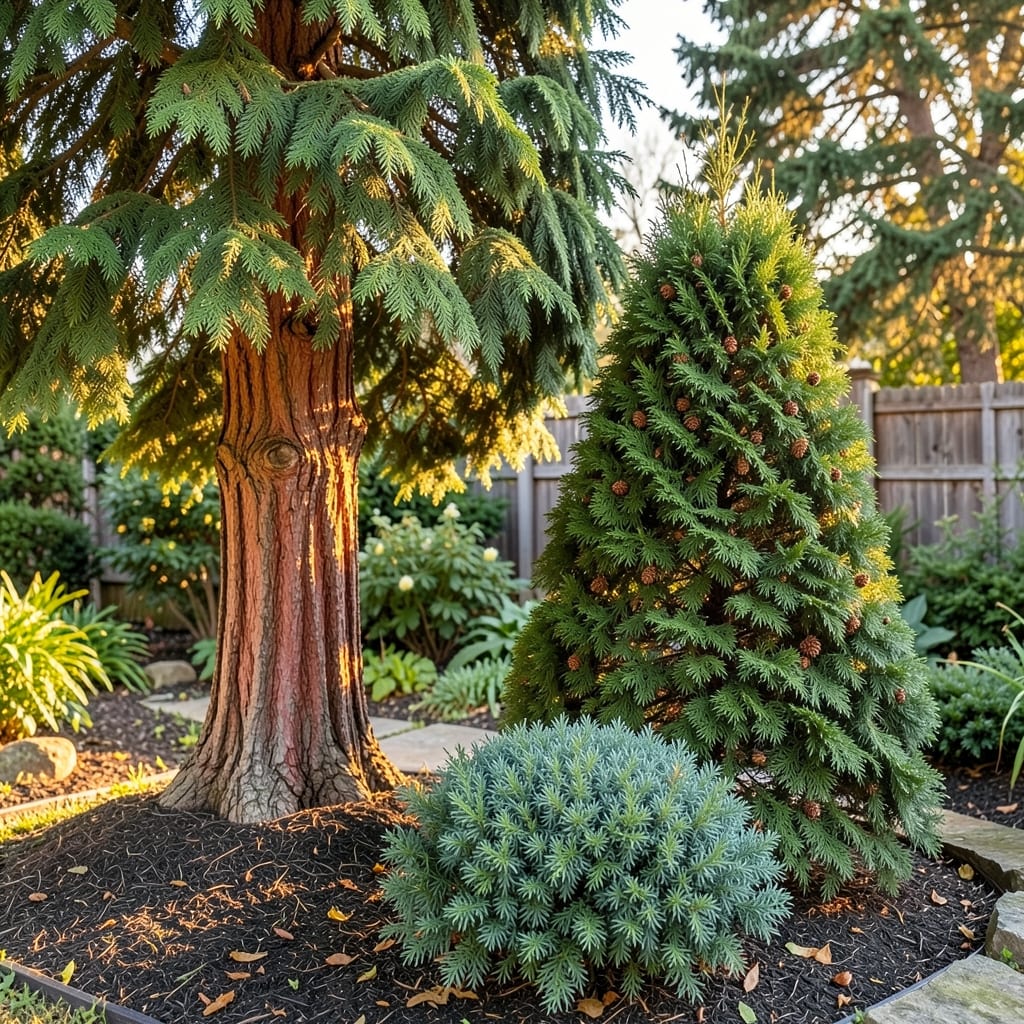
Wondering how tall arborvitae grow before you commit to planting? These evergreen trees can range from 3 feet to towering 40 feet, depending on the variety you choose. Whether you're dreaming of a towering privacy screen or a compact accent plant, knowing the mature height of arborvitae is the key to making the right choice for your space.
Some arborvitae varieties, like the Green Giant, grow fast—adding 3 to 5 feet per year—and can reach heights of 50 feet or more. Others, like the Emerald Green, stay more manageable at 12 to 15 feet, making them perfect for smaller yards. The difference comes down to species, growing conditions, and a little bit of pruning know-how.
If you're planning your landscape design, understanding these growth patterns will help you space your plants correctly and avoid future headaches. I’ll break down the fastest-growing cultivars, how to estimate their height over time, and even share tips for keeping them at your desired size—so you can create the perfect backdrop for your home.
Let’s dive into the details so you can pick the perfect arborvitae for your needs—whether you want a tall statement or a compact charm.

Arborvitae height ranges by fastest-growing cultivars (with mature sizes)
When planning your landscape, arborvitae height is one of the most critical factors. Some varieties grow over 50 feet tall, while others stay under 10 feet. The fastest-growing arborvitae cultivars can add 3-5 feet per year under ideal conditions, making them perfect for quick privacy screens or windbreaks. Let’s break down the tallest and fastest-growing varieties, including their mature heights and growth rates.
For those seeking rapid growth, the Leyland Cypress (a hybrid) and Green Giant arborvitae are top choices. These cultivars can reach 50-60 feet tall in just 10-15 years, making them ideal for large properties or commercial landscapes. Meanwhile, Emerald Green arborvitae grows more slowly but still reaches 12-15 feet in 10 years, perfect for smaller yards.
If you’re unsure which cultivar to choose, here’s a quick comparison of the fastest-growing arborvitae varieties and their mature heights:
| Cultivar | Mature Height | Annual Growth Rate | Best For |
|---|---|---|---|
| Leyland Cypress | 50-60 ft | 3-5 ft/year | Privacy screens, windbreaks |
| Green Giant | 40-50 ft | 2-4 ft/year | Large landscapes, commercial properties |
| Emerald Green | 12-15 ft | 1-2 ft/year | Small yards, hedges |
| American Arborvitae | 30-40 ft | 1-3 ft/year | Native landscapes, wildlife habitats |
| Thunderbird | 12-15 ft | 1-2 ft/year | Foundation plantings, small hedges |
The Leyland Cypress is the fastest-growing option, often doubling in height every 5-7 years when planted in full sun with rich, well-drained soil. However, its rapid growth means it may outgrow its space quickly, so plan accordingly. The Green Giant, while slightly slower, is more cold-hardy and better suited for USDA zones 5-8, making it a reliable choice for northern climates.
For those with limited space, the Emerald Green arborvitae is a popular choice. It grows at a steady 1-2 feet per year and stays compact, making it ideal for hedges or foundation plantings. Its dense foliage also provides excellent privacy without overwhelming smaller yards. If you’re aiming for a balanced growth rate, the American Arborvitae is a native option that thrives in woodland settings and reaches 30-40 feet over 20 years.
When selecting an arborvitae cultivar, consider your landscape goals and available space. For example, if you need a quick privacy screen, the Leyland Cypress or Green Giant will deliver results in 5-10 years. For a slower, more manageable option, Emerald Green or Thunderbird are excellent choices that won’t require frequent pruning to control height.
Always check the mature height and growth rate of your chosen cultivar before planting. Overestimating space can lead to root competition or the need for aggressive pruning, which can stress the tree. Measure your space carefully and leave at least 3-5 feet of clearance around the base for airflow and maintenance.
Proper spacing is key—planting arborvitae too closely can stunt their growth or lead to disease spread due to poor airflow. For example, Green Giant trees should be spaced 8-10 feet apart, while Emerald Green can be planted 3-5 feet apart for a dense hedge. Always follow the cultivar’s spacing guidelines to ensure healthy growth.
If you’re unsure which cultivar to choose, start with your landscape’s specific needs. Need a fast-growing screen? Go for Leyland Cypress. Prefer a low-maintenance native option? The American Arborvitae is perfect. For small spaces, Emerald Green or Thunderbird are ideal. With the right choice, your arbor
How to estimate arborvitae height over time (growth rate factors)
Predicting how tall your arborvitae will grow depends on understanding its annual growth rate, which varies dramatically by cultivar. For example, a Green Giant can grow 3-5 feet per year in ideal conditions, while a dwarf variety like 'Tiny Tim' might only add 6 inches annually. These differences mean your 10-year-old arborvitae could range from a modest 3 feet to a towering 30 feet, depending on your choice.
To estimate growth accurately, start by checking the cultivar’s expected growth rate. Most arborvitae grow fastest in their first 5-10 years, then slow as they mature. For instance, a Leyland Cypress hybrid might hit 20 feet in 5 years but only add 1-2 feet per year after that. Use this rule of thumb: multiply the annual growth rate by the number of years to get a rough estimate, then adjust for local conditions.
Soil quality is the #1 factor affecting height. Arborvitae thrive in well-draining, slightly acidic soil (pH 6.0-7.0). Heavy clay or waterlogged soil can stunt growth by 30-50%. If your soil is poor, amending it with compost or organic matter before planting can boost height by up to 2 feet per year in the early stages. I once saw a Green Giant grow 4 feet in a single season after adding compost to its planting hole.
Growth Rate Factors
- 🌿 Soil quality: Rich, well-draining soil = faster growth
- ☀️ Sunlight: Full sun (6+ hours) = 2x growth vs. partial shade
- 🌡️ Climate: Warmer zones (USDA 6+) = 10-15% faster growth
- ✂️ Pruning: Over-pruning can reduce height by 30%
- 💧 Watering: Consistent moisture = 1-2 ft/year boost
Sunlight exposure directly impacts height. Arborvitae need full sun (6+ hours daily) to reach their maximum potential. In partial shade (3-6 hours of sun), growth can slow by 40-60%. For example, a Emerald Green in full sun might reach 12-15 feet in 10 years, but in shade, it could stay under 8 feet. If your yard has limited sun, choose shade-tolerant cultivars like 'American Arborvitae' or 'Globe Arborvitae', which grow slower but adapt better to low-light conditions.
Your climate zone plays a surprisingly large role. Arborvitae grow fastest in USDA Zones 5-7, where they experience moderate winters and long growing seasons. In Zone 8+, growth can accelerate by 10-15% annually due to longer frost-free periods. However, in Zone 4 or colder, growth may slow by 20-30% as the plant focuses energy on cold hardiness. If you're in a cooler zone, consider 'Wichita Blue' or 'Scotch Pine Arborvitae', which handle cold better while still growing steadily.
Pruning can dramatically alter height if not done carefully. Shearing or topping arborvitae to control height is common, but overdoing it can stress the tree and reduce growth by up to 50%. For example, if you shear a Green Giant back by 1 foot annually, it may never reach its full 40-50 foot potential. Instead, use selective pruning to shape the tree while allowing it to grow naturally. I recommend pruning only in late winter or early spring to avoid damaging new growth.
Finally, avoid these common mistakes that stunt growth: planting too deep (root collar should be 2-3 inches above soil), overwatering (can cause root rot), or using high-nitrogen fertilizers without balancing with phosphorus and potassium. I’ve seen arborvitae planted too deep fail to grow taller than 6 feet after 10 years because their roots couldn’t access oxygen properly. Always follow the 'planting depth rule' for your specific cultivar.