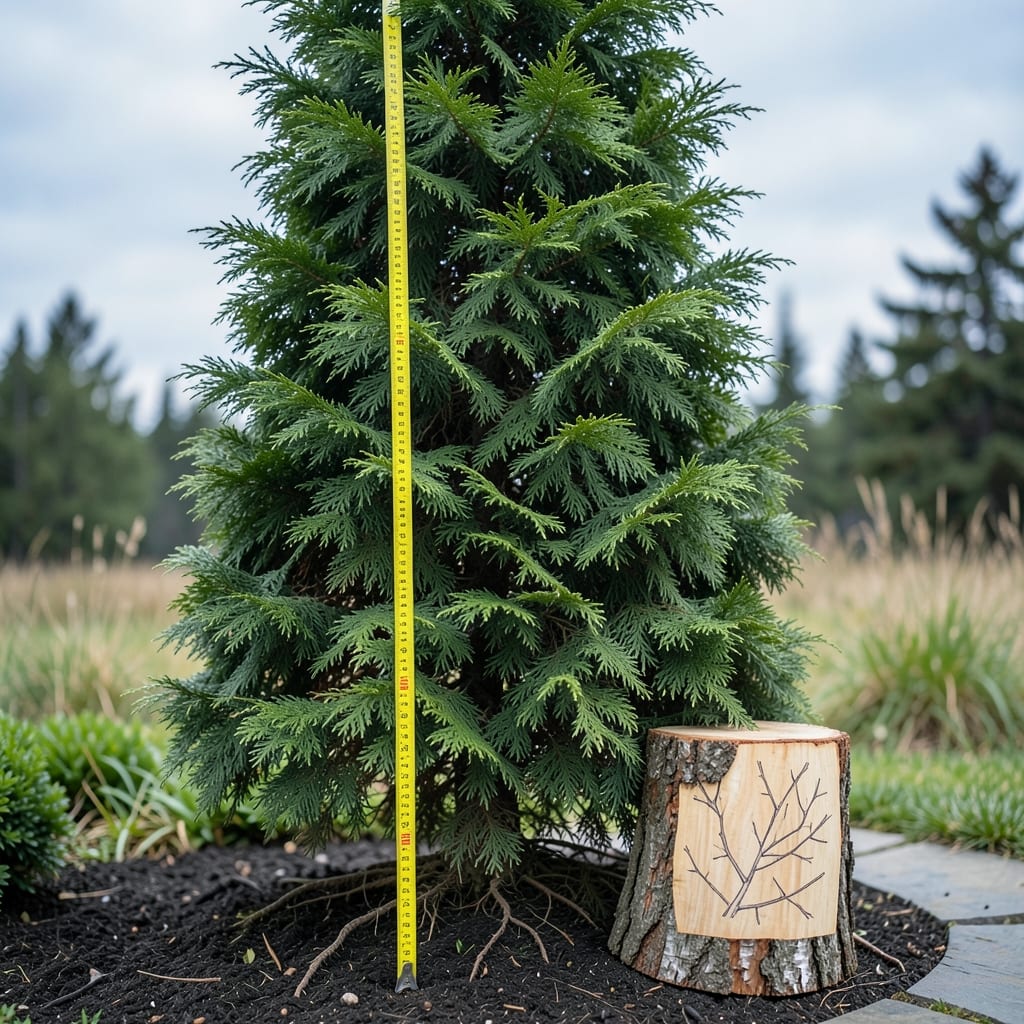
Ever wondered how tall your arborvitae 🌲 could grow before it becomes a towering landscape feature? The answer depends entirely on the variety you choose—some stay compact and manageable, while others shoot up like skyscrapers in just a decade.
If you're planning your landscape with these evergreens in mind, knowing the height range is the key to avoiding surprises. Fast-growing types like Green Giant can reach 40-60 feet tall, while dwarf varieties stay under 10 feet—making them perfect for smaller yards. The growth rate also varies, with some adding 2 feet per year and others growing much slower.
But height isn't just about genetics—it's also about where you plant it. Sunlight, soil quality, and even pruning habits play a huge role in how tall your arborvitae becomes. Let me break down the fastest-growing varieties, how to control their height naturally, and what to expect over time.
Whether you're dreaming of a towering privacy screen or a neat hedge, understanding these growth patterns will help you make the best choices for your space. Let’s dive into the details so you can plan with confidence.
Arborvitae Height Range
10 ftto60 ft
0 ft3 ft6 ft9 ft12 ft
🌱Very Very Tall Tree
Arborvitae height limits by fastest-growing varieties (with growth rates)
Arborvitae trees—belonging to the Thuja genus—come in a stunning range of heights, from tiny dwarf varieties perfect for borders to towering sky-high giants that can outshine your two-story home. The fastest-growing arborvitae varieties, like Green Giant and Emerald Green, can shoot up 3 feet per year in ideal conditions, while dwarf types like Compacta max out at just 3–4 feet tall. Your choice of variety isn’t just about aesthetics—it’s about long-term planning for spacing, pruning, and even property lines!
If you’re dreaming of a privacy screen or a windbreak hedge, the tallest arborvitae varieties will deliver dramatic results in just a decade. But if you’re working with limited space, semi-dwarf or compact cultivars offer all the beauty without the overwhelming height. Let’s break down the height limits and growth rates of the most popular arborvitae types so you can pick the perfect fit for your landscape.
🌲 Key Takeaway: Arborvitae height varies wildly by variety. A Green Giant can hit 50–60 feet in 20 years, while a Golden Globe stays a cozy 3–4 feet tall forever. Your pruning habits and growing conditions also play a huge role in how tall (or short) your tree becomes.
Arborvitae Height Comparison by Variety
Variety
Mature Height
Annual Growth
Ideal Spacing
Best For
Green Giant
40–50 ft
3 ft/year
12–15 ft apart
Privacy screens, windbreaks
Emerald Green
12–15 ft
1–2 ft/year
4–6 ft apart
Hedges, foundation plantings
Leap ‘n Grow
15–20 ft
2–3 ft/year
6–8 ft apart
Quick-growing hedges
Compacta
3–4 ft
6–12 in/year
2–3 ft apart
Borders, containers
Golden Globe
3–4 ft
4–6 in/year
2–3 ft apart
Accent plants, rock gardens
American Arborvitae
30–40 ft
1–2 ft/year
10–12 ft apart
Wildlife habitat, large landscapes
Arborvitae height limits by fastest-growing varieties (with growth rates)
When planning your landscape, knowing how tall arborvitae can grow helps you choose the right variety for your space. The Green Giant variety, for example, can reach 40–60 feet tall, while dwarf types like Compacta stay under 3 feet. Understanding these differences ensures you select a tree that fits your yard's scale and design goals.
Arborvitae growth rates vary dramatically—some varieties grow 2–3 feet per year, while others add just 6–12 inches annually. The fastest growers, like the Leap ‘n Grow, can reach 10 feet in just 5 years, making them ideal for quick privacy screens. Slower growers, such as Emerald Green, take 10–15 years to reach their mature height of 12–15 feet.
Variety
Mature Height
Annual Growth
Ideal Spacing
Green Giant
40–60 ft
2–3 ft/year
15–20 ft apart
Leap ‘n Grow
30–40 ft
3–4 ft/year
10–15 ft apart
Emerald Green
12–15 ft
6–12 in/year
4–6 ft apart
Compacta
2–3 ft
3–6 in/year
2–3 ft apart
Proper spacing between trees is critical to avoid root competition and ensure healthy growth. For example, planting Green Giant arborvitae 15–20 feet apart gives them room to develop their full width of 10–15 feet. Dwarf varieties like Compacta can be planted closer together, making them perfect for hedges or borders.
Soil quality and sunlight also impact height. Arborvitae thrive in well-draining, slightly acidic soil with full sun to partial shade. In poor soil or low-light conditions, growth slows significantly, often by 30–50%. Amending soil with compost or peat moss can boost growth rates in less-than-ideal conditions.
If you're using arborvitae for a privacy screen, consider the Leap ‘n Grow variety for faster results. For a low-maintenance hedge, Emerald Green or Compacta are excellent choices. Always check your local USDA hardiness zone (arborvitae thrive in zones 3–8) to ensure your selected variety will flourish in your climate.
For maximum height control, plan your planting layout carefully. Fast-growing varieties may need annual pruning to maintain shape, while dwarf types require minimal maintenance. Always measure your space before planting to avoid overcrowding, which can stunt growth and lead to disease.