
Size
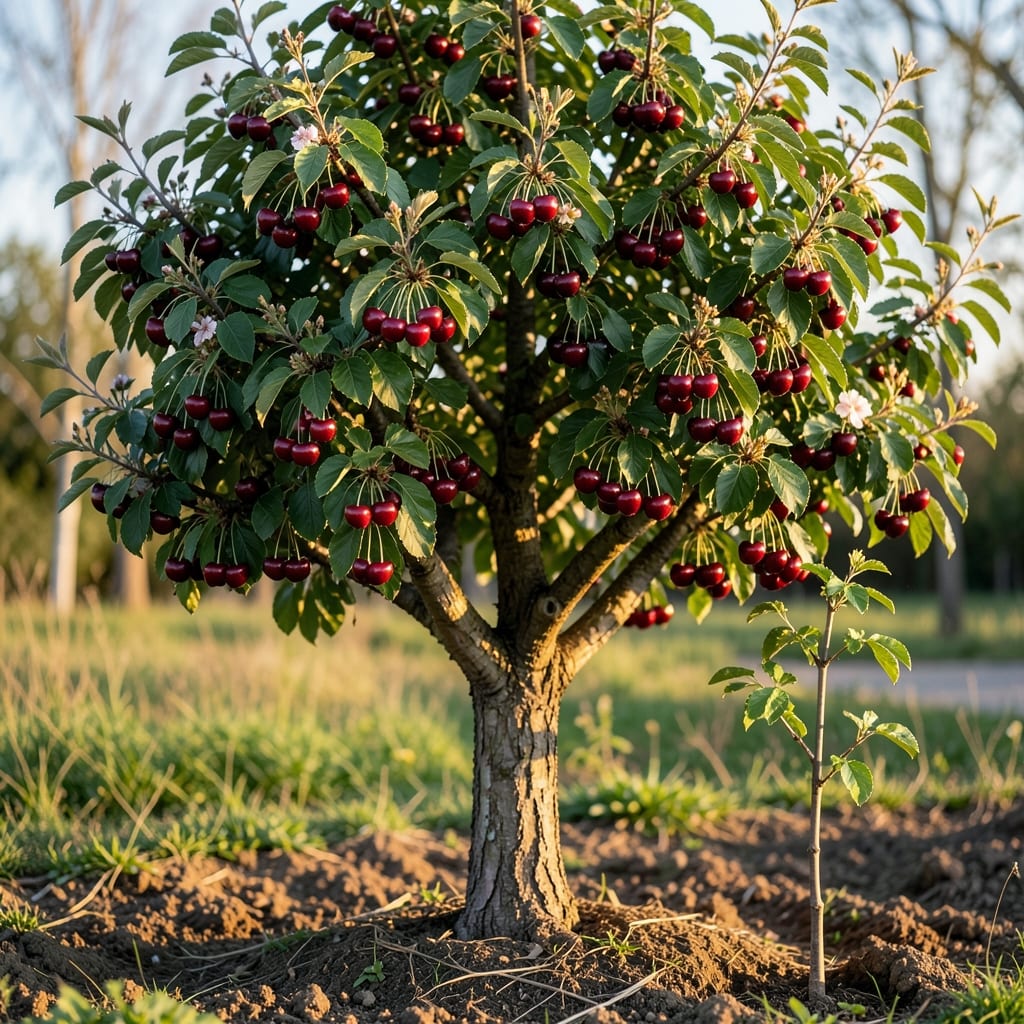
Curious about how tall can cherry trees grow before they become a backyard giant? The answer might surprise you—some varieties stretch toward the sky like skyscrapers, while others stay neatly trimmed for small spaces. Whether you're planning a 15-foot dwarf or a 60-foot towering specimen, understanding these heights is the first step to picking the perfect 🌸 cherry tree for your landscape.
Imagine waking up to a canopy of blossoms in spring, only to realize your tree’s mature height means it’ll soon shade your entire patio. That’s why knowing the growth potential of different varieties—like the compact 'Stella' or the sprawling 'Rainier'—isn’t just useful, it’s essential. But height isn’t just about the variety; soil quality, sunlight, and even your pruning habits play a huge role in how tall (or short) your tree ends up.
If you’re dreaming of a cherry tree but worried about space, don’t stress. We’ll break down the exact heights of popular types, from dwarf varieties that fit patios to standard trees that need room to breathe. Plus, I’ll share pro tips to manage growth—because sometimes, even the tallest trees can be trained to stay within bounds.
Ready to find the perfect fit for your yard? Let’s dive into the world of cherry tree heights and discover which variety will thrive—and grow—where you live.

Cherry tree height by variety: dwarf to giant mature sizes
Cherry trees are stunning additions to any landscape, but their mature height can vary dramatically depending on the variety. From dwarf varieties perfect for small backyards to standard giants that tower over your home, understanding these differences helps you choose the right tree for your space. I’ve grown several varieties myself, and the contrast in size is truly remarkable!
For example, the 'Stella' cherry tree stays a compact 8–12 feet tall, making it ideal for urban gardens, while the standard 'Bing' cherry can reach 30–60 feet—as tall as a three-story building! The key lies in the rootstock and pruning practices, which we’ll explore further below.
Here’s a quick breakdown of the most popular cherry tree varieties and their mature heights to help you visualize their potential in your garden:
| Variety | Type | Mature Height (ft) | Notes |
|---|---|---|---|
| 'Stella' | Dwarf Sweet | 8–12 | Compact, great for containers |
| 'Balaton' | Dwarf Tart | 10–15 | Cold-hardy, disease-resistant |
| 'Rainier' | Semi-Dwarf Sweet | 15–25 | Yellow-red fruit, needs cross-pollination |
| 'Montmorency' | Standard Tart | 20–30 | Classic sour cherry, great for pies |
| 'Bing' | Standard Sweet | 30–60 | Iconic dark red cherries, needs space |
| 'Black Tartarian' | Standard Tart | 25–40 | Dark purple fruit, self-pollinating |
| 'Columbia' | Columnar Sweet | 12–15 (narrow) | Narrow growth, great for small yards |
If you’re short on space, columnar varieties like 'Columbia' are game-changers—they grow narrow but tall, fitting perfectly along fences or property lines. Meanwhile, ornamental cherries, such as 'Okame', can reach 20–30 feet but wow with stunning spring blooms and autumn colors.
Pruning plays a huge role in managing height. For example, I’ve seen standard Bing cherries kept at 15–20 feet through aggressive annual pruning, while neglected trees can easily exceed 40 feet. The key is to prune in late winter to shape the tree and remove suckers that encourage vertical growth.
For sweet cherries, most varieties need cross-pollination, so planting two compatible trees (like 'Rainier' and 'Stella') ensures fruit production. Tart cherries, on the other hand, are often self-pollinating, making them easier to grow solo. This is something I learned the hard way—my first sweet cherry tree bore almost no fruit until I added a second variety!
Ornamental cherries, like 'Autumn Brilliance', focus more on foliage and flowers than fruit. These can grow 20–30 feet tall but are prized for their vibrant fall colors and spring blossoms. They’re perfect if you want a low-maintenance tree with high visual impact.
Before planting, always check your local climate zone—some varieties, like 'Montmorency', thrive in USDA Zones 3–7, while others, like 'Bing', prefer Zones 5–8. My 'Rainier' cherry, for instance, struggled in its first year until I moved it to a s
What determines a cherry tree’s maximum height?
Cherry trees aren’t one-size-fits-all when it comes to height—soil quality plays a starring role. Well-draining, nutrient-rich soil with a slightly acidic pH (6.0–6.5) fuels rapid growth, while poor or compacted soil stunts a tree’s potential. For example, a ‘Stella’ cherry tree might max out at 12 feet in rocky soil but reach 15 feet in loamy, fertile beds. Always test your soil before planting to avoid surprises!
Another game-changer is sunlight exposure. Cherry trees thrive in full sun (6+ hours daily), which boosts their growth rate. In partial shade, a standard Bing cherry could stay 10–15 feet shorter than its sun-soaked counterpart. South-facing yards are ideal, but even east or west exposures work if the tree gets direct morning or afternoon light.
Don’t overlook the rootstock—this underground foundation dictates whether your cherry tree will be a towering giant or a compact shrub. For instance, grafting a ‘Rainier’ cherry onto Gisela 5 rootstock caps its height at 8–12 feet, while the same variety on Mahaleb rootstock can soar to 25–30 feet. Always check the rootstock type when buying nursery trees!
Pruning is your secret weapon for controlling height. If left unchecked, a standard Bing cherry can hit 50–60 feet, but strategic pruning in late winter (before buds swell) keeps it 20–30% shorter. Focus on removing suckers, water sprouts, and crossing branches to encourage a stronger, more manageable structure. Just avoid heavy pruning in summer—it stresses the tree and invites pests.
Finally, climate matters. Cherry trees in USDA zones 7–9 (e.g., California, Georgia) grow faster and taller due to longer growing seasons, while those in zones 5–6 (e.g., Michigan, New York) may mature more slowly. Cold winters can also damage young trees, stunting their growth. If you’re in a colder zone, choose hardy varieties like ‘Montmorency’ tart cherry (15–20 ft) over heat-loving ‘Lapins’ (25–30 ft).
By mastering these factors, you can steer your cherry tree’s height—whether you want a backyard giant or a container-friendly dwarf. Start with the right variety and rootstock, then tweak sunlight, soil, and pruning to shape its future! 🌳✂️