
Vegetables
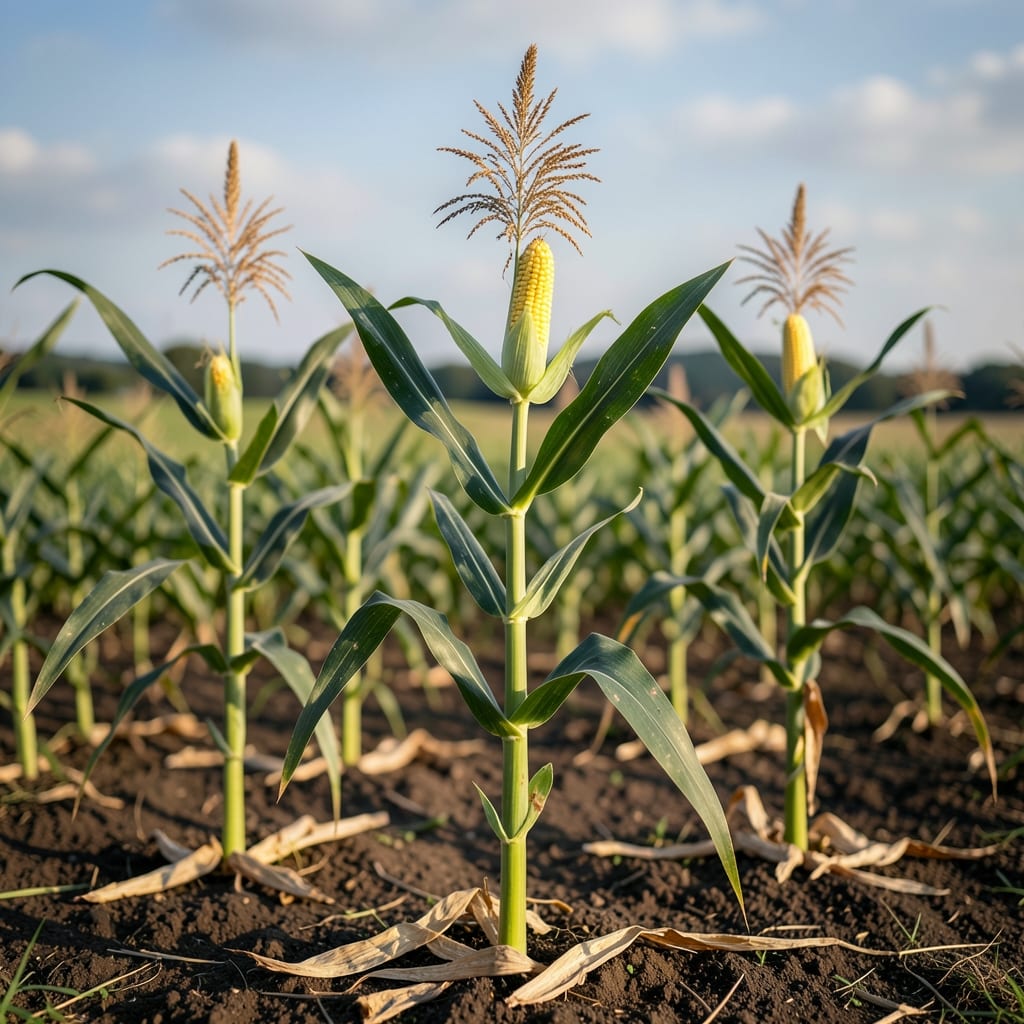
If you've ever wondered just how tall your 🌽 corn plants can grow, the answer might surprise you—some varieties stretch toward the sky like nature's skyscrapers, while others stay humble and compact. Understanding how tall corn grows isn't just about fitting it into your garden; it's the first step to growing healthier, more productive plants and avoiding common mistakes that stunt their growth.
From the towering 12-foot giants like 'Mammoth' to the charming 5-foot 'Golden Bantam' that barely reaches your knees, corn height varies more than you'd think. The right growing conditions—like full sun, rich soil, and consistent water—can push your plants to their full potential, while poor care might leave them struggling to stand tall. Let's break down what influences corn height and how you can optimize it for the best results.
Did you know that corn needs 6-8 hours of sunlight daily to reach its maximum height? Even the most compact varieties will fall short without proper care. Whether you're planting sweet corn for the table or field corn for livestock, knowing the height range of your variety helps with spacing, support, and even harvest planning. The key to success lies in understanding the factors that shape your corn's growth from seed to stalk.
Ready to grow corn that reaches its full height potential? I'll walk you through the varieties, growing conditions, and care tips that make the difference between a knee-high disappointment and a sky-scraping harvest. Let's get started!


Corn height ranges by variety: from dwarf to giant varieties
When planning your corn garden, knowing the height range of your chosen variety is essential for proper spacing and support. Corn heights vary dramatically—from dwarf varieties that stay under 5 feet to giant types that can reach over 12 feet. The right variety for your space and goals can mean the difference between a manageable patch and a towering jungle of stalks.
Most gardeners grow standard sweet corn varieties like 'Silver Queen' or 'Peaches and Cream,' which typically reach 6-8 feet at maturity. These are perfect for home gardens with moderate space. However, if you're aiming for a dramatic display or have plenty of room, tall varieties like 'Mammoth' or 'Country Gentleman' can create a stunning vertical garden feature.
For smaller gardens or container growing, dwarf corn varieties like 'Golden Bantam' or 'Tom Thumb' are ideal. These stay between 3-5 feet tall, making them perfect for patio containers or urban gardens where space is limited. Even these compact varieties can produce sweet, flavorful ears—just on a smaller scale.
Field corn, often grown for livestock or ethanol production, tends to be taller than sweet corn, with varieties like 'Pioneer Brand 39G53' reaching 8-12 feet. These giants need ample space and strong support, especially in windy areas where their height can make them top-heavy.
| Variety Type | Height Range | Best For | Notes |
|---|---|---|---|
| Dwarf Sweet Corn | 3-5 ft | Containers, small gardens | Examples: 'Golden Bantam', 'Tom Thumb' |
| Standard Sweet Corn | 6-8 ft | Home gardens, fresh eating | Examples: 'Silver Queen', 'Peaches and Cream' |
| Tall Sweet Corn | 8-12 ft | Large gardens, dramatic effect | Examples: 'Mammoth', 'Country Gentleman' |
| Field Corn | 8-12+ ft | Livestock, ethanol production | Examples: 'Pioneer Brand 39G53' |
If you're growing corn for ornamental purposes, consider multi-colored varieties like 'Rainbow' or 'Glass Gem,' which can reach 7-10 feet while adding vibrant streaks of color to your garden. These varieties are perfect for creating a natural corn maze or as a striking backdrop for other plants.
For container growing, stick to dwarf varieties or use large pots (at least 18 inches deep)** to accommodate even semi-dwarf types. Remember that corn needs deep roots, so shallow containers will stunt growth regardless of the variety. If you're growing taller varieties in containers, consider using sturdy stakes or trellises to support their weight.
Did you know that corn height can also influence pollination success? Taller varieties may have an advantage in windy areas, as their tassels can catch the breeze more effectively. However, if you're growing multiple varieties, ensure they're planted in blocks (not rows) to improve cross-pollination and prevent uneven ear development.
When selecting your corn variety, also consider your harvest goals. Taller plants may produce more ears, but they also require more space and nutrients. If you're growing corn for silage or livestock feed, taller field corn varieties will yield more biomass per plant. For fresh eating, mid-height sweet corn varieties often strike the best balance between yield and manageability.
Pro tip: If you're new to growing corn, start with a standard sweet corn variety like 'Ambrosia' or 'Bodacious.' These are disease-resistant, produce consistent yields, and reach a manageable 7-8 feet at maturity—perfect for building confidence before tackling taller varieties.
🌽
How growing conditions affect corn height: sun, soil, and season
Your corn's final height isn't just about the variety you plant—it's heavily influenced by growing conditions. While some varieties naturally reach 12 feet, others may only grow half that tall if conditions aren't ideal. The right balance of sunlight, soil quality, and seasonal timing can push your corn to its maximum potential height, while poor conditions will leave it stunted and struggling.
Let's start with the most critical factor: sunlight exposure. Corn is a sun-worshipper that needs 6-8+ hours of direct sunlight daily to grow tall and strong. Even varieties labeled as "short" will fall short if they don't get enough light. In my garden, I've seen 'Silver Queen' corn—normally a 6-7 foot variety—struggle to reach 4 feet when planted in partial shade. The moral? Always plant corn in the sunniest spot available.
Soil quality plays an equally important role in determining how tall your corn will grow. Corn thrives in well-draining, fertile soil with a pH between 6.0 and 6.8. If your soil is compacted, nutrient-poor, or has poor drainage, your corn plants will focus energy on survival rather than reaching for the sky. I recommend testing your soil before planting and amending it with compost and a balanced fertilizer (like 10-10-10) to give your corn the nutrients it needs to grow tall and strong.
🌱 Key Takeaway: Optimizing Corn Height
- Sunlight: 6-8+ hours daily = full height potential
- Soil: Loose, fertile, pH 6.0-6.8 for best growth
- Water: 1-2 inches weekly—more during tasseling
- Spacing: 12-36 inches apart (depends on variety)
- Season: Plant after last frost in warm soil (70°F+)
Pro Tip: For taller varieties like 'Mammoth', add stakes or trellises early to support their weight and prevent lodging.
Watering habits can make or break your corn's height potential. Corn has high water needs, especially during the critical tasseling and ear development stages. I've seen corn plants wilt dramatically during dry spells, only to recover and continue growing when watered properly. Aim for 1-2 inches of water per week, delivered consistently rather than in sporadic bursts. Morning watering is best—it reduces fungal diseases and gives plants time to dry before evening.
The growing season also impacts how tall your corn will become. Corn planted too early in cool soil may struggle to establish roots and stems, while late plantings might not have enough time to mature fully. I always wait until the soil reaches 70°F+ and plant after the last frost date in my zone. For most gardeners, this means starting seeds indoors 4-6 weeks before the last expected frost or direct-sowing after warm soil conditions are confirmed.
Finally, don't underestimate the power of proper spacing. Corn planted too closely will compete for sunlight, water, and nutrients, resulting in shorter, weaker stalks. Taller varieties like 'Country Gentleman' (10-12 feet) need 36 inches of spacing, while shorter types like 'Peaches and Cream' (7-8 feet) can get by with 12 inches. I've learned this lesson the hard way—once, my overcrowded 'Mammoth' corn barely reached 8 feet because they were fighting for resources!
By paying attention to these growing conditions, you'll give your corn the best chance to reach its full height potential. Whether you're growing dwarf varieties for small gardens or giant stalks for show, the right care makes all the difference. With proper sunlight, soil, water, and spacing, your corn will grow tall, strong, and ready for harvest! 🌽