
How To
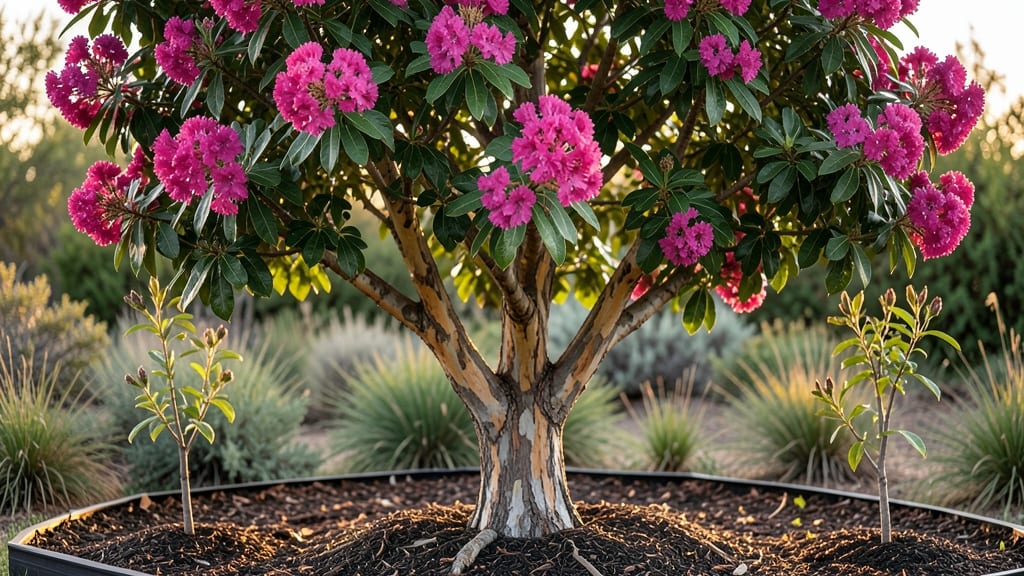
If you're dreaming of a stunning, low-maintenance tree that blooms like a firework display every summer, crepe myrtles might be your perfect match—but first, you need to know: how tall do crepe myrtles grow?
These trees can range from compact shrubs to towering giants, depending on the variety and care you provide.
The 🌸 crepe myrtle isn’t just a one-size-fits-all plant. Dwarf varieties might stay as short as 6 feet, while standard types can soar up to 30 feet—that’s taller than a basketball hoop!
Understanding these differences is key to choosing the right tree for your space and ensuring it thrives in USDA Zones 7-10.
What’s even more interesting? The height of your crepe myrtle isn’t just about genetics—it’s also shaped by factors like pruning, sunlight, and soil conditions. Whether you’re planning a backyard retreat or a street-lining masterpiece, knowing these 5 key factors will help you manage (or maximize) your tree’s growth.
Ready to turn your yard into a showstopper? Let’s break down everything you need to know about crepe myrtle height—from picking the perfect variety to keeping it at your ideal size.


Crepe myrtle height range: what to expect based on variety
Crepe myrtles (Lagerstroemia indica) are famous for their vibrant blooms and adaptability, but their mature height can vary dramatically depending on the cultivar you choose. If you're planning your landscape, knowing these height ranges will help you select the perfect tree for your space.
Some varieties stay compact, while others grow tall enough to rival small trees.
Most crepe myrtles reach maturity between 6 to 30 feet, but their growth habits differ significantly. For example, the popular 'Natchez' variety can grow up to 25 feet tall, while dwarf varieties like 'Arapaho' or 'Tonto' stay under 12 feet.
Understanding these differences ensures you pick a tree that fits your yard without overwhelming it.
Here’s a quick visual guide to help you compare the most common crepe myrtle varieties and their mature heights:
| Variety | Mature Height (ft) | Growth Rate | Best For |
|---|---|---|---|
| 'Natchez' | 20-25 ft | Moderate | Large landscapes, focal points |
| 'Muskogee' | 15-20 ft | Fast | Medium yards, privacy screens |
| 'Arapaho' | 6-10 ft | Slow to moderate | Small yards, containers |
| 'Tonto' | 8-12 ft | Slow | Urban gardens, patios |
| 'Sioux' | 10-15 ft | Moderate | Medium spaces, borders |
Dwarf varieties like 'Arapaho' and 'Tonto' are ideal if you have limited space or want to plant crepe myrtles in containers. Meanwhile, standard varieties like 'Natchez' or 'Muskogee' make stunning focal points in larger yards or as shade trees.
Always check the spacing recommendations on the nursery tag to avoid overcrowding.
Even within the same variety, environmental factors like sunlight and soil quality can influence how tall a crepe myrtle grows. For instance, a 'Natchez' in full sun may reach its maximum height faster than one planted in partial shade.
I’ll cover these factors in more detail in the next section, so stay tuned!
If you’re unsure which variety to choose, consider your yard’s layout and future growth. A 10-foot-tall tree might seem perfect now, but in 5 years, it could block sunlight or interfere with power lines. Always leave room for your crepe myrtle to grow into its mature size.
Pro tip: When planting, dig a hole twice as wide as the root ball but only as deep. This encourages root expansion, which supports healthier growth and stability as the tree matures. Mulch around the base to retain moisture and suppress weeds, which also helps the tree establish itself quickly.
Crepe myrtles are prized for their drought tolerance once established, but their height potential is heavily influenced by early care. With the right variety and conditions, you can enjoy years of stunning blooms without worrying about overgrowth.
Just remember: patience is key—these trees grow slowly in their first few years but reward you with dramatic height gains later on.
5 Critical factors that control crepe myrtle growth height
Crepe myrtles are famous for their dramatic height variations, but did you know 5 key factors determine whether your tree will stay compact or tower like a skyscraper?
Understanding these will help you control growth and avoid unexpected space issues. Let’s break down what truly influences how tall your crepe myrtle will grow.
First, sunlight exposure plays a starring role. Crepe myrtles thrive in full sun (6+ hours daily), which fuels rapid vertical growth. However, partial shade can stunt height by up to 30%, keeping your tree shorter but potentially bushier.
If you’re in a shadier climate, expect a more compact 6–12 ft mature height rather than the 20–30 ft standard.
Next, pruning techniques can dramatically alter height. Many gardeners mistakenly prune crepe myrtles in summer or fall, which encourages weak, leggy growth. Instead, late winter pruning (just before buds swell) removes water sprouts and shapes the tree.
If you want a 6–12 ft dwarf variety, prune aggressively for 3 years straight—you’ll see a 50% height reduction compared to unpruned trees.
Don’t underestimate soil conditions either. Crepe myrtles prefer well-draining, slightly acidic soil (pH 5.5–6.5). Compacted or clay-heavy soil restricts root growth, forcing the tree to grow taller to access nutrients. Amend your soil with compost or sand before planting to encourage a sturdier, shorter tree.
I once planted one in heavy clay—it shot up to 25 ft in 5 years, while a neighbor’s in amended soil stayed at 12 ft.
Watering habits also sneakily influence height. Overwatering creates leggy, weak stems that stretch upward for sunlight, while deep, infrequent watering promotes a thicker trunk and slower vertical growth.
Aim for 1–2 gallons per week once established, and always water at the base of the tree to avoid fungal issues that weaken the structure.
Finally, root restrictions play a hidden role. If your crepe myrtle is planted too close to sidewalks, buildings, or other roots, it’ll grow taller to escape competition. Give it 6–15 ft of space (depending on variety) to spread its roots freely.
I learned this the hard way when my 'Natchez' crepe myrtle nearly hit my roof—turns out it was fighting for space with a nearby oak!
By mastering these 5 factors, you’ll have full control over your crepe myrtle’s height—whether you want a compact accent tree or a towering summer spectacle. Start with the right variety, then tweak sunlight, pruning, and soil to shape its future growth. 🌳