
How To
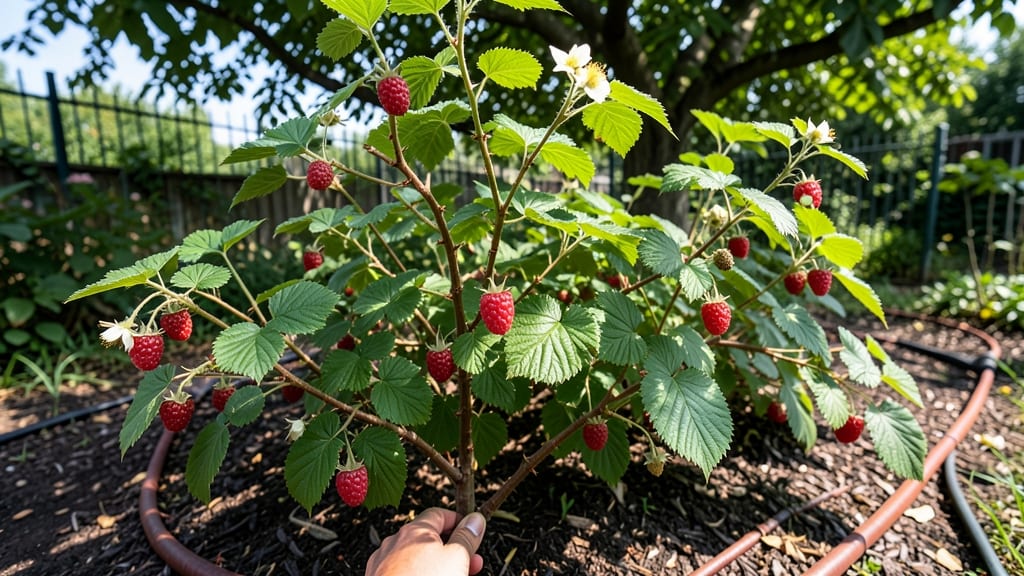
If you’ve ever wondered how tall do raspberries grow, you’re not alone—many gardeners assume these plants will stay small, only to be surprised when their canes shoot up toward the sky.
Raspberry plants, especially varieties like Heritage, can reach an impressive 6 to 10 feet tall, making them one of the taller shrubs in your garden.
But don’t let their height scare you off! With the right support—like trellises or sturdy fencing—you can keep those canes organized and maximize your harvest. Whether you’re working with summer-bearing or fall-bearing varieties, understanding their growth patterns is the key to a thriving raspberry patch.
In this guide, I’ll break down everything you need to know about raspberry height, from dwarf varieties that stay under 4 feet to towering canes that need extra care.
You’ll also learn how to choose the best support system and prune for healthy growth, so your plants stay strong and productive all season long.
Ready to grow raspberries that reach for the sky without taking over your garden? Let’s get started with the essentials you need to plan your perfect patch.


Raspberry plant height by variety: from compact to towering canes
Raspberries aren’t just delicious—they’re architectural stars in your garden, with heights ranging from 2 feet to a towering 10 feet, depending on the variety. If you’re planning your raspberry patch, knowing these differences will help you choose the perfect fit for your space and support system.
Most raspberries fall into two broad categories: summer-bearing (like ‘Boyne Gold’) and fall-bearing (like ‘Heritage’). Summer-bearing types typically reach 6–8 feet tall, while fall-bearing varieties can stretch even taller, up to 10 feet, especially in ideal conditions. The key difference lies in their growth habits and fruiting canes.
Dwarf varieties, like ‘Tulameen’, stay compact at 2–4 feet, making them ideal for small gardens or containers. Semi-dwarf varieties, such as ‘Nova’, grow 4–6 feet tall, striking a balance between space efficiency and productivity.
Meanwhile, standard varieties like ‘Willamette’ can reach 8 feet or more, demanding sturdy support.
| Variety Type | Height Range | Notes |
|---|---|---|
| Dwarf (e.g., 'Tulameen') | 2–4 feet | Ideal for small gardens or containers; minimal support needed. |
| Semi-Dwarf (e.g., 'Nova') | 4–6 feet | Balanced height; works well with trellises or stakes. |
| Standard (e.g., 'Willamette') | 6–8 feet | Requires strong support; best for larger gardens. |
| Tall (e.g., 'Heritage') | 8–10 feet | Fall-bearing; needs robust trellising or fencing. |
| Primocane (e.g., 'Autumn Britten') | 5–7 feet | Fruits on first-year canes; great for extended harvests. |
Understanding these height differences is crucial because taller varieties need more space between plants—typically 6–8 feet apart in rows—to prevent overcrowding and disease. Shorter varieties can be spaced 3–4 feet apart, making them perfect for smaller plots or urban gardens.
Another factor to consider is growth rate. In their first year, raspberries might only reach 1–2 feet tall, but by year two, they can shoot up to 4–5 feet.
By year three, mature canes will hit their full height, so plan your support system accordingly to avoid struggling with floppy, unruly growth later.
If you’re growing fall-bearing raspberries, like ‘Heritage’, expect even more vigorous growth. These varieties produce fruit on second-year canes (floricanes) and can reach 10 feet tall if left unsupported. Without proper trellising or pruning, they’ll sprawl across your garden like a tangled mess, making harvesting a nightmare.
For summer-bearing varieties, such as ‘Boyne Gold’, the canes grow 6–8 feet tall and fruit on first-year canes (primocanes). These are easier to manage but still require strong support to keep canes upright and fruit accessible. Pruning old canes after harvest ensures new growth stays tidy and productive.
Choosing the right variety isn’t just about height—it’s also about fruit color, flavor, and disease resistance. For example, red raspberries like ‘Heritage’ are tall but prone to cane borers, while black raspberries like ‘Boyne Gold’ are shorter and more disease-resistant.
Match your variety to your climate and garden goals for the best results.
Pro tip: If you’re short on space, consider dwarf or semi-dwarf varieties paired with vertical trellises. This maximizes your harvest in a small footprint while keeping canes manageable. Just remember—even compact varieties need support to thrive and produce fruit efficiently.
Raspberry plant height by variety: from compact to towering canes
Raspberries aren’t just delicious—they’re also impressive climbers! Most varieties grow between 4 to 8 feet tall, but some can reach up to 10 feet if left unsupported. The height depends on the variety, growing conditions, and whether you prune them regularly.
Understanding these differences helps you plan your garden layout and choose the right support system.
For example, summer-bearing raspberries (like 'Heritage' or 'Boyne Gold') typically grow 6 to 10 feet tall, while fall-bearing varieties (like 'Fall Red') often stay between 4 to 6 feet.
Dwarf varieties, such as 'Tulameen,' max out at just 2 to 4 feet, making them perfect for small gardens or containers.
🌱 Raspberry Height by Variety
| Variety Type | Height Range | Notes |
|---|---|---|
| Summer-Bearing (Floricane) | 6–10 ft | Tallest; needs strong support |
| Fall-Bearing (Primocane) | 4–6 ft | Shorter; bears fruit on new canes |
| Dwarf Varieties | 2–4 ft | Ideal for containers or small spaces |
| Semi-Dwarf | 4–6 ft | Balanced height for small gardens |
If you’re growing summer-bearing raspberries, expect them to grow rapidly in their first year, reaching 4 to 5 feet. By their third year, they’ll hit their full height of 6 to 8 feet.
In contrast, fall-bearing varieties grow more slowly but produce fruit on both old and new canes, making them easier to manage for beginners.
For container gardening, choose dwarf varieties like 'Tulameen' or 'Heritage' (if pruned aggressively). Even these can reach 4 to 5 feet without support, so plan for a 5-gallon pot with drainage and a sturdy trellis.
If you’re planting in the ground, space canes 3 to 4 feet apart to allow airflow and prevent disease.
Pro tip: Prune in late winter to control height and encourage bushier growth. Remove any canes that exceed your desired height or show signs of disease. This keeps your raspberry patch manageable and productive while preventing overcrowding.
Now that you know how tall raspberries grow, you can choose the perfect variety for your space—and set up the right support to keep those canes climbing happily! 🌿