
Trees
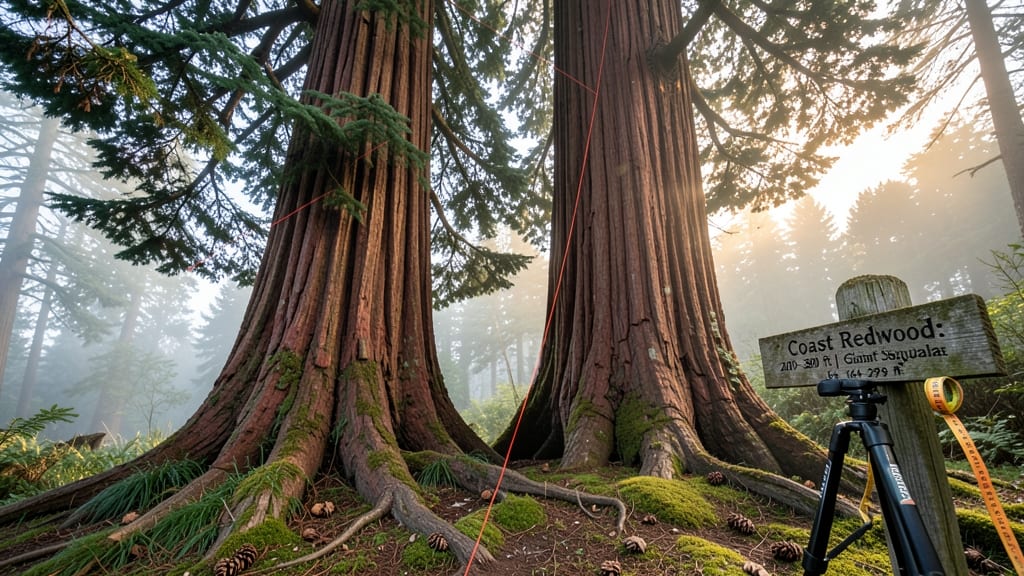
Sequoia tree height records: the tallest trees on Earth
When I first saw a coast redwood in California’s Redwood National Park, I couldn’t believe how tiny I felt standing beside it. These trees aren’t just tall—they’re the tallest trees on Earth, reaching heights that make skyscrapers look like shrubs.
But just how tall can they grow, and which species holds the record?
The answer lies in two iconic species: coast redwoods (Sequoia sempervirens) and giant sequoias (Sequoiadendron giganteum). While both are massive, they specialize in different ways—one for height, the other for volume. Let’s break down the records that make these trees legendary.
🌲 Sequoia Tree Height Records
| Species | Record Height | Location | Age | Fun Fact |
|---|---|---|---|---|
| Coast Redwood (Sequoia sempervirens) | 379.7 ft (115.7 m) | Redwood National Park, CA | ~2,200 years | Tallest tree ever measured (2006) |
| Giant Sequoia (Sequoiadendron giganteum) | 275 ft (83.8 m) | General Sherman Tree, CA | ~2,200 years | Most massive tree by volume |
| Coast Redwood (2nd tallest) | 367.8 ft (112.1 m) | Redwood National Park, CA | ~2,000 years | Grows 1 ft per year in ideal conditions |
| Giant Sequoia (2nd tallest) | 250 ft (76.2 m) | Converse Basin Grove, CA | ~1,800 years | Wider than a basketball court |
The Hyperion, a coast redwood in Redwood National Park, currently holds the title for the tallest tree on Earth at 379.7 feet. To put that into perspective, that’s taller than a 25-story building!
This tree grows about 1 foot per year under ideal conditions, though growth slows dramatically as the tree matures.
Giant sequoias, while not as tall, are massive in girth. The famous General Sherman Tree in California’s Sequoia National Park is the most massive tree by volume, weighing an estimated 2.7 million pounds.
Its height of 275 feet is impressive, but its trunk diameter of 25 feet is what truly sets it apart.
What makes these trees grow so tall? It’s a combination of perfect climate conditions, ancient genetics, and minimal competition. Coast redwoods thrive in the foggy, mild coastal climates of Northern California, while giant sequoias prefer the drier, mountainous regions of the Sierra Nevada.
Both species have evolved to maximize height and volume, making them the ultimate giants of the forest.
Interestingly, these trees can live for thousands of years, with some coast redwoods reaching ages of 2,200+ years. Their slow, steady growth over centuries allows them to accumulate massive heights and volumes.
Unlike many trees that grow rapidly and then slow down, sequoias continue growing—just at a slower pace as they age.
If you’ve ever dreamed of planting a sequoia in your yard, remember: while they’re stunning, their space requirements are enormous. A mature coast redwood needs at least 50 feet of clearance to reach its full height potential.
That’s why most home gardeners opt for dwarf varieties or smaller ornamental sequoias, though even these require significant space.
Next time you see a sequoia, take a moment to appreciate the centuries of growth that went into creating that towering masterpiece. These trees aren’t just tall—they’re a testament to nature’s ability to create living skyscrapers that outshine anything we can build. 🌳
Factors that influence sequoia tree growth height
Understanding what makes sequoias reach their staggering heights starts with their genetics—these trees are hardwired for growth. Coast redwoods (Sequoia sempervirens) and giant sequoias (Sequoiadendron giganteum) both carry genes that promote rapid vertical growth when conditions are ideal.
But genetics alone don’t explain why some trees hit 380 feet while others stay shorter. The real magic happens when nature’s perfect recipe—climate, soil, and space—comes together.
One of the biggest factors is climate. Sequoias thrive in cool, foggy coastal regions (like California’s Redwood National Park) where moisture lingers in the air. High humidity and mild temperatures reduce water stress, allowing them to grow taller without stunting.
In contrast, dry inland climates or extreme heat can slow their ascent dramatically. Even a few degrees difference can mean the difference between a 200-foot giant and a 100-foot underachiever.
Next up: soil quality. Sequoias demand deep, well-draining soil rich in organic matter. Compacted or nutrient-poor soil forces their roots to struggle, limiting height potential. In their native habitats, they tap into thick layers of decomposed leaves and wood, creating a natural fertilizer.
If you’re growing one in your yard, amending soil with compost and sand mimics these conditions—critical for encouraging vertical growth.
Don’t underestimate the power of space. Sequoias are light competitors—they stretch upward to outshine neighbors. In crowded forests, they grow taller to access sunlight, while isolated trees may spread wider.
This is why young sequoias planted in open areas (like large gardens or parks) often grow faster than those in tight spaces. If you’re dreaming of a backyard sequoia, ensure it has at least 50 feet of clear sky to reach its potential.
Human impact plays a sneaky role too. Fire suppression has altered ecosystems, reducing natural disturbances that once cleared weak trees. Meanwhile, pollution and urbanization can stunt growth by degrading soil and air quality.
Even well-meaning gardeners can hinder height by over-fertilizing—sequoias prefer minimal nitrogen to avoid bushy, stunted growth. Balance is key: feed them just enough to support their ambitions without encouraging wild sprawl.
Finally, age matters. Sequoias grow fastest in their first 50–100 years, adding 3–4 feet per year under perfect conditions. After that, growth slows to a crawl—think 1–2 feet per decade. Patience is a gardener’s virtue here!
The oldest sequoias, like the 3,200-year-old "President" tree, spent millennia perfecting their towering stature. For home growers, this means celebrating small wins—even a 50-foot sequoia in your lifetime is a triumph.
🌲
🌱 Growth Boosters vs. Stoppers
- Cool, foggy climates: Reduces water stress
- Deep, organic soil: Supports deep roots
- Full sun exposure: Fuels rapid vertical growth
- Open space: Encourages upward reach
- Minimal nitrogen: Prevents bushy growth
- Dry or hot climates: Limits moisture availability
- Compacted soil: Strangles root development
- Crowded planting: Encourages lateral growth
- Over-fertilization: Promotes bushiness
- Pollution/urban areas: Degrades air/soil quality
Armed with these insights, you can now optimize conditions for your own sequoia—whether it’s a backyard statement piece or a forest giant. Remember, even a 100-foot sequoia is a marvel in its own right. The key is patience, precision, and a deep respect for nature’s tallest architects. 🌳