
How To
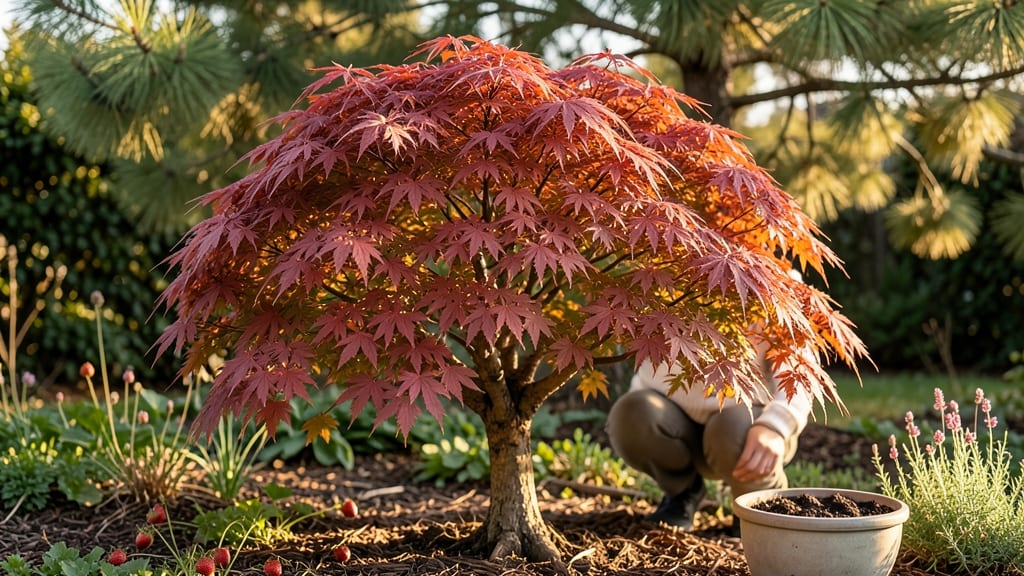
Japanese maple mature heights by popular variety: small to giant sizes
Japanese maples are famous for their stunning foliage and compact forms, but their mature heights can vary dramatically depending on the variety. Some stay small enough for container growing, while others reach small-tree proportions.
The key difference often lies between Acer palmatum (the classic ornamental type) and Acer japonicum (hardier, larger species). Let’s break down the height expectations for the most popular varieties so you can plan your garden layout with confidence.
First, it’s critical to understand that dwarf varieties typically mature between 6–12 feet tall, while standard types can soar to 20–30 feet. Even within the same species, growth habits differ—some grow upright, others weep dramatically, and a few stay bushy and rounded.
For example, the ‘Bloodgood’ variety is a mid-sized powerhouse at 20–25 feet, while the ‘Shishigashira’ (also called ‘Shishigashira’ or ‘Crested’) rarely exceeds 6 feet.
Here’s a quick visual guide to help you visualize how these varieties will fit into your space, from tiny patio trees to backyard giants.
| Variety | Mature Height | Growth Habit | Best For |
|---|---|---|---|
| ‘Bloodgood’ (Acer palmatum) | 20–25 ft | Upright, rounded | Backyard centerpiece |
| ‘Shishigashira’ (Acer palmatum) | 6–10 ft | Weeping, compact | Patio or container |
| ‘Emperor I’ (Acer palmatum) | 12–15 ft | Upright, fast-growing | Privacy screen |
| ‘Aureum’ (Acer japonicum) | 25–30 ft | Pyramidal, hardy | Large landscapes |
| ‘Viridis’ (Acer palmatum) | 15–20 ft | Upright, spreading | Foundation planting |
| ‘Orange Dream’ (Acer palmatum) | 8–12 ft | Bushy, rounded | Small gardens |
| ‘Vermilion’ (Acer japonicum) | 20–25 ft | Upright, vibrant | Shade tree |
| ‘Dissectum’ (Acer palmatum) | 10–15 ft | Weeping, delicate | Container or bonsai |
If you’re working with limited space, dwarf varieties like ‘Orange Dream’ or ‘Shishigashira’ are ideal—they’ll fit neatly in a 5-gallon container and still thrive. For larger properties, varieties like ‘Bloodgood’ or ‘Aureum’ provide dramatic height and structure, making them perfect for focal points.
Remember, these heights are for mature trees, which can take 10–20 years to reach full size, depending on growing conditions.
One common misconception is that all Japanese maples stay small. In reality, Acer japonicum species (like ‘Aureum’) are often larger and hardier than their Acer palmatum cousins.
If you’re unsure about a variety’s growth potential, check the nursery tag or ask for a mature height guarantee—some nurseries even provide growth projections based on your climate zone.
For container growers, even the tallest varieties can be managed with root restriction and regular pruning. For example, a ‘Bloodgood’ in a 15-gallon pot might only reach 10–12 feet over 10 years, while the same tree in the ground could double that height.
Always factor in root space when planning for containers.
Another pro tip: Weeping varieties like ‘Shishigashira’ or ‘Dissectum’ may not grow as tall as upright types, but their spread can be just as wide.
Measure your space in all directions—some weepers can extend 8–10 feet outward from the trunk, making them perfect for architectural accents over patios or walkways.
Finally, don’t overlook the color impact on
How sunlight affects Japanese maple growth rate and final height
Japanese maples thrive in partial shade, but sunlight exposure dramatically alters their growth patterns. Too much sun can stress the tree, stunting its height, while too little shade slows its development. Understanding this balance is key to predicting how tall your Japanese maple will grow.
Most varieties grow 20-30% taller in ideal partial shade (4-6 hours of sunlight daily) compared to deep shade or full sun. For example, Acer palmatum 'Bloodgood' may reach 20 feet in perfect conditions but only 12-15 feet in deep shade.
🌿
| Sunlight Condition | Growth Rate | Mature Height | Pruning Needs |
| Full Sun (6+ hours) | Slow (1-2 ft/year) | 10-15 ft | High (leaf scorch risk) |
| Partial Shade (4-6 hours) | Moderate (2-3 ft/year) | 15-25 ft | Low (ideal conditions) |
| Deep Shade (<4 hours) | Very Slow (1 ft/year) | 8-12 ft | Minimal (but weak growth) |
If your Japanese maple is in full sun, prune selective branches to reduce stress and encourage upward growth. Focus on removing leafy outer branches to let light penetrate the canopy. This technique can boost height by 30% over 5 years.
For dwarf varieties like 'Orangeola', even full sun won’t exceed 8-10 feet, but their foliage will be more vibrant. If you’re growing a weeping variety like 'Crimson Sentinel', partial shade helps maintain its graceful shape while reaching 12-15 feet.
🌳
In hot climates (Zones 7-9), afternoon shade is critical. Use lightweight shade cloth (30-50%) during peak sun (12-4 PM) to protect young trees. This mimics natural dappled shade and prevents leaf scorch, which can stunt height growth by up to 25%.
Prune in late winter (just before buds swell) to shape your tree while it’s dormant. Remove dead or crossing branches first, then thin the canopy to improve airflow. This encourages vertical growth and ensures your Japanese maple reaches its full potential height.