
How To
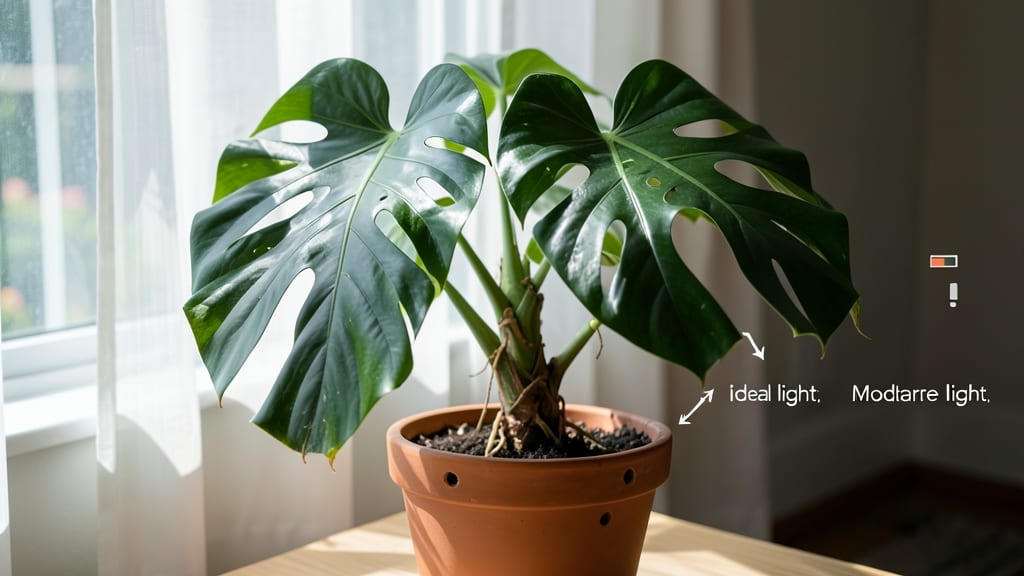
Your monstera plant how much light it needs might surprise you—it’s not just about bright spaces, but the right kind of brightness. Too little, and those stunning fenestrated leaves shrink into sad, compact versions of themselves.
Too much, and you’ll watch them develop crispy brown edges like a forgotten salad. The sweet spot? Bright, indirect light that mimics its jungle roots without scorching it.
I’ve watched my own 🌿 Monstera transform when placed near an east-facing window (the perfect balance of morning sun and afternoon shade). But what happens when your home only offers dim corners or harsh afternoon rays?
The answer lies in understanding light intensity—and how to tweak your plant’s environment without guesswork. Let’s break down the exact conditions that keep your Monstera thriving, from leaf size to growth speed.
You’ll learn how to spot the subtle signs of light stress—yellowing leaves, slow growth, or even variegation fading—and how to adjust before it’s too late. Whether you’re dealing with a low-light apartment or a sun-drenched conservatory, I’ll show you how to create the ideal setup.
No more guessing if your Monstera is getting just enough light—or if it’s silently begging for more.
Ready to unlock the secret to lush, vibrant leaves year-round? Let’s dive into the science (and simple fixes) that’ll have your Monstera reaching for the sky—literally. By the end, you’ll know exactly how to position it, supplement its light, and keep those iconic splits coming.
Monstera light requirements: ideal brightness levels for healthy growth
Monstera plants thrive in bright indirect light, but understanding the exact light spectrum is key to those stunning fenestrated leaves. Think of it like a goldilocks zone—not too dim, not too harsh.
The ideal range sits between 1,000 to 3,000 foot-candles of light, measured 12 inches from the plant. This mimics their native understory habitat in tropical forests, where dappled sunlight filters through canopy leaves.
In my own home, I’ve noticed that monsteras placed near east-facing windows get the perfect morning glow without afternoon intensity. West-facing windows work too, but only if you use sheer curtains to diffuse the harsher late-day sun.
South-facing windows? Those can be too intense unless you’re using a light filter or placing the plant at least 6 feet away from the glass.
Here’s how light intensity directly impacts your monstera’s growth: low light (under 1,000 foot-candles) slows growth and reduces variegation, while too much direct sun (over 5,000 foot-candles) causes leaf burn and crispy edges.
The sweet spot? Medium to bright indirect light keeps leaves lush, speeds up vine growth, and encourages those iconic splits.
🌿
🌱 Monstera Light Requirements Summary
| Light Level | Foot-Candles | Leaf Impact | Growth Effect |
|---|---|---|---|
| Low Light | Under 1,000 | Small, dark green, no fenestrations | Slow, leggy stems |
| Medium Light | 1,000-3,000 | Medium-sized, variegated, some splits | Balanced, healthy growth |
| Bright Indirect | 3,000-5,000 | Large, bold splits, vibrant variegation | Fastest growth, most fenestrations |
| Direct Sun | Over 5,000 | Brown/yellow patches, crispy edges | Stunted growth, leaf burn |
If you’re wondering how to measure light in your space, a simple light meter app (like "Light Meter" for smartphones) works perfectly. Hold it 12 inches from your monstera’s leaves during peak daylight hours—aim for readings between 2,000 and 4,000 foot-candles for optimal results.
I’ve used this method to troubleshoot my own plants, and it’s saved me from overwatering stressed leaves or letting them languish in dim corners.
Seasonal adjustments are crucial too. In winter, when natural light dims, supplement with a grow light for 12-14 hours daily. I’ve found that LED grow lights with a 6500K color temperature mimic natural sunlight perfectly without overheating.
Place it 12-18 inches above the plant and adjust as it grows—this keeps my monsteras thriving even in my north-facing apartment.
For those with variegated monsteras (like the stunning Monstera albo-variegata), light becomes even more critical. These rare plants need higher light levels (closer to 3,000-5,000 foot-candles) to maintain their striking white patterns. Without enough light, the variegation fades to solid green, and the plant loses its signature beauty.
I’ve seen this firsthand with a friend’s variegated monstera—moving it to a brighter spot brought back those gorgeous cream streaks in just a few months.
Pro tip: Rotate your monstera quarter-turns every 2-3 weeks. This ensures even light exposure and prevents the plant from leaning toward the brightest source. I swear by this habit—my monsteras grow bushier and more symmetrical when I follow this simple routine.
Plus, it’s a great excuse to give your plant some TLC while checking for pests on the undersides of those big leaves!
🪴
Signs your monstera isn’t getting enough (or too much) light
Your monstera’s leaves speak volumes about its light conditions. Pale, small leaves with minimal fenestrations (those signature splits) scream for more light. This happens when your plant isn’t getting enough bright indirect sunlight—its energy source for photosynthesis.
Without it, growth slows dramatically, and those stunning variegated patterns fade to plain green.
On the flip side, brown crispy edges or bleached white patches mean your monstera is getting too much direct sun. These are classic signs of sunburn, where UV rays overwhelm the plant’s protective pigments.
The affected areas will feel dry and papery to the touch, while healthy tissue stays soft and flexible.
Yellowing leaves can mean either too much light or too little, but the pattern helps diagnose. If the yellow starts at the bottom leaves and moves upward, it’s usually a watering or nutrient issue. However, if new growth turns yellow while older leaves stay green, your monstera is likely light-starved and struggling to produce chlorophyll.
TOO MUCH LIGHT
- ✅ Brown crispy edges
- ✅ Bleached white patches
- ✅ Slow new growth
JUST RIGHT
- ✅ Deep green leaves
- ✅ Visible fenestrations
- ✅ Steady growth
TOO LITTLE LIGHT
- ✅ Pale, small leaves
- ✅ Leggy stems
- ✅ No variegation
Don’t ignore stretched stems either—this is your monstera’s way of reaching for light. When light is insufficient, stems elongate excessively, creating that classic "leggy" look. The leaves will be sparse and far apart, a clear sign your plant is phototropism in action, growing toward any available light source.
Check the underside of leaves too. Healthy monstera leaves have a matte, slightly waxy texture. If they feel sticky or develop a white powdery residue, it could indicate pests thriving in low-light conditions, like spider mites or mealybugs, which often worsen when plants are stressed.
Finally, pay attention to leaf drop. While some leaf shedding is natural, sudden drops—especially of healthy-looking leaves—often signal a light shock. This happens when you move your monstera from a dark corner to sudden bright light (or vice versa) without acclimating it gradually.
Always adjust light conditions slowly over 1-2 weeks to avoid stress.