
Plants
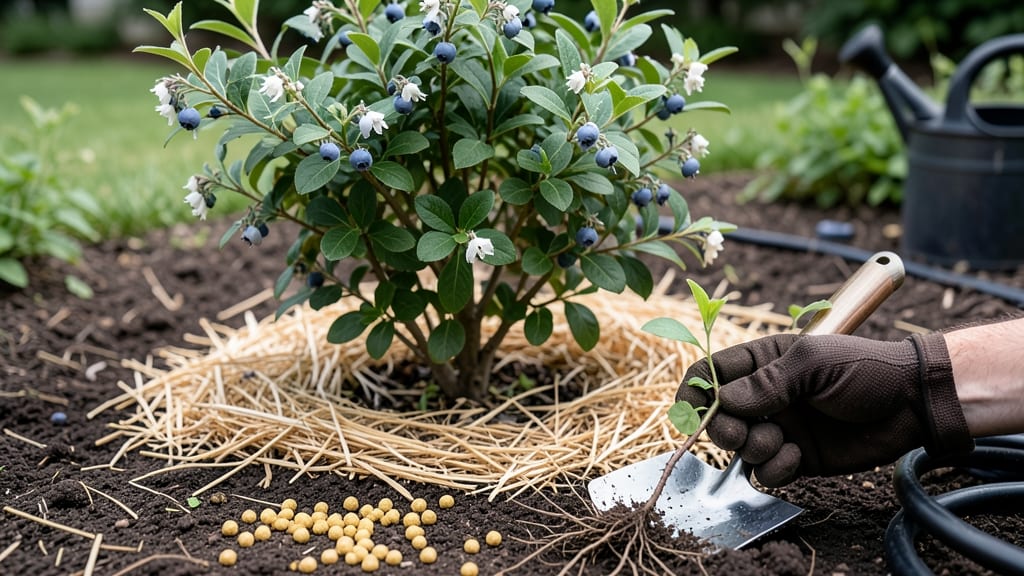
If you've ever dreamed of picking fresh 🫐 straight from your Alabama backyard, timing your blueberry bush planting just right is the key to success. Alabama's unique climate—with its hot summers and mild winters—means getting the schedule wrong can leave you with struggling plants or no harvest at all.
The perfect window for planting your blueberry bushes in Alabama is either late winter to early spring (February-March) or fall (October-November), when temperatures are cooler and the soil is workable.
This timing aligns with your USDA Zone 7a-8b frost dates, giving your bushes the best chance to establish strong roots before summer's intense heat arrives.
What makes Alabama blueberry gardening different is the need for chill hours—most varieties require between 400-800 hours below 45°F to produce fruit. I'll show you how to match the right variety to your specific county's chill-hour zone for maximum productivity.
From soil prep to post-planting care, I'll walk you through every step to ensure your blueberry bushes thrive in Alabama's heat and humidity. Let's get started on your path to a bountiful harvest!
Alabama’s best planting months for blueberries: chill-hour zones explained
Alabama’s climate—warm winters and long summers—means blueberry bushes need precise timing to thrive. Unlike northern states, Southern highbush varieties dominate here, requiring 400–800 chill hours (below 45°F) to produce fruit. Planting outside this window risks poor yields or no berries at all.
Most Alabama gardeners succeed with fall planting (October–November) or early spring (February–March), but your exact timing depends on your county’s chill-hour zone. Northern Alabama (e.g., Huntsville) gets 600–800 chill hours, while Southern Alabama (e.g., Mobile) sees only 400–600 hours—critical for choosing the right variety.
Why timing matters: Fall-planted bushes establish roots before summer heat, while spring planting avoids winter stress. Both methods work, but Southern highbush varieties (like ‘Southern Blue’ or ‘Climax’) are best for Alabama’s mild winters and need 500+ chill hours to fruit reliably.
Here’s how Alabama’s USDA zones 7b–8a break down for blueberry planting:
| Region | Chill Hours | Best Planting Window | Recommended Varieties |
|---|---|---|---|
| Northern AL (Zones 7a–7b) | 600–800 hours | Fall (Oct–Nov) or early spring (Feb–March) | ‘Tifblue’, ‘Powderblue’, ‘Climax’ |
| Central AL (Zones 7b–8a) | 500–700 hours | Fall (Oct–Nov) preferred | ‘Southern Blue’, ‘Reveille’, ‘Emerald’ |
| Southern AL (Zones 8a–8b) | 400–600 hours | Fall (Oct–Nov) only | ‘Misty’, ‘O’Neal’, ‘Premier’ |
If you’re in Southern Alabama (e.g., Mobile, Dothan), avoid spring planting—your mild winters may trick bushes into blooming too early, risking frost damage. Stick to fall planting and choose varieties with 400–500 chill hours.
For Central Alabama (e.g., Birmingham, Montgomery), both fall and spring work, but fall gives roots a head start. Use mulch (3–4 inches of pine straw) to insulate roots during winter and retain moisture in summer’s heat.
In Northern Alabama (e.g., Huntsville, Decatur), you can plant as late as mid-April if soil temps stay above 40°F. These areas benefit from hardier varieties like ‘Tifblue’, which handle 700+ chill hours without issue.
Pro tip: Check your local frost dates (average last frost: March 15 in most of Alabama). Plant 6–8 weeks before to avoid transplant shock. For example, February 1–15 is ideal for spring planting in Central Alabama.
Always buy local nursery stock (e.g., Alabama Cooperative Extension-recommended sources) to ensure varieties are adapted to your chill zone. Avoid big-box stores—their blueberries often lack regional hardiness.
Once planted, water deeply weekly for the first year to encourage root growth, and test soil pH annually (aim for 4.5–5.5). Alabama’s clay-heavy soils often need sulfur or peat moss to acidify properly.
Step-by-step planting timeline for Alabama’s heat zones 7-8
Timing your blueberry planting in Alabama’s heat zones 7-8 means balancing chill-hour needs with humidity and heat. Fall planting (October–November) is ideal for bare-root bushes, while early spring (February–March) suits container-grown varieties. Let’s break it down by month to maximize success.
Start with soil prep 4–6 weeks before planting. Alabama’s clay-heavy soils need organic matter like compost or pine bark to improve drainage and acidity. Aim for a pH of 4.5–5.5—test your soil with a kit from local nurseries like Alabama Cooperative Extension Service.
📅 October (Best for Bare-Root Bushes):
- Plant 6–8 weeks before first frost (typically mid-November).
- Dig a hole twice as wide as the root ball but no deeper.
- Mix peat moss or sulfur into the backfill soil to boost acidity.
- Water deeply immediately after planting and mulch with pine needles or wood chips.
Amend soil with compost and sulfur to lower pH. Test soil 4–6 weeks before planting.
Bare-root: October | Containers: February–March. Dig hole twice as wide as root ball.
Water deeply 2x/week for first month. Mulch with pine needles (3–4 inches).
Trim dead wood in late winter (February). Avoid heavy pruning in first year.
Monitor for drought stress (wilting leaves). Water morning-only to prevent fungal diseases.
Add extra mulch (6 inches) to insulate roots. Avoid fertilizing dormant plants.
For container-grown bushes, plant in February–March after the last frost (typically mid-March). Remove the plant from its pot, loosen roots gently, and plant at the same depth as it was in the container. This prevents stem rot from burying the crown too deeply.
After planting, water deeply 2–3 times per week for the first month to encourage root establishment. Alabama’s humid summers can stress young bushes, so avoid overhead watering—use drip irrigation or soaker hoses instead.
Apply a 2–3 inch layer of mulch around the base (but not touching the stem) to retain moisture and suppress weeds.
By following this timeline, your blueberry bushes will establish strong roots before Alabama’s hot summers and mild winters. Expect your first harvest in 2–3 years, with full production by year 5 if cared for properly.