
Plants
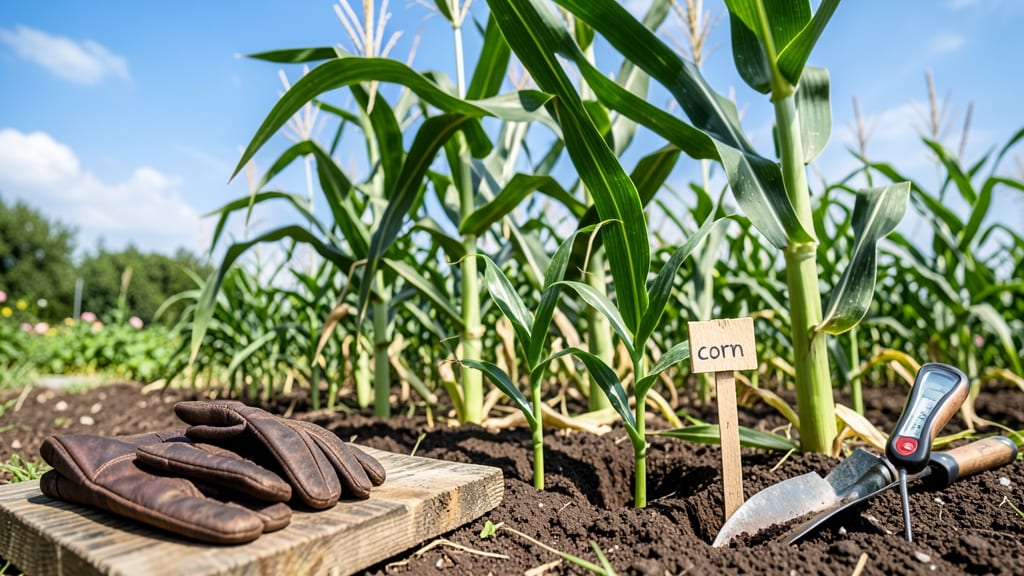
Timing your 🌽 corn planting in New Jersey can make the difference between a thriving harvest and wasted effort. The wrong window means frost-nipped seedlings or corn that matures too late for peak flavor—both gardeners' worst nightmares.
Whether you're in the cooler north or warmer south of the state, knowing the perfect frost-free window is key to success.
Most New Jersey gardeners plant corn in late spring, but the exact timing depends on your zone's last frost date and soil warmth. Unlike other veggies, corn needs consistently warm soil—at least 50°F—to germinate properly.
Waiting too long risks missing the ideal 75-day growth window before fall's first frost, while planting too early means seedlings will struggle in chilly soil.
I've learned the hard way that NJ's microclimates matter—what works in Camden might fail in Newark. The solution? Planting in two waves: early varieties when soil hits 60°F and late varieties for a second harvest.
This strategy maximizes your yield regardless of whether you're in Zone 6b or 7a.
Ready to grow corn that rivals the cornfields of Iowa? I'll walk you through the exact planting dates by region, soil temperature secrets, and how to stretch your harvest season. Let's get those kernels popping in your garden!
New Jersey corn planting dates by region: frost-free windows explained
New Jersey’s diverse climate means your planting window can vary by 500 miles—from northern USDA Zone 6a to southern Zone 7b. The key is knowing your last frost date, which shifts from late May in the north to mid-April in the south.
For sweet corn, this means planting early varieties in the north and late varieties in the south to align with 90-day harvest windows before fall frosts arrive.
Most NJ gardeners rely on average frost dates, but microclimates (like urban heat islands or coastal areas) can shift these by 1-2 weeks. For example, Trenton’s last frost is April 15, while Newark’s is April 22—just a week apart!
Use your local Cooperative Extension office data for precision, or track your own frost dates for 3+ years to refine your schedule.
Here’s how to break it down by region, including ideal transplanting windows and succession planting strategies to maximize your harvest:
| Region | USDA Zone | Avg. Last Frost | Early Varieties (60-70 days) | Mid-Season (75-85 days) | Late Varieties (90+ days) | Succession Planting |
|---|---|---|---|---|---|---|
| Northern NJ (Bergen, Passaic, Sussex) | Zone 6a | May 15–22 | April 20–May 5 | May 10–25 | June 1–15 (risky) | Plant every 2 weeks until June 15 |
| Central NJ (Mercer, Middlesex, Monmouth) | Zone 7a | April 15–May 1 | April 1–15 | April 20–May 10 | May 15–June 1 | Plant every 2 weeks until July 1 |
| Southern NJ (Atlantic, Cape May, Camden) | Zone 7b | March 20–April 10 | March 15–April 5 | April 10–25 | May 1–15 | Plant every 2 weeks until July 15 |
*Adjust dates 1-2 weeks later for high-altitude areas (e.g., Highlands) or 1-2 weeks earlier for urban heat zones (e.g., Newark).
For direct sowing (planting seeds directly into the ground), aim for soil temperatures of 60°F+, which typically aligns with 2 weeks after your last frost date.
In northern NJ, this might mean waiting until May 1–15, while southern NJ gardeners can start as early as April 1–15. Use a soil thermometer to confirm—corn seeds won’t germinate below 50°F, and slow germination invites pests and disease.
Pro tip: Succession planting is your secret weapon for a continuous harvest. In central NJ, for example, you can plant 3–4 batches of corn spaced 2 weeks apart, ensuring fresh ears from July through September.
Choose varieties with diverse maturity dates, like ‘Silver Queen’ (75 days) alongside ‘Peaches and Cream’ (90 days), to stagger your harvest.
Don’t overlook summer planting for late varieties! In southern NJ, you can even try a late June planting for a fall harvest before the first frost (typically November 15–December 1).
Just be prepared to use row covers in September to extend the season. This strategy works best with short-season varieties like ‘Early Sunglow’ (70 days) or ‘Bodacious’ (85 days).
One common mistake? Planting too late and ending up with small, underdeveloped ears. If you’re in northern NJ and plant after June 1, your corn may not reach harvestable size before fall frosts.
Always check your variety’s days to maturity and count backward from your average first frost date (usually October 31 in NJ).
🌽
Soil temperature requirements for corn: when to plant based on heat zones
Corn is a warm-season crop that demands precise soil temperature conditions to thrive. Unlike cool-weather veggies, corn seeds won't germinate until the soil reaches 50°F (10°C), but they grow best when temperatures climb above 60°F (15.5°C).
In New Jersey, this often means waiting until mid-to-late May for most regions, though southern zones can start earlier.
I’ve found that using a soil thermometer is non-negotiable—surface air temps can be misleading. Test your soil at 4-inch depth in the morning for the most accurate reading. If your thermometer shows below 50°F, even for a few days, your seeds may rot or fail to sprout.
This is especially critical in northern NJ, where spring can linger.
Here’s the golden rule for planting corn in NJ: Wait until soil hits 60°F consistently for at least 5 days. This ensures strong, uniform germination and reduces the risk of seedling diseases that thrive in damp, cold soil.
For early varieties, you might start as soon as late April in southern NJ (Zone 7a), but northern gardeners should hold off until early May.
🌡️ Critical Soil Temp Guidelines for NJ Corn Planting
- 🌱 50°F (10°C): Minimum for germination (risky—seeds may rot)
- 🌿 55°F (13°C): Slow germination (3+ weeks to sprout)
- ☀️ 60°F (15.5°C): Ideal for fast, strong germination (5-7 days)
- 🔥 65°F+ (18°C+): Optimal growth (corn loves heat!)
- ❄️ Below 50°F: Seeds won’t sprout; risk of disease
💡 Pro Tip: Use black plastic mulch or row covers to warm soil by 5-10°F if temps are borderline.
If your soil is still too cold, don’t despair—there are warm-season hacks to trick corn into growing earlier. I’ve had success with black plastic mulch, which can raise soil temps by 5-10°F and speed up germination.
Another trick? Plant in raised beds, which warm up faster than in-ground soil. For extra insurance, use biodegradable row covers to protect young seedlings from late frosts.
One mistake I’ve seen NJ gardeners make is planting corn too early just to "get a head start." Corn planted in 45°F soil often produces weak, leggy seedlings that never recover.
Instead, I recommend staggering plantings: start with early varieties when soil hits 60°F, then follow up with late varieties 2-3 weeks later for a extended harvest.
For those in Zone 6b (northern NJ), aim for May 15–June 1 to avoid late frosts. Southern NJ gardeners (Zone 7a) can start as early as April 20–May 10, but always confirm with a soil test.
Remember: Corn needs 75–90 days to maturity, so time your planting to finish before the first fall frost (mid-October in most of NJ).