
Flowers
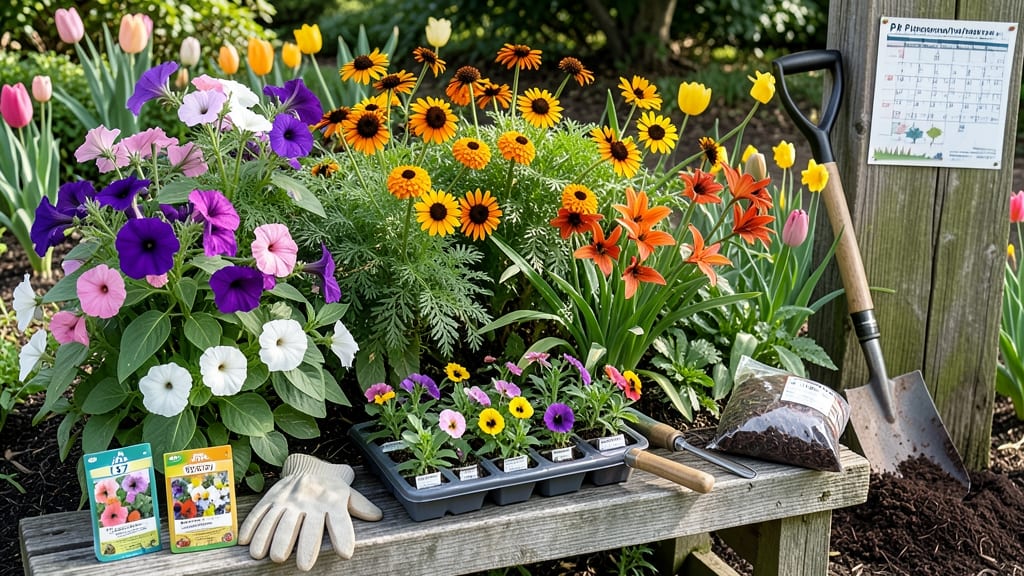
Timing your flowers planting in Pennsylvania isn't just about the calendar—it's about beating frost, embracing regional microclimates, and unlocking vibrant blooms all season long.
With USDA Zones 5b-7a spanning from Pittsburgh to Philadelphia, the last frost can arrive anywhere from mid-March to late April, meaning your 🌸 planting window shifts dramatically depending on where you garden.
Plant too early, and a surprise frost will turn your tender annuals into sad, wilted souvenirs. Wait too long, and your perennials might struggle to establish roots before summer heat sets in.
The key? Understanding your local frost dates and matching them to the right flowers—whether you're sowing hardy bulbs in March or waiting until soil warms to 60°F for heat-loving annuals.
In this guide, I'll break down the exact planting windows for Pennsylvania's two main seasons: spring (March-May) and fall (August-September).
You'll discover which flowers thrive when planted in cool vs. warm soil, how to adjust for urban heat islands or mountain microclimates, and why some varieties need a head start indoors.
No more guessing games—just a foolproof calendar that transforms your garden from "meh" to "wow." Let's get those flowers in the ground at the perfect moment so you can enjoy blooms from spring through fall.
Pennsylvania Zone 6 frost dates and ideal flower planting windows
Pennsylvania’s Zone 6 climate creates a delicate balance for flower gardeners—too early, and frost zaps tender seedlings; too late, and summer blooms arrive late. The average last frost date ranges from March 15 in southern regions (like Philadelphia) to April 30 in the north (near Erie).
Understanding these windows ensures your annuals, perennials, and bulbs thrive without wasted effort or lost investments.
For spring planting, most gardeners aim to start 6-8 weeks before the last frost, typically between February and early May. Fall planting (August–September) is ideal for bulbs like tulips and daffodils, which need time to root before winter.
Meanwhile, heat-tolerant annuals like zinnias or marigolds can wait until after May 15 when soil reaches 60°F.
Here’s how Pennsylvania’s regional microclimates affect your planting schedule:
| Region | Last Frost Date | Ideal Planting Window | Best for |
|---|---|---|---|
| Southern PA (Philadelphia, Harrisburg) | March 15–April 1 | March 1–April 15 | Tulips, pansies, early annuals |
| Central PA (Lancaster, Harrisburg) | April 1–April 15 | April 1–May 1 | Dahlias, coneflowers, marigolds |
| Northern PA (Pittsburgh, Erie) | April 15–May 1 | April 15–May 15 | Peonies, black-eyed Susans, late bulbs |
| Mountainous (Poconos, Alleghenies) | May 1–May 15 | May 1–June 1 | Hardy perennials, late-start annuals |
For annual flowers, like petunias or geraniums, wait until after the last frost and when nighttime temps stay above 50°F. Perennials, such as daylilies or hostas, can handle cooler soil and should be planted 2–4 weeks before the last frost to establish roots early. Bulbs like tulips need a 6–8 week head start—plant them in October or November for spring blooms.
Pro tip: Use row covers or cold frames to extend your planting window by 2–3 weeks in early spring or late fall. This is especially helpful in northern PA, where frost lingers longer.
For heat-sensitive varieties like cosmos or snapdragons, start seeds indoors in March to transplant outdoors after the last frost.
Always check your local USDA Plant Hardiness Zone—Pennsylvania spans Zones 5b to 7a—and adjust for urban heat islands (like Philadelphia) or high-altitude areas (like the Poconos), where frost dates can shift by 2–3 weeks. A quick soil thermometer check (60°F for annuals) confirms readiness.
Finally, keep a gardening journal to track your local frost dates—over time, you’ll refine your schedule. For example, my Philadelphia garden saw two late frosts in May 2022, so I now plant heat-loving zinnias only after May 20.
🌱
Best flowers to plant by month in Pennsylvania’s climate
March is your early spring window for cold-hardy flowers like tulips, daffodils, and pansies. These bulb plants thrive when soil temps hit 40°F—perfect for Pennsylvania’s Zone 6 climate. Pair them with hardy annuals like snapdragons for instant color.
April brings warmer soil (50°F+), ideal for perennial favorites such as coneflowers, black-eyed Susans, and bee balm. These low-maintenance bloomers establish roots quickly before summer heat arrives. Don’t forget cool-season veggie flowers like nasturtiums to deter pests naturally.
🌸 Monthly Flower Planting Guide
April: Coneflowers, Black-Eyed Susans, Bee Balm, Nasturtiums
May: Petunias, Marigolds, Sunflowers, Dahlias
June: Zinnias, Cosmos, Lantana (heat-tolerant)
August: Mums, Asters, Salvia (fall bloomers)
September: Pansies, Sweet Alyssum (cool-season)
May is peak planting season for annuals and heat-loving perennials. Petunias, marigolds, and sunflowers thrive when planted after the last frost date (typically April 15–May 1). For container gardens, opt for compact varieties like geraniums or bacopa to maximize space.
June through August focuses on heat-tolerant varieties like zinnias, cosmos, and lantana. These drought-resistant bloomers require minimal watering once established—perfect for Pennsylvania’s summer humidity. Deadhead spent blooms to encourage continuous flowering until frost.
Fall planting (August–September) revives cool-season flowers such as mums, asters, and sweet alyssum. These late-season stars add color before winter and often rebloom next spring. Use mulch to protect roots from early frost in October.
Extend your bloom season by layering spring, summer, and fall flowers. For example, plant tulips in March, zinnias in June, and pansies in September for a year-round garden that thrives in Pennsylvania’s variable climate. 🌷