
Plants
Timing your grape planting in Arizona isn't just about following a calendar—it's about outsmarting the desert's 240 frost-free days and microclimates that can turn a good harvest into a gamble.
Whether you're in the scorching Low Desert or cooler Mountain Valleys, planting 🍇 grapes outside the November-February window risks weak vines struggling against summer heat before they even fruit.
Most gardeners assume all of Arizona is the same, but that’s a mistake. The 9b zone hides pockets where cold air pools or monsoons delay planting—meaning your 3-foot vines next spring could be fighting for survival.
I’ll show you how to pick the perfect month for your exact location, so your grapes thrive from the first sip of water.
You’ll learn which microclimate rules apply to you—whether it’s Phoenix’s relentless sun or Flagstaff’s cooler nights—and exactly how to prep soil to beat Arizona’s drought-prone conditions. No more guessing whether your vines will make it past June’s heat or September’s harvest.
From bare-root vines to first-year growth, this guide cuts through the confusion so you plant confidently. Let’s get those 🍇 grapes growing the right way—once, and for good.
Arizona’s 3 best grape planting zones by microclimate (with exact months)
Arizona’s diverse microclimates mean planting grapes in Phoenix differs drastically from Flagstaff or Prescott. The key? Timing your bare-root vines to avoid extreme heat and cold air pooling.
Low desert areas like Tucson hit 100°F+ by April, while mountain valleys like Yavapai County can still see freezing nights into March.
For successful grape cultivation, focus on dormant planting (November–February) when soil temps stay 50–65°F. This gives roots time to establish before Arizona’s brutal summers. Ever-bearing varieties like Thompson Seedless thrive in Low Desert, while Muscadine grapes handle High Desert chill better.
Pro Tip: Test soil 2 weeks before planting—ideal temps are 60–70°F. Use a soil thermometer to avoid planting too early in cooler microclimates (e.g., Sedona) or too late in heat-prone zones (e.g., Yuma).
In Low Desert zones, Thompson Seedless and Red Globe grapes excel when planted in November. These varieties handle Arizona’s intense sunlight but need afternoon shade during peak summer. Ever-bearing types produce two crops/year, but require consistent watering—a challenge in drought-prone soils.
For High Desert areas, Concord and Catawba grapes tolerate cooler nights but need windbreaks to prevent winter desiccation. Plant in December to avoid early-spring frosts, which can damage emerging buds. Mulch heavily with straw or wood chips to insulate roots.
Mountain valley growers should prioritize disease-resistant varieties like Chardonnay or Cabernet Sauvignon, planted in late fall. These areas benefit from longer chilling hours, which improve fruit quality. However, avoid low-lying pockets where cold air pools—opt for south-facing slopes instead.
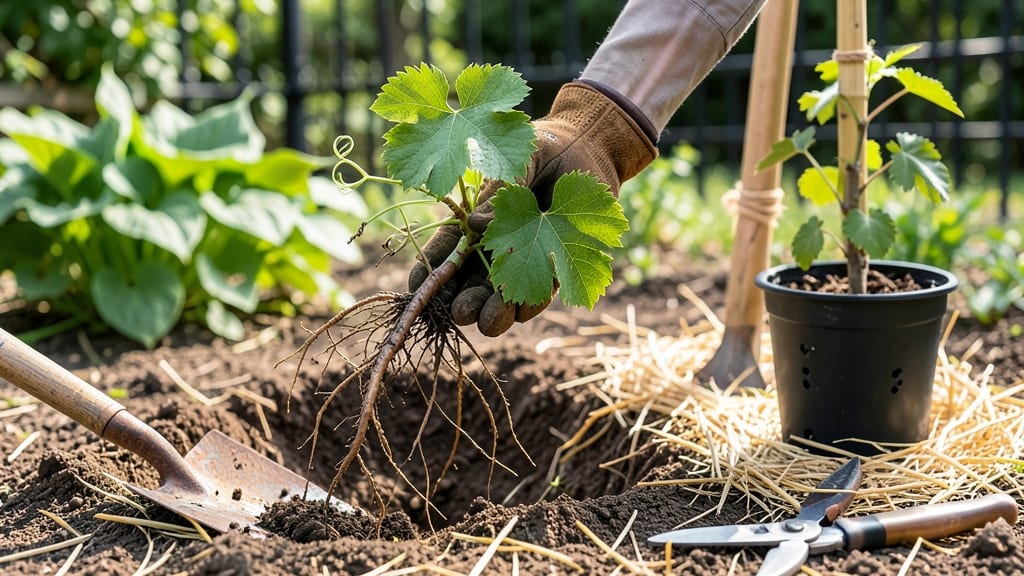
Regardless of zone, bare-root vines establish faster than potted grapes. Soak roots in water + mycorrhizal fungus for 1–2 hours before planting to boost root growth. Avoid planting in March—soil temps often exceed 80°F, causing transplant shock.
After planting, water deeply every 7–10 days until vines establish (typically 6–8 weeks). Use drip irrigation to keep foliage dry, reducing fungal risks like powdery mildew. In Low Desert, shade cloth (30–50%) helps young vines survive 110°F+ afternoons.
Monitor vine growth closely—shoots longer than 12 inches by March signal successful rooting. If growth stalls, fertilize lightly with fish emulsion (5-5-5). For organic vineyards, use compost tea instead of synthetic fertilizers to avoid salt buildup in sandy soils.
Remember: Arizona’s monsoon season (July–September) brings sudden downpours that can drown roots if drainage is poor. Amend planting holes with gravel or coarse sand to prevent waterlogging. With the right timing and microclimate-specific care,
How to avoid common Arizona grape planting mistakes (and when to adjust timing)
Arizona’s unpredictable monsoons and microclimates can turn grape planting into a risky gamble if you don’t adjust your timing. Many gardeners rush planting in early spring, only to watch their vines struggle under 100°F+ heat by June. Others ignore cold air pooling in valleys, risking frost damage even in USDA Zone 9b. Let’s fix these mistakes before they derail your harvest. The biggest mistake? Planting too early in monsoon-prone areas like Tucson or Phoenix. Heavy rains in July-September can drown young roots, while soil temperatures above 85°F slow root establishment. If you’ve already planted in March or April, delay pruning until mid-October to let vines recover before winter dormancy.Another critical error is ignoring soil temperature. Grapes need soil temps between 60-70°F to root properly. In high-desert areas like Flagstaff, wait until late April—when nighttime temps stay above 50°F—before transplanting.
Use a soil thermometer to check depth; if it’s cooler than 55°F, hold off for 2-3 weeks.
Organic growers often face unique challenges, like poor soil structure from over-amending with compost too soon. If your soil is sandy or clay-heavy, amend 3 months before planting with aged compost and gypsum.
For conventional vineyards, over-fertilizing with nitrogen in early spring can lead to excessive leaf growth at the expense of fruit. Adjust your schedule to apply balanced 10-10-10 fertilizer in late winter instead.
Cold air pooling in valleys and low-lying areas (like the Salt River Valley) can drop temps 10°F below surrounding zones. If you’re in one of these areas, plant 4-6 weeks later than recommended for your USDA zone.
Monitor local weather forecasts for radiation frost warnings in November-December—even in Phoenix, temps can dip to 32°F overnight.
Finally, skipping heat acclimation for vines planted in fall is a recipe for shock. If you plant in November, mulch heavily with straw or wood chips to insulate roots. In March, gradually expose vines to afternoon sun over 2 weeks to avoid sunburn on tender new growth.
This simple step can mean the difference between healthy vines and wilting canes by June.
By adjusting your timing for soil temps, microclimate risks, and organic/conventional needs, you’ll give your grapes the best shot at thriving. The key is patience—Arizona’s climate rewards those who wait for the perfect window.
⚠️ Common Mistakes & Fixes
- Planting too early: Wait until soil temps hit 60°F+ (use a thermometer!).
- Ignoring monsoons: Avoid planting in March-April in desert lowlands.
- Over-fertilizing: Use balanced 10-10-10 in late winter, not spring.
- Cold air pooling: Delay planting by 4-6 weeks in valleys.
- No heat acclimation: Gradually expose vines to sun in March.
🌱 Pro Tip: Test soil moisture weekly—drought stress in summer can stunt growth.
Now that you’ve avoided the pitfalls, your next step is month-by-month care. From pruning in winter to summer heat management, timing is everything. Stay tuned for our post-planting care calendar to keep your vines on track for a bountiful harvest.