
Plants
Ontario’s frost-free planting window by zone: exact dates for grass seed success
Ontario’s spring weather can be as unpredictable as a snowstorm in May, making timing critical for grass seed success. Planting too early risks frost damage, while waiting too long exposes young grass to summer drought stress.
The key is aligning your planting with soil temperatures, last frost dates, and your specific USDA hardiness zone.
Most Ontario gardeners fall into three broad zones: Southern (5b-6a), Central (5a-5b), and Northern (4b-5a). Each has distinct frost-free windows. For example, London and Niagara (Zone 6a) can plant as early as late March, while Sudbury and North Bay (Zone 4b) should wait until mid-May.
Let’s break down the exact windows by zone.
🌱 Why timing matters: Grass seeds need consistent soil temps above 50°F (10°C) to germinate. Planting too soon means seeds rot in cold soil, while late planting risks summer drought before roots establish.
Here’s your zone-by-zone planting calendar, including soil temperature thresholds and historical frost dates from the Ontario Ministry of Agriculture. Use these as your guide to avoid common mistakes like frost damage or seed desiccation.
If you’re in Southern Ontario (e.g., Toronto, Hamilton, London), aim to plant 4–6 weeks before your average last frost date. For most areas, this means late March to mid-April.
Check the Environment Canada frost forecast for your specific city, as microclimates can shift dates by 1–2 weeks.
For Central Ontario (e.g., Barrie, Peterborough, Kingston), wait until early April to give seeds time to germinate before potential late frosts. Use cool-season grass varieties like Kentucky bluegrass or fine fescue, which tolerate lighter frosts better than warm-season types.
Northern Ontario gardeners (e.g., Sudbury, North Bay, Thunder Bay) face the shortest growing season. Plant no earlier than mid-May, even if soil temps seem ideal. Tall fescue or perennial ryegrass are better choices for these zones due to their drought tolerance and cold hardiness.
⚠️ Critical Mistake: Planting in May or June risks summer drought stress. Young grass needs 4–6 weeks to establish roots before Ontario’s hot, dry spells (common in July/August). If you miss spring, consider fall planting in September instead.
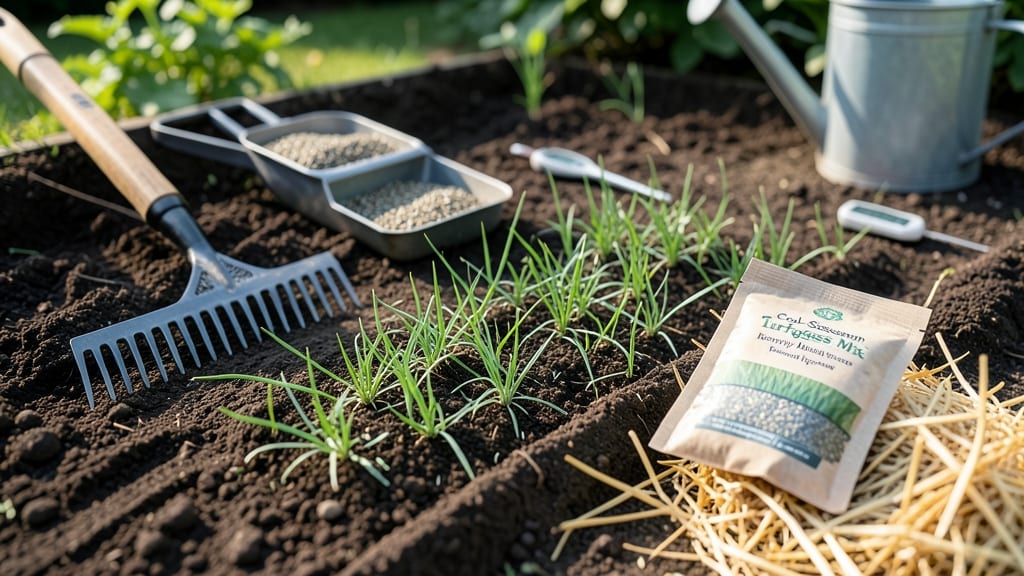
To extend your window, use seed starter fertilizer (e.g., 10-10-10) and light mulch (straw, not wood chips) to retain moisture. This helps seeds germinate faster in cooler soils, giving them a head start before summer heat arrives.
For real-time updates, bookmark the Ontario Ministry of Agriculture’s frost maps or use apps like Old Farmer’s Almanac. These tools adjust for yearly variations, ensuring you plant when soil AND air temps align for success.
🌱 Next Steps: After choosing your zone, test soil moisture (it should feel like a wrung-out sponge) and clear weeds. Then, follow your 30–60–90 rule: plant in March–April, water daily for 30 days, then taper to every other day once grass reaches 2–3 inches.
5 Critical signs your Ontario soil is ready for grass seed (before you plant)
Before rushing to plant grass seed in Ontario’s spring, check these 5 critical soil conditions—skipping them means poor germination or wasted seed. I’ve learned the hard way that even the best seed won’t thrive in cold, wet, or compacted soil.
Let’s break down what to look for and how to fix common issues.
First, soil temperature must reach at least 50°F (10°C)—any cooler, and seeds won’t germinate. Use a soil thermometer (they’re cheap!) to test depth. In Southern Ontario, this usually happens by mid-April, while Northern zones may wait until early May.
Planting too early risks frost damage to tender seedlings.
Next, moisture levels should be consistently damp but not soggy. Press your finger 1 inch deep—if it feels dry, water thoroughly before planting. Ontario’s spring showers can make soil too wet, leading to fungal diseases or seed rot.
A quick fix? Wait for a dry spell or improve drainage with compost.
Weeds are another red flag—competition for nutrients stunts grass growth. Pull existing weeds manually or apply a pre-emergent herbicide 1–2 weeks before seeding. Pro tip: Use a straw mulch after planting to suppress weeds naturally while keeping soil moist.
Check your soil’s pH balance—ideal for grass is 6.0 to 7.5. Ontario’s clay-heavy soils often skew acidic. Test with a DIY kit (available at garden centers) and amend with lime (to raise pH) or sulfur (to lower it) if needed. This step alone can double your success rate!
Finally, soil texture matters. Compacted clay soil (common in Southern Ontario) smothers roots. Loosen the top 2–3 inches with a rake or tiller before planting. For heavy clay, mix in sand or compost to improve aeration. Think of it as giving your grass seeds room to breathe.
🌱