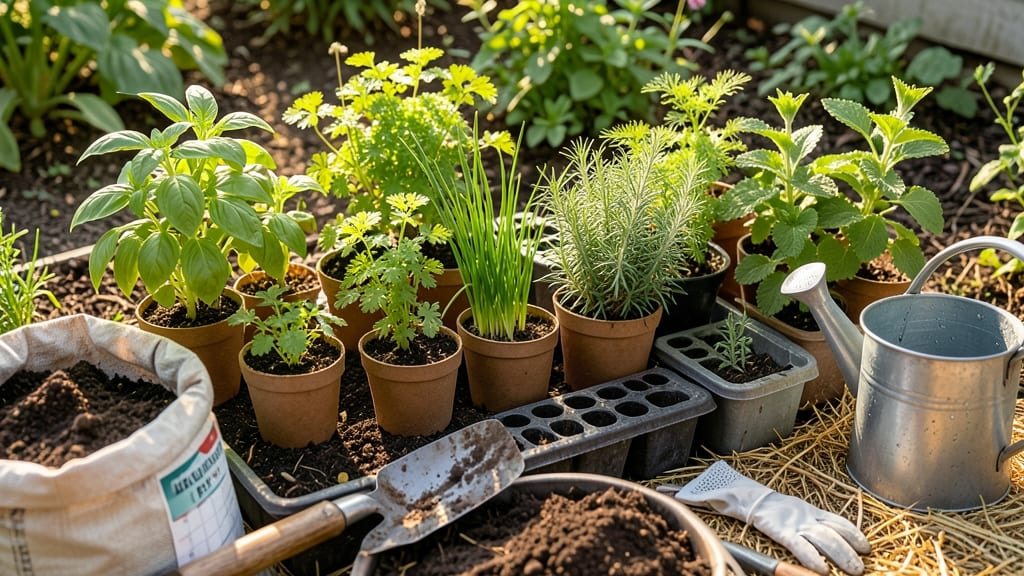
Timing your herb planting just right in spring can mean the difference between a thriving kitchen garden and a sad, frost-nipped disappointment. With 🌿 basil and parsley on your mind, knowing when to plant herbs in spring is the key to unlocking bold flavors all season long.
Most gardeners in Zone 6a wait until 2-4 weeks before the last frost date, but the exact timing depends on your specific herbs. Some, like hardy parsley, can handle cooler temperatures, while delicate basil needs warmer soil to thrive.
In this guide, I’ll break down the perfect planting window for your favorite herbs, so you can avoid common mistakes and maximize your harvest. Whether you’re starting seeds indoors or sowing directly outside, you’ll learn exactly when to plant for the best results.
Ready to transform your garden into a fragrant, flavorful paradise? Let’s get those herbs in the ground at the perfect moment for a bountiful season ahead.
🌿
When to Plant Herbs
Jan
❄️
Feb
🌱
Mar
🌿
Apr
🌿
May
🌿
Jun
🌱
Jul
☀️
Aug
☀️
Sep
🍂
Oct
🍂
Nov
🍂
Dec
❄️
Spring herb planting timeline: frost-free dates by US hardiness zones
Getting your herbs in the ground at the right time is everything—plant too early and a surprise frost will kill your seedlings, while waiting too long might mean missing peak harvests. The key is knowing your USDA hardiness zone and adjusting for your average last frost date.
Most herbs thrive when soil temperatures hit at least 50°F (10°C), but some, like basil, need even warmer conditions.
I’ve organized this timeline by 10 common herbs and USDA zones 3-10, so you can pinpoint the perfect window for your garden.
For example, in Zone 5, where last frosts often hit around May 10, you’ll want to plant heat-loving herbs like basil and cilantro 2-3 weeks after that date. Meanwhile, hardy perennials like thyme can go in as early as 2-4 weeks before your last frost.
Pro tip: Use a frost calendar for your specific location (check the National Weather Service or local extension office) and adjust by 1-2 weeks if you’ve had early or late frosts recently.
Container herbs, like parsley or dill, can often be planted 1-2 weeks earlier than in-ground varieties since they warm up faster.
| Herb |
USDA Zones 3-5 |
USDA Zones 6-8 |
USDA Zones 9-10 |
| Basil |
Wait until after last frost (soil 60°F+) |
2-3 weeks after last frost |
Start indoors Feb-Mar, transplant April |
| Cilantro |
2-4 weeks before last frost |
Direct sow March-April |
Sow Oct-Nov for winter harvest |
| Parsley |
3-4 weeks before last frost |
Direct sow March-April |
Biennial; sow fall or spring |
| Dill |
Wait until after last frost |
Direct sow April-May |
Sow early spring or fall |
| Mint |
2-3 weeks before last frost |
Direct sow or transplant April |
Plant spring or fall (aggressive; use containers) |
| Thyme |
3-4 weeks before last frost |
Transplant March-April |
Perennial; plant spring or fall |
| Chives |
Herbs that defy spring planting rules: fast-growing exceptions
Not all herbs play by the last-frost-date rules—some are frost-tolerant champions that thrive even when most plants are still huddled under blankets. These early-season heroes like chives, thyme, and oregano can handle light frost and even grow faster when planted early.
Their secret? Cold-hardy roots and resilient growth habits that let them outpace slower herbs.
If you're eager to harvest fresh culinary herbs before summer arrives, these fast-growing exceptions are your best bet. They’ll reward you with bold flavors and vigorous growth even when soil temperatures are still chilly.
Think of them as the early birds of your herb garden—ready to take flight when others are still napping.
Here’s the inside scoop on which frost-defying herbs you can plant 2-4 weeks before your last frost date, along with their ideal growing conditions for maximum success. Pro tip: Pair these with heat-loving herbs like basil for a year-round harvest strategy.
🌱 Top 5 Frost-Tolerant Herbs for Early Planting
-
1. Chives – Thrives in 32-40°F soil; regrows after light frost. Perfect for early spring snips for salads and soups.
-
2. Thyme – Handles 28°F temperatures; drought-tolerant once established. Ideal for rock gardens or container growing.
-
3. Oregano – Survives 25°F frost; spreads aggressively. Great for border plantings or potted herbs.
-
4. Parsley (flat-leaf) – Tolerates 28-32°F; biennial with two-year harvests. Plant seeds 4-6 weeks before last frost.
-
5. Cilantro – Grows best in cool soil (50-65°F); bolts in heat. Direct-sow seeds in early spring for fast harvests.
💡 Pro Tip: Mulch these herbs with straw or leaves to protect roots from late-season frost after planting.
These hardy herbs don’t just survive early spring—they thrive. Plant them in well-draining soil with partial sun (4-6 hours/day) to avoid legginess. For example, chives grow best in moist, fertile soil, while thyme prefers dry, rocky conditions to mimic its Mediterranean roots.
To maximize your early harvests, pair these frost-defiers with slow-to-germinate herbs like basil. While chives and thyme are cutting back for your first harvest, your basil seedlings (started indoors) will be ready to transplant after frost.
This staggered planting ensures a continuous supply of fresh herbs from spring to fall.
Don’t let frost dates limit your herb garden dreams—these resilient plants prove you can start early and still harvest bold flavors.
Just remember: protect young plants with row covers if a late frost sneaks in, and you’ll be feasting on homegrown herbs before your neighbors even dig their first row.
★★★★★4.8(3 reviews)
|