
Trees
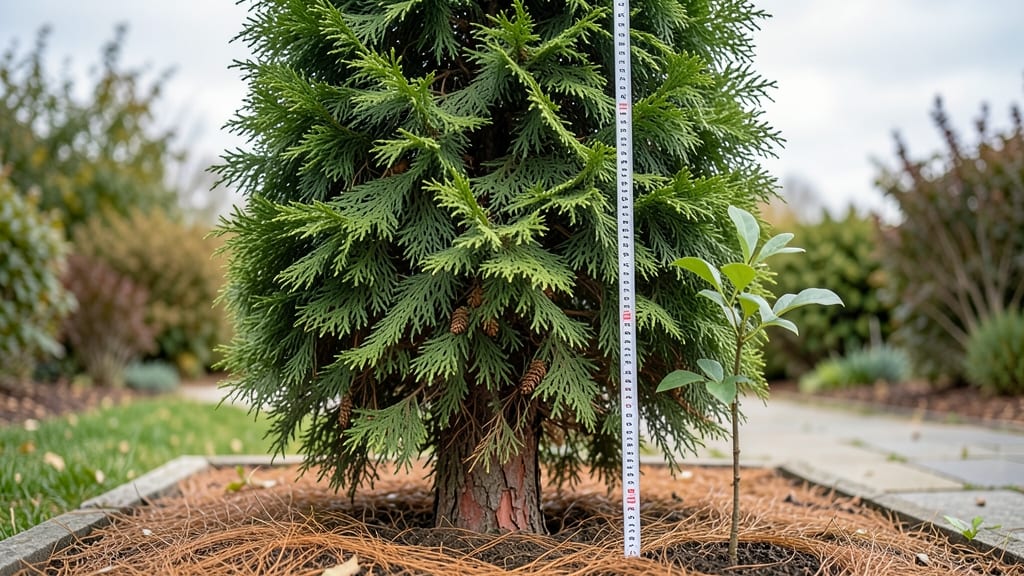
White cedar tree height by mature stage: regional growth charts
White cedar trees (Thuja occidentalis) are prized for their fast growth and privacy benefits, but their mature height can vary dramatically—from 10 feet in dwarf varieties to over 40 feet in standard types.
Understanding these height ranges helps you plan spacing, pruning, and landscaping layouts effectively. Let’s break down how tall white cedars grow by age and region to help you make informed decisions.
In the Pacific Northwest, white cedars thrive in cool, moist climates, often reaching 25–40 feet at maturity. Meanwhile, in the Northeast, they typically max out at 20–30 feet due to colder winters.
The Midwest sees 15–25 feet heights, while Southern climates may stunt growth to 10–20 feet without proper care. These regional differences are key to predicting your tree’s final size.
Here’s how white cedar height progresses over time, with spacing recommendations for full growth:
| Growth Stage | Pacific Northwest | Northeast | Midwest | South | Spacing (ft) |
|---|---|---|---|---|---|
| 0–10 Years | 12–20 ft | 8–15 ft | 6–12 ft | 5–10 ft | 6–8 ft apart |
| 10–20 Years | 25–35 ft | 18–25 ft | 12–20 ft | 10–15 ft | 8–10 ft apart |
| 20+ Years | 30–40 ft | 20–30 ft | 15–25 ft | 10–20 ft | 10–12 ft apart |
🌲 Note: Dwarf varieties like 'Little Giant' stay under 10 feet.
For privacy screens, plant white cedars 6–8 feet apart in their first decade to ensure they fill in quickly. In windy regions, like the Midwest, closer spacing (5–6 feet) helps trees lean less and grow straighter.
If you’re using them as windbreaks, space them 10–12 feet apart to maximize airflow and reduce storm damage.
In urban landscapes, where space is limited, consider semi-dwarf varieties like 'Columbus' or 'Emerald Green', which top out at 15–20 feet. These are perfect for small yards or container gardening with proper pruning. Always check the nursery tag for specific variety heights before planting.
White cedars in coastal areas (e.g., Pacific Northwest) grow 20–30% faster due to higher humidity and mild winters. In contrast, arid Southern climates may slow growth to half the rate without extra water. Mulching with wood chips and deep watering can help offset dry conditions and encourage taller growth.
Pro tip: If you’re planting multiple rows for a privacy hedge, stagger the trees by 1–2 feet in each row. This creates a denser, more uniform screen as they mature. Over time, their foliage will spread 3–5 feet wider than their height, so account for that in your layout.
For fastest height gain, focus on spring and summer care: fertilize with a balanced 5-10-10 mix in early spring, water deeply once a week, and prune only to shape—never to stunt growth.
Avoid heavy pruning in late summer, as this can weaken new growth and reduce height gains the following year.
🌳 Whether you’re aiming for a towering natural fence or a compact accent tree, understanding these regional growth patterns ensures your white cedar thrives—and reaches its full height potential.
Factors that dramatically affect white cedar tree height
White cedar trees (Thuja occidentalis) are adaptable, but their height growth depends heavily on your local conditions.
In cold climates like the Northeast, these trees thrive and can reach 30-40 feet with proper care, while in warmer Southern zones, they may max out at 20-30 feet due to heat stress.
Even small differences in soil quality or sunlight exposure can shift their growth trajectory by 10-15 feet over 20 years.
Another critical factor is water availability. White cedars in well-drained, moist soil grow 30% faster than those in dry or compacted soil. If your yard has clay-heavy soil, consider amending it with compost to improve drainage and support taller growth.
Even pests like bagworms or improper pruning can stunt height by 50% or more if left unchecked.
✅ DO
- Plant in well-drained soil with partial shade for optimal growth.
- Use mulch to retain moisture and improve soil quality.
- Prune in late winter to encourage upward growth.
- Monitor for pests like spider mites and treat early.
❌ DON'T
- Plant in waterlogged soil—roots rot easily.
- Over-fertilize with high-nitrogen products.
- Prune in summer, which stresses the tree.
- Ignore bagworms—they defoliate and stunt growth.
Sunlight plays a surprising role too. While white cedars tolerate full sun, they grow 10-15% taller in partial shade, especially in hotter regions. If you’re planting near a south-facing wall, expect slower height growth due to reflected heat.
Conversely, in cooler climates, full sun can boost height by 20% or more compared to shaded spots.
Even the tree variety you choose makes a difference. Dwarf varieties like 'Little Giant' max out at 10-15 feet, while standard types like 'Columbus' can easily exceed 30 feet.
If your goal is a privacy screen, selecting the right cultivar is just as important as soil prep or sunlight management.
Finally, seasonal care impacts long-term height. Trees that receive consistent watering in spring and early summer grow 2-3 feet taller per year than those neglected during drought. In USDA Zone 5 or colder, winter protection (like mulching) ensures healthier regrowth in spring, setting the stage for taller growth.
By aligning these factors—soil, sunlight, water, and variety—you can steer your white cedar toward its maximum potential height while avoiding common pitfalls. Small adjustments can mean the difference between a 20-foot screen and a 40-foot tower over a decade. 🌲