
Plants
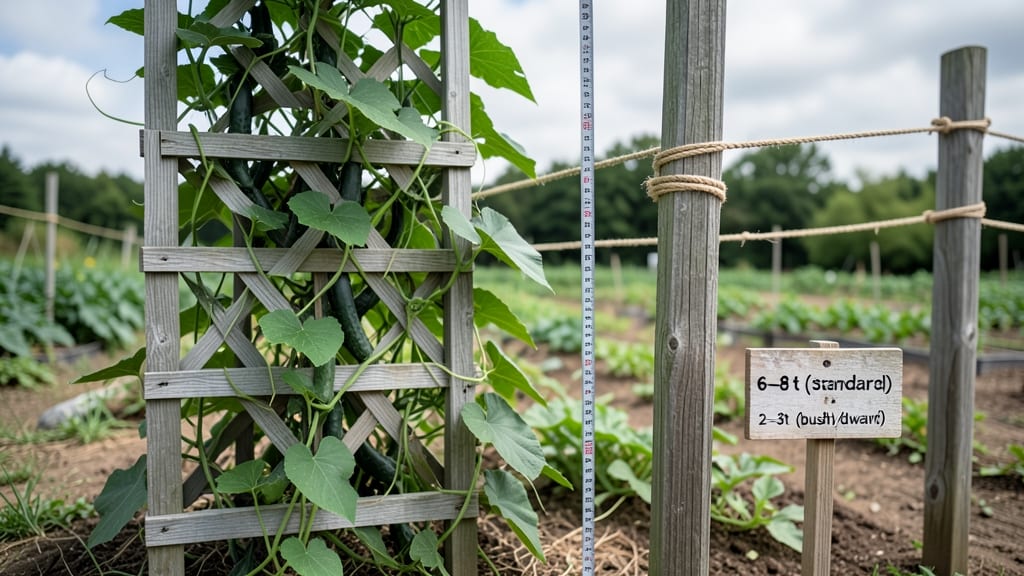
If you’ve ever wondered how tall cucumber plants will grow in your garden, the answer depends on one key factor: the variety you choose. Some cucumbers climb like jungle gyms, reaching heights of 20 feet or more, while others stay compact—perfect for small spaces or containers.
For gardeners in USDA Zone 6a, planting between April and May means you’ll need to plan ahead for these vertical giants.
Bush varieties, like the Bush Champion, top out at just 1-3 feet, making them ideal for tight spaces, while traditional vining types can stretch toward your roofline if left unchecked.
But here’s the game-changer: with the right support structures—like trellises or cages—you can train even the tallest cucumbers to grow upward instead of outward. This isn’t just about saving space; it also improves airflow, reduces disease risk, and makes harvesting a breeze.
In this guide, I’ll break down the height differences between vining and bush types, share space-saving hacks, and help you pick the perfect cucumber for your garden—whether you’ve got acres or just a balcony. Let’s get growing!


Cucumber plant heights by variety: vining vs bush types explained
If you've ever wondered whether your cucumber plants will sprawl like a jungle or stay neatly contained, the answer lies in the variety you choose.
Most cucumbers fall into two main categories: vining types, which can reach 6 to 20 feet, and bush varieties, which max out around 1 to 3 feet.
The difference isn't just about height—it affects your garden layout, harvest efficiency, and even how much space-saving you'll need.
Vining cucumbers are the classic sprawlers, often climbing trellises or fences like enthusiastic gymnasts. These varieties thrive when given vertical support, which not only saves space but also improves air circulation and reduces disease risk.
On the other hand, bush cucumbers are the compact, low-maintenance cousins, perfect for containers or small gardens. They produce fruit closer to the ground, making them easier to harvest but often yielding slightly less than their vining counterparts.
Here’s where it gets interesting: some semi-dwarf varieties bridge the gap, growing 3 to 6 feet tall with minimal support. These are ideal for balconies or patios where you want a bit of height without committing to a full-scale trellis.
The key to choosing the right variety lies in understanding your growing space and how much vertical or horizontal room you can dedicate to these hungry plants.
| Variety Type | Mature Height | Best For | Popular Examples |
|---|---|---|---|
| Vining | 6–20 ft | Trellises, large gardens | Marketmore, Straight Eight, Lemon Cucumber |
| Semi-Dwarf | 3–6 ft | Containers, small spaces | Bush Champion, Salad Bush, Spacemaster |
| Bush | 1–3 ft | Balconies, small gardens | Bush Crop, Patio Snacker, Tiny Teardrop |
Let’s talk about vining cucumbers, the heavyweights of the cucumber world. Varieties like Marketmore and Straight Eight can shoot up to 20 feet if left unchecked, making them perfect for large gardens or rural settings.
These plants are prolific producers, but their sprawling habit means you’ll need a sturdy trellis or fence to keep them in check. Without support, they’ll sprawl across your garden bed, competing with other plants for space and sunlight.
On the flip side, bush cucumbers like Bush Champion or Patio Snacker are designed for small-space gardening. They stay compact, often reaching just 1 to 3 feet tall, and produce smaller but abundant fruits.
These are the go-to choices for container gardening or if you’re growing cucumbers on a balcony or patio. The trade-off? You might sacrifice a few extra cucumbers compared to their vining cousins, but the convenience is worth it for many gardeners.
If you’re torn between the two, consider semi-dwarf varieties like Spacemaster, which grow 3 to 6 feet tall and require minimal support. These are a middle-ground solution, offering the productivity of vining types without the need for a massive trellis.
They’re also great for urban gardeners with limited vertical space but still want to grow cucumbers vertically.
One critical factor to remember is that cucumber height isn’t set in stone. Even vining types can be pruned or trained to stay shorter if needed, while bush varieties might stretch taller if they’re overcrowded or nutrient-starved.
The key is to choose the right variety for your space and then provide the support and care they need to thrive. Whether you’re working with a backyard oasis or a balcony garden, there’s a cucumber variety that’ll fit perfectly.
For first-time growers, I recommend starting with a bush variety like Bush Crop to get a feel for cucumber care without the complexity of trellising. Once you’re comfortable, you can experiment with vining types and the space-saving magic of vertical gardening.
Either way, understanding these height differences will help you plan your garden like a pro.
Next up, we’ll dive into how to control cucumber plant height—whether you want to train them upward, keep them compact, or even prune for better yields. Stay tuned for tips on trellising, pruning, and space-saving hacks that’ll transform your cucumber game!
How to control cucumber plant height: trellising, pruning, and space-saving techniques
If your cucumber plants are reaching for the sky faster than you can say "sunny day," don’t panic! With the right techniques, you can manage their height while keeping yields high.
The key lies in trellising, pruning, and choosing compact varieties—all of which can transform a sprawling mess into a neat, productive garden feature.
First, let’s tackle the trellising method, which is my go-to for vining cucumbers. By guiding vines upward, you save space and improve air circulation, reducing disease risks. A simple 4-6 foot tall trellis can support most varieties, keeping them off the ground while maximizing vertical growth potential.
Next, consider pruning techniques to control height and encourage bushier growth. For vining types, pinch off the main stem’s tip when it reaches your desired height (usually 6-8 feet).
This redirects energy to lateral branches, producing more fruit without excessive height. For bush varieties, minimal pruning is needed—just remove yellowed leaves to improve airflow.
For those with limited space, compact or dwarf varieties are a game-changer. Varieties like 'Bush Champion' or 'Spacemaster' stay under 3 feet tall while delivering abundant harvests. These are perfect for container gardening or small plots where vertical space is scarce.
Don’t forget the power of container gardening! Growing cucumbers in large pots (at least 12-18 inches deep) with trellises attached lets you place them on patios or decks. Just ensure the container has drainage holes and use a lightweight potting mix to avoid toppling.
Finally, monitor your plants for overcrowding signs. If vines are tangled or sprawling uncontrollably, it’s time to intervene. Thin out excess growth and redirect vines onto the trellis. With these techniques, even 20-foot vines can be tamed into a manageable, space-efficient garden feature.