
Trees
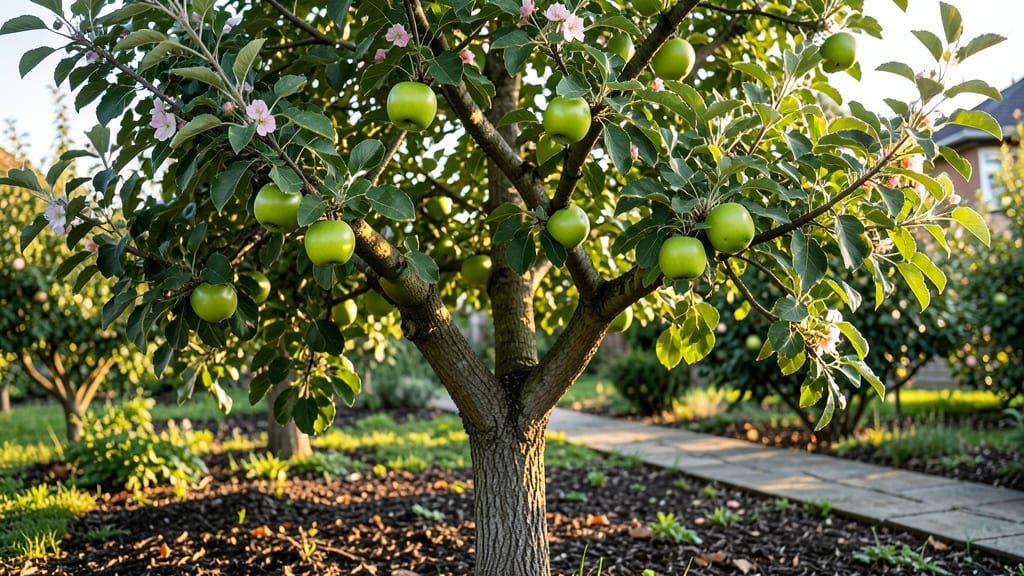
Wondering how tall do Granny Smith apple trees grow and whether they’ll fit in your backyard? These crisp, tangy favorites come in sizes that’ll surprise you—from compact dwarfs perfect for containers to towering standards that need serious space.
The 🍎 Granny Smith Apple Tree you choose makes all the difference. Dwarf varieties max out around 6–10 feet, making them ideal for urban gardens or small patios, while standard trees can reach 20–30 feet—think two-story height! Even semi-dwarfs (12–16 feet) strike a balance for suburban yards.
But height isn’t the only factor. Spacing, pruning, and your USDA Zone 6a climate all play a role in how much room your tree needs to thrive. Whether you’re dreaming of a backyard orchard or a single potted tree, knowing these details helps you plan for success.
Let’s break down the options so you can pick the perfect size for your space—and your apple harvest goals. Ready to get growing?


Granny Smith apple tree height guide: dwarf vs semi-dwarf vs standard varieties explained
Granny Smith apple trees are famous for their crisp, tart flavor, but their mature size can vary dramatically depending on the rootstock used during propagation. Understanding these differences is crucial for planning your orchard layout, especially if you're working with limited space.
The height of your tree directly impacts its spread, fruit production, and even pruning requirements. Let's break down the three main categories: dwarf, semi-dwarf, and standard varieties.
Most gardeners assume all Granny Smith trees reach the same towering height, but that couldn't be further from the truth. A standard Granny Smith can soar to 20-30 feet tall, while a dwarf variety stays compact at just 6-10 feet.
This variation is achieved through careful selection of rootstock—the underlying root system that determines a tree's growth habit. For example, M.9 rootstock produces dwarf trees, while MM.111 yields semi-dwarfs, and seedling rootstock results in full-sized trees.
Here's the key visual comparison you need to plan your garden:
| Variety Type | Mature Height | Canopy Spread | Rootstock Examples | Best For |
|---|---|---|---|---|
| Dwarf | 6–10 ft | 6–8 ft | M.9, M.26 | Containers, small yards, urban gardens |
| Semi-Dwarf | 12–16 ft | 10–14 ft | MM.106, MM.111 | Residential yards, small orchards |
| Standard | 18–25 ft | 15–20 ft | Seedling, Antonovka | Large properties, commercial orchards |
If you're growing Granny Smiths in containers, dwarf varieties are your best bet. These compact trees thrive in 15-20 gallon pots and can produce fruit just like their larger counterparts. However, container-grown trees will need annual repotting to accommodate their growing root systems.
The trade-off? You'll need to prune aggressively to maintain size and shape, typically cutting back by 25-30% annually during late winter or early spring.
For urban gardeners with limited space, semi-dwarf varieties strike the perfect balance. They offer better fruit production than dwarfs while staying manageable in most backyards. These trees typically reach 12-16 feet tall, making them ideal for lawn ornaments that also provide shade and harvests.
Just ensure you plant them 12-15 feet apart to allow proper airflow and reduce disease risk.
Standard Granny Smith trees are the traditional orchard giants, reaching heights of 20-30 feet with spreads of 15-20 feet. These trees require significant space—plant them 20-25 feet apart—and are best suited for rural properties with ample land.
While they produce the most fruit, their size makes them impractical for most home gardens unless you're committed to regular pruning and maintenance.
One common misconception is that dwarf trees produce less fruit than their larger counterparts. In reality, properly cared-for dwarf Granny Smiths can yield just as many apples as standard trees, but concentrated in a smaller area.
The key is thinning fruit during the growing season to ensure each apple has enough energy to develop properly. Aim to leave 6-8 inches between apples on the branch to prevent overcrowding.
When selecting your Granny Smith apple tree, consider your climate zone and local frost dates. Dwarf varieties are more vulnerable to late frosts because their buds open earlier in spring. If you're in a USDA Zone 6 or colder, semi-dwarf or standard trees may be more reliable.
Always check the cold hardiness rating of the specific rootstock you choose—most Granny Smiths tolerate -15°F to -25°F once established.
Remember that pruning plays a crucial role in managing tree height. For dwarf varieties, focus on open-center pruning to create a vase-like shape that allows sunlight to reach all branches.
Semi-dwarf and standard trees benefit from central leader pruning, where you maintain a single dominant trunk. Always prune during late winter or early spring before new growth begins.
How to choose the right Granny Smith size for your garden space
Selecting the perfect Granny Smith apple tree size depends on your available space and gardening goals. If you're working with a small urban yard or balcony, dwarf varieties (6–10 feet tall) are your best bet.
These compact trees thrive in containers or tight spaces while still producing high-quality fruit. For larger properties, semi-dwarf (12–16 feet) or standard (18–25 feet) trees offer more traditional orchard experiences.
Consider your climate zone too—dwarf trees handle urban heat islands better due to their smaller canopies, while standard trees may need more winter protection in colder regions. Always check the rootstock type (e.g., M9 for dwarfs, MM106 for standards) as it directly impacts mature height and spread requirements.
🌱 Key Takeaway:
Choose your Granny Smith size based on space, container suitability, and pruning commitment—dwarf trees need less maintenance but may require annual pruning to control growth.
For container gardening, opt for dwarf varieties grafted onto M9 rootstock. These trees fit in 15–20 gallon pots and can be moved seasonally if needed. Just ensure your container has drainage holes and a support stake—Granny Smiths, even dwarfs, can get top-heavy with fruit!
If you're planting in ground soil, calculate spacing needs based on mature height and spread. Dwarf trees need 6–8 feet apart, while standard trees require 20–25 feet to prevent shade competition and disease spread. Always plant 2–3 trees for proper pollination, even with dwarf varieties.
Pruning plays a huge role in managing tree size. Dwarf Granny Smiths need annual pruning to maintain shape and fruit production, while standard trees benefit from open-center pruning every 2–3 years. Use sharp, clean tools and prune in late winter to encourage airflow and sunlight penetration.
Remember: Soil quality affects growth too. Amend your planting area with compost and organic matter to ensure your tree reaches its full potential height. In poor soil, even dwarf varieties may grow taller than expected—so test your soil before planting!