
How To
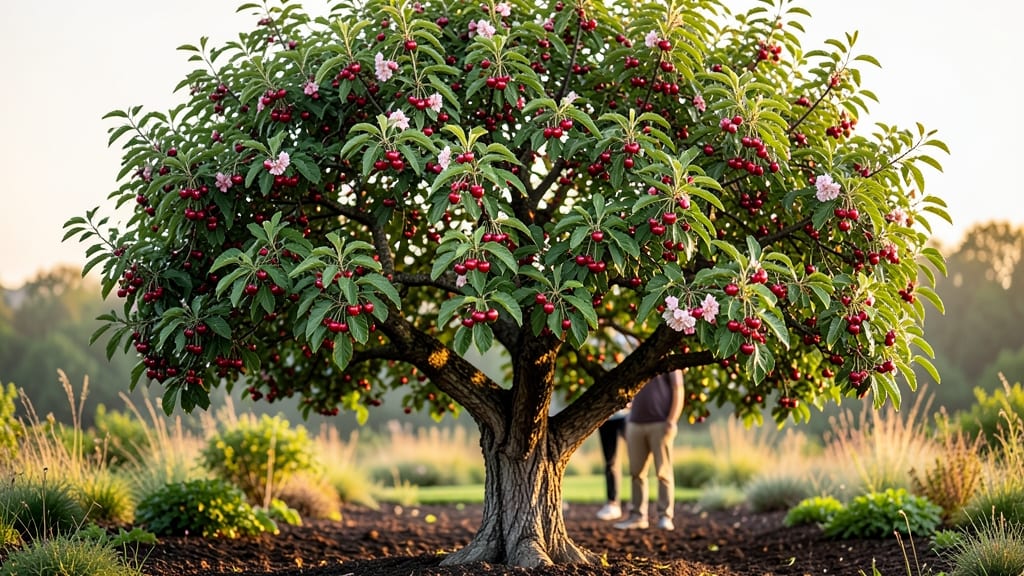
If you're wondering "how tall does a Bing cherry tree grow", the answer might surprise you—especially if you're dreaming of a backyard harvest without sacrificing space.
A full-size Bing cherry tree 🍒 can reach a towering 20-25 feet, taller than most two-story homes, but don’t let that scare you off.
Here’s the good news: with dwarf and semi-dwarf varieties, you can enjoy sweet Bing cherries in as little as 6-10 feet of space. Whether you’re working with a small urban yard or a cozy balcony, compact options make it possible to grow these delicious fruits without the massive footprint.
In this guide, I’ll break down the height differences between standard, semi-dwarf, and dwarf Bing cherry trees, plus the pruning and care tips to keep your tree manageable. You’ll also discover which varieties thrive in tight spaces while still delivering a bountiful harvest.
Ready to grow your own Bing cherries without the yard? Let’s get started—your future fruit bowl is waiting!


Bing cherry tree height guide: standard vs. dwarf varieties compared
When planning your Bing cherry tree garden, one of the first questions is: how tall does a Bing cherry tree grow? The answer depends on whether you choose a standard tree, semi-dwarf, or dwarf variety.
Standard Bing cherry trees can soar to 20-25 feet tall, making them perfect for large orchards but challenging for home gardens. Dwarf varieties, however, offer a game-changing solution for small spaces.
If you're working with limited space, dwarf Bing cherry trees are your best bet, typically reaching 6-10 feet tall at maturity. These compact trees produce just as many sweet, juicy cherries as their taller counterparts but require far less yard space.
For example, a 6-foot dwarf Bing cherry tree fits easily in a backyard or even a large container, while still yielding 50-100 pounds of fruit annually.
Here’s a quick comparison to help you visualize the differences:
Understanding these differences is key to selecting the right tree for your space. For instance, a 10-foot dwarf Bing cherry tree can be planted just 8 feet apart from another tree, while standard varieties need 20-25 feet of space to thrive.
This compact spacing is ideal for small urban gardens or even container growing with the right care.
Another critical factor is growth rate. Standard Bing cherry trees grow 2-4 feet per year in ideal conditions, while dwarf varieties grow 1-2 feet per year. This slower growth makes them easier to manage and less likely to outgrow their space quickly.
For example, a dwarf Bing cherry tree planted in spring will likely reach 3-4 feet tall by its second year, making it perfect for monitoring its growth over time.
If you're considering a container-grown Bing cherry tree, opt for dwarf varieties like 'Stella' or 'Compact Bing,' which thrive in 15-20 gallon pots. These trees can be moved to different locations as needed, adding flexibility to your gardening plans.
Just ensure the container has adequate drainage and depth to support root growth.
Pruning also plays a significant role in managing height. Regular summer pruning can keep dwarf Bing cherry trees even smaller, while winter pruning helps shape the tree and encourage fruit production.
For example, pruning back one-third of the new growth in late winter can help maintain a 6-foot height limit over time.
One common misconception is that dwarf Bing cherry trees produce fewer cherries. In reality, they yield proportionally less fruit but still provide a plentiful harvest for home use.
A 6-foot dwarf Bing cherry tree can produce 30-50 pounds of cherries annually, enough for fresh eating, jams, or even selling at local markets.
Before planting, consider your climate zone. Bing cherry trees thrive in USDA Zones 5-8, where they receive at least 6 hours of full sun daily.
In cooler climates, dwarf varieties may need winter protection, such as mulching around the base or wrapping the trunk with tree guards to prevent frost damage.
For those with limited space, pairing a dwarf Bing cherry tree with a pollinator variety like 'Lapins' or 'Stella' ensures successful fruit set. These companion trees can be planted just 8-10 feet apart, making them ideal for small backyards or even large containers on a patio.
In summary, whether you choose a standard, semi-dwarf, or dwarf Bing cherry tree, understanding its mature height and growth habits will help you plan your garden layout effectively. With the right variety and care, you can enjoy sweet Bing cherries without sacrificing precious yard space! 🌱
Bing cherry tree height guide: standard vs. dwarf varieties compared
A standard Bing cherry tree can soar to 20-25 feet tall—taller than most two-story homes! This means they need plenty of space, ideally 20-25 feet between trees for proper airflow and sunlight.
If your yard is smaller, you’ll want to explore dwarf or semi-dwarf varieties, which stay between 6-12 feet tall while still producing sweet, juicy cherries.
Understanding the growth rate of Bing cherry trees helps with planning. In their first year, they grow just 2-4 feet tall. By year two, they’ll reach 6-10 feet, and by year three, they can shoot up to 12-18 feet if left unpruned.
Dwarf varieties grow more slowly, making them ideal for small gardens or containers.
| Variety | Mature Height | Growth Rate (First 3 Years) | Space Needs |
|---|---|---|---|
| Standard Bing | 20-25 ft | 2-4 ft/year | 20-25 ft apart |
| Semi-Dwarf Bing | 12-18 ft | 1-3 ft/year | 15-20 ft apart |
| Dwarf Bing | 6-10 ft | 1 ft/year | 8-10 ft apart |
Climate and soil conditions also affect height. Trees grown in rich, well-draining soil with full sun exposure tend to grow taller and produce more fruit. In cooler climates, like USDA Zone 6a, growth may be slower, but the trees still reach their mature height over time.
If you’re in a warmer zone, expect faster growth and potentially larger trees.
Pruning plays a huge role in controlling height. Regular pruning in late winter or early spring can keep your Bing cherry tree 30-50% shorter than its natural height.
For example, a standard Bing cherry tree can be pruned to stay around 12-15 feet tall, while dwarf varieties can be maintained at 6-8 feet with consistent care. This also improves fruit production by focusing energy on fewer, healthier branches.
If you’re considering container gardening, dwarf Bing cherry trees are your best bet. They thrive in large pots (20+ gallons) and can be kept under 10 feet tall with proper pruning. Just ensure the container has drainage holes and use a balanced fertilizer to support growth.
Container-grown trees may produce slightly fewer cherries, but the convenience of having fresh fruit in a small space is worth it!
Before planting, check your local frost dates. Bing cherry trees need 165+ frost-free days to produce fruit, so they’re best suited for regions with mild winters.
If you’re in a colder area, opt for a dwarf variety and plant near a sunny wall to extend the growing season and protect against late frosts.